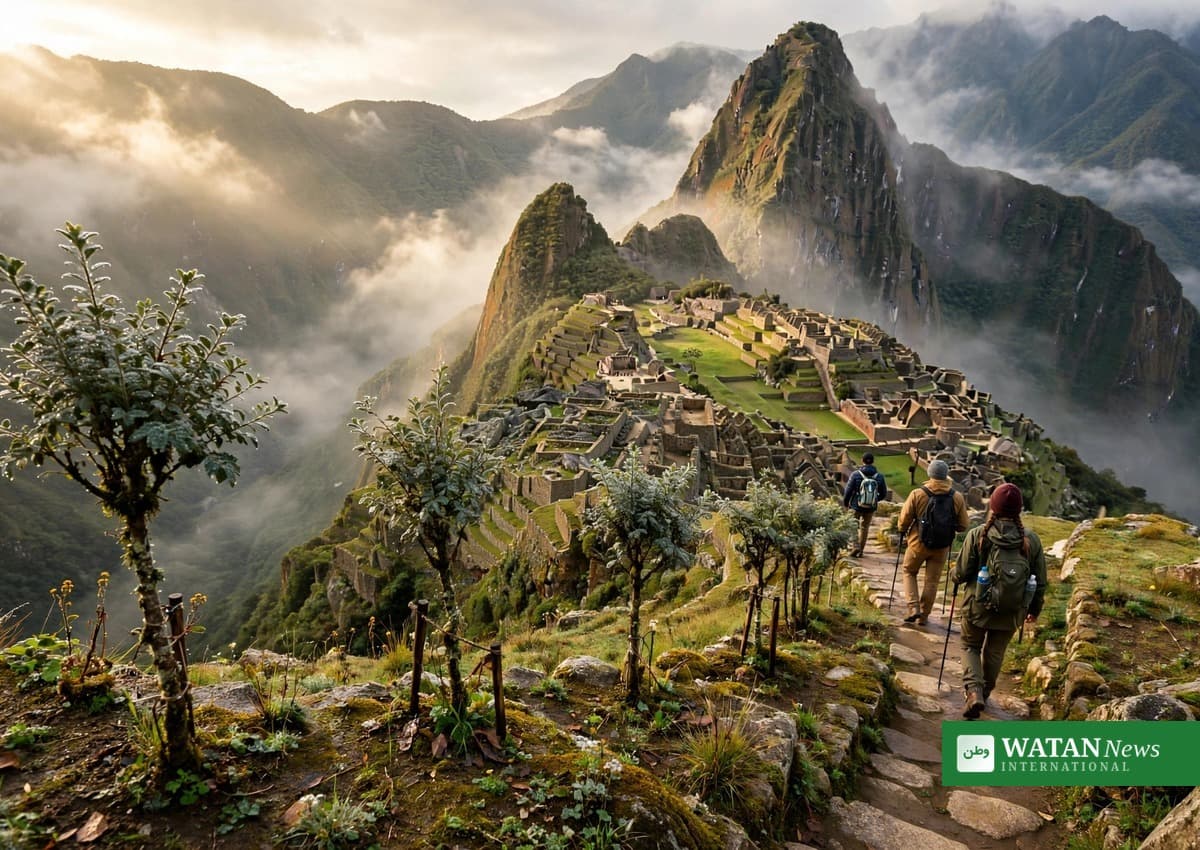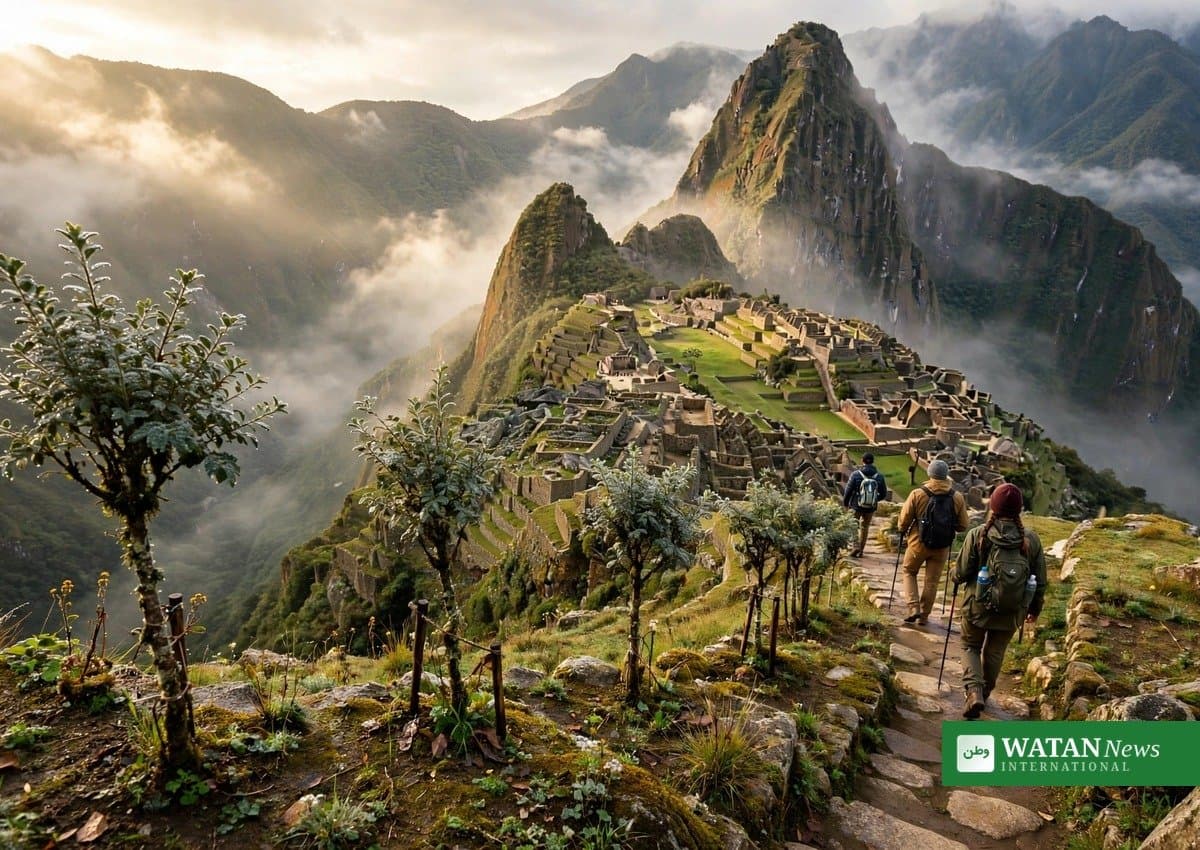
Machu Picchu has earned its fourth certification as a carbon neutral tourist destination, after cutting its carbon footprint per visitor by more than 8% since 2025, the certifier Green Initiative announced at a ceremony on 5 November 2026.
The recognition was presented during Climate Action Day at the fourth Carbon Neutral Certification Ceremony of Machu Picchu, attended by representatives of UN Tourism, the United Nations Conference on Trade and Development (UNCTAD), Peru’s tourism promotion agency PROMPERU, the Ministry of Foreign Trade and Tourism (MINCETUR) and the National Chamber of Tourism (CANATUR).
A fourth certification for the Inca citadel
Machu Picchu, the 15th-century Inca citadel in the Peruvian Andes and a UNESCO World Heritage Site since 1983, received its first carbon neutral certification from Green Initiative in 2021. It became the first carbon neutral certified UNESCO-designated site, and the world’s first carbon-neutral tourist destination.
At its third certification in November 2025, the destination reported a 7.07% reduction in its carbon footprint per tourist between 2019 and 2024. An earlier verified cut of 18.77% in emissions was recorded between 2019 and 2022. The fourth certification, according to Green Initiative, shows that the progress has continued: the footprint per tourist has now fallen by more than 8% since 2025.
“Machupicchu is a living laboratory of climate action best practices, and its experience is being scaled up worldwide,” said Maritza Montero, president of CANATUR. “When Machupicchu moves forward, Peru’s tourism moves forward.”
How the footprint fell
Green Initiative says the result comes from an environmental management model that combines emissions reduction, waste use and ecosystem conservation. The work is driven by the Municipality of Machu Picchu together with the hotel and conservation group Inkaterra, Grupo AJE and Bosques Amazonicos (BAM), with allies including Tetra Pak, InkaRail, LATAM, PeruRail and international financing from the Spanish Agency for International Development Cooperation (AECID).
Among the practical measures, compactors now recycle PET plastic and cardboard, a biodiesel plant turns used cooking oils into fuel, and a pyrolysis system converts organic waste into biochar. Ecological restoration in 2024 captured more than 5,000 tonnes of carbon dioxide equivalent, and 6,596 native trees have been planted to restore local ecosystems and increase carbon capture in the Historic Sanctuary of Machu Picchu.

“What makes the case of Machu Picchu special is that carbon neutrality has become a long-term commitment,” said Yves Hemelryck of Green Initiative. “This fourth certification reflects continuous work that combines emissions measurement, circular economy and ecosystem restoration.”
A corridor beyond one site
The experience is now meant to travel further. A climate-neutral tourism corridor connecting Cusco, Machu Picchu and Choquequirao is being promoted, aiming to extend emissions reduction, waste management and environmental conservation practices along a longer tourist route in Peru.
The model is also being shared with other iconic destinations, including Christ the Redeemer in Brazil, Angkor Wat in Cambodia, Petra in Jordan and Tikal in Guatemala. On behalf of UN Tourism, Daniel Diniz Nepomuceno, Director of Investments and Public-Private Partnerships, said the Machu Picchu experience shows how cooperation between public institutions, private companies and specialised organisations can turn climate commitments into concrete action, in line with the principles of the Glasgow Declaration on Climate Action in Tourism.
Elvis La Torre, mayor of Machu Picchu, said the certification is the result of coordinated work between authorities, companies and the local community, and that the municipality will keep promoting actions that reduce the destination’s environmental footprint.
Europe is moving in the same direction: the European Union adopted its first Sustainable Tourism Strategy on 4 November 2026, aiming to spread visitors more evenly and ease pressure on hotspots.
Key facts
- What happened: Machu Picchu received its fourth Carbon Neutral destination certification from Green Initiative, presented on 5 November 2026.
- Progress: carbon footprint per tourist down more than 8% since 2025; 18.77% emissions reduction verified between 2019 and 2022.
- Restoration: more than 5,000 tonnes of CO2 equivalent captured through ecological restoration in 2024; 6,596 native trees planted.
- Next step: a climate-neutral tourism corridor linking Cusco, Machu Picchu and Choquequirao.
- History: first certified in 2021; the first carbon neutral certified UNESCO-designated site in the world.