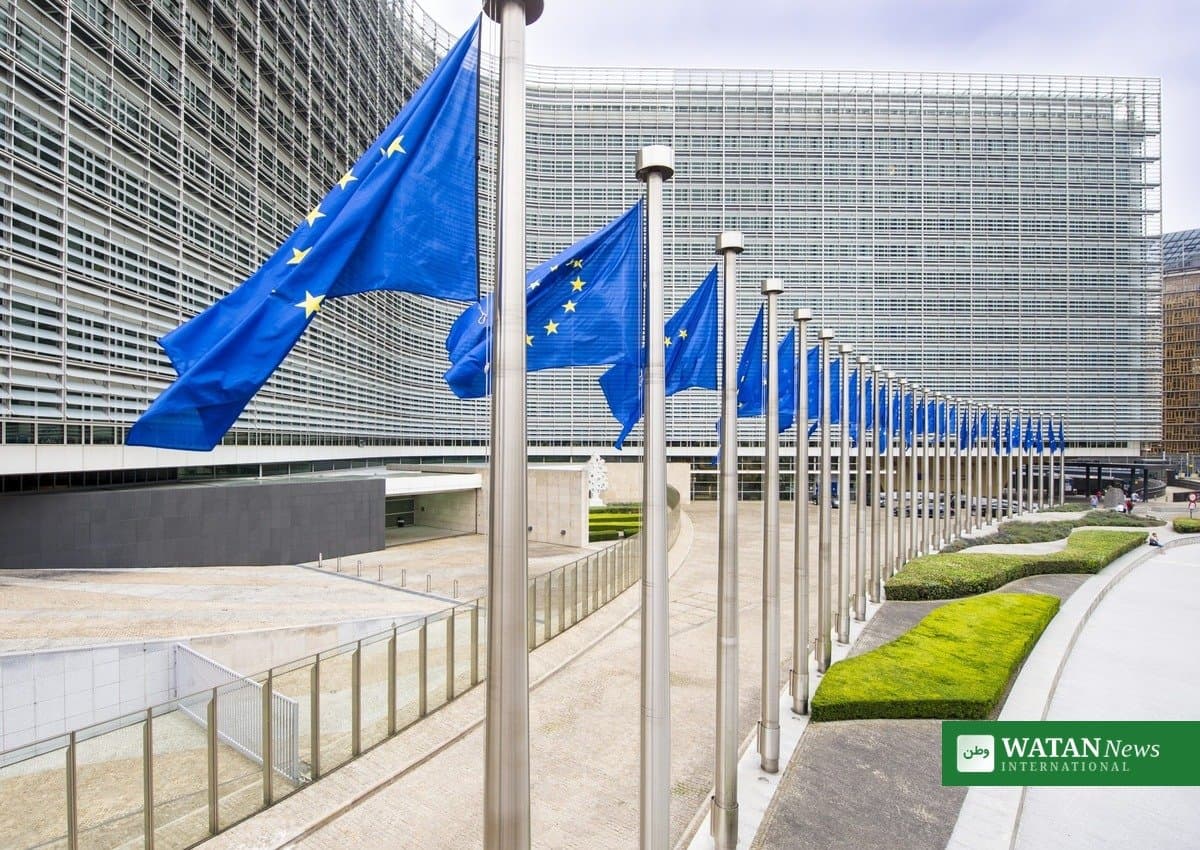
The leaders of six of the European Union’s biggest net contributors — including the prime ministers of Denmark, Finland and Sweden — have jointly demanded cuts of “several hundred billion euros” from the EU’s proposed 2028–2034 long-term budget, escalating a fight that could block agreement on the bloc’s spending plan this year. The EU budget cuts demand, set out in a letter dated Monday 28 September 2026, puts the Nordic governments at the centre of one of the EU’s most consequential fiscal battles in years.
FAKTA
- Who: The leaders of the six “frugal” states — German Chancellor Friedrich Merz, Austrian Chancellor Christian Stocker, Danish Prime Minister Mette Frederiksen, Dutch Prime Minister Rob Jetten, Finnish Prime Minister Petteri Orpo and Swedish Prime Minister Ulf Kristersson.
- What: A joint letter demanding cuts of “several hundred billion euros” from the European Commission’s proposed 2028–2034 Multiannual Financial Framework (MFF).
- When: The letter was sent on Monday 28 September 2026 to the Irish EU presidency and European Council President António Costa.
- Why: The six say they account for almost 40% of member states’ budget contributions and call the Commission’s proposed nominal increase of around 60% “not realistic”.
- Next step: The Irish presidency is expected to present a compromise negotiating box before the General Affairs Council on 13 October, ahead of an EU summit on 15–16 October.
The EU budget cuts the frugal six are demanding
The letter, first reported by Euronews and Agence Europe, says the Commission’s proposal must come down by hundreds of billions of euros, with “all items” contributing to the saving. The six argue that any negotiating framework from the Irish presidency “must set out an overall volume that can realistically be financed by those who carry the main financial burden” — and that the question cannot be postponed to a later stage of talks.
They also want the budget’s priorities reshaped: more weight on competitiveness, security and defence, and combating illegal migration, with less automatic funding for traditional areas such as cohesion policy and agriculture. “Almost every EU member state is making painful efforts to consolidate its public finances. There will be no European sovereignty without sound public finances,” the letter states.
Why the Nordic three are pushing back
Denmark, Finland and Sweden are among the EU’s most fiscally conservative member states, and their governments argue that expanding the EU budget while every national government is tightening its own would be indefensible at home. The three Nordic leaders have been pressing the case since a meeting of the frugal group in Berlin at the end of August.
For Copenhagen, Helsinki and Stockholm, the budget fight is also about influence: the Nordics want the next MFF to channel money toward innovation, competitiveness and defence rather than toward the older spending priorities favoured by a group of 17 member states, including Spain and Italy, that believe agricultural support should be allowed to grow.
The numbers behind the dispute
The scale of the disagreement is stark. The Commission’s proposal for 2028–2034 represents a nominal increase of roughly 60% compared with the current framework — a package worth nearly 2 trillion euros. In June, the Cypriot presidency proposed trimming the Commission’s draft by 2%, a compromise the frugal six dismissed as far too small to win their support.
| Proposal | Overall volume | Frugal six position |
|---|---|---|
| European Commission draft | Nearly €2 trillion, nominal increase of around 60% | “Not realistic. Not economically. Not politically.” |
| June compromise (Cypriot presidency) | 2% cut to the Commission’s draft | Insufficient to secure backing |
| Frugal six demand (28 Sept letter) | Cut by “several hundred billion euros” | Non-negotiable before talks continue |
What happens next
The Irish presidency is expected to present its revised compromise in the coming days, ahead of the General Affairs Council on 13 October and the European Council summit on 15–16 October. A diplomat from one of the frugal countries told the Financial Times: “If there are no cuts of hundreds of billions, there will be no agreement this year.”
Negotiations are officially targeting a deal by the end of 2026 so that the new framework can be operational in 2028. With partial general agreements already reached in the summer on three of the main spending programmes, the overall volume remains the single biggest obstacle — and the Nordic three, alongside Germany, Austria and the Netherlands, are holding the line. For more European political coverage, visit Watan News.
Conclusion
The 28 September letter turns a simmering budget dispute into an open confrontation ahead of the October summits. With Denmark, Finland and Sweden jointly insisting that the Commission’s nearly €2 trillion proposal must shrink by hundreds of billions, the frugal camp has made the overall volume the decisive question — and shown it is prepared to block any deal that ducks it.