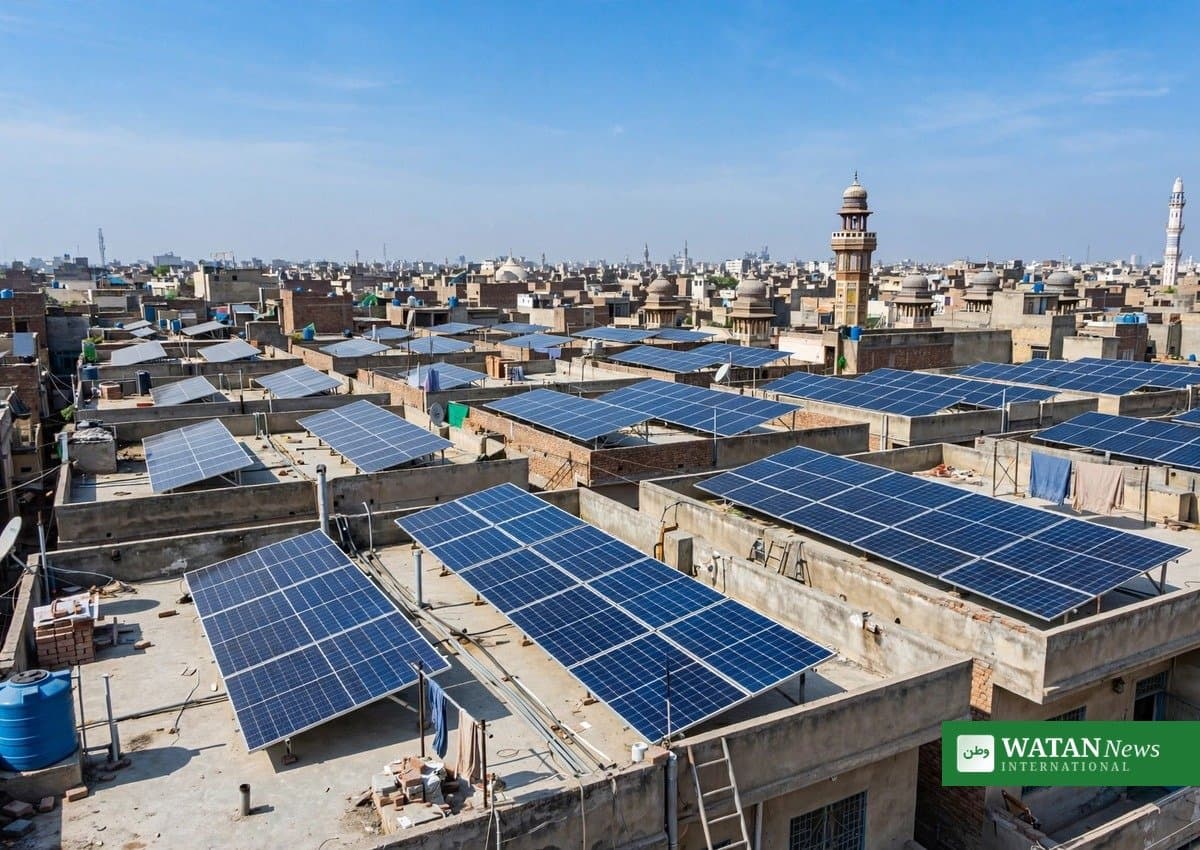
Pakistan is living through one of the world’s fastest rooftop solar revolutions. The Pakistan solar power boom has put millions of panels on homes, shops, schools, factories and farms, driven by soaring electricity tariffs, an unreliable grid, and a flood of cheap Chinese panels that made self-generation affordable for ordinary households.
Read the same story on our main site: Pakistan embraces solar power amid growing momentum.
Key Facts
- Pakistan imported some 17 gigawatts of solar capacity in 2024 alone, among the highest totals in the world, according to renewable energy think-tank Ember.
- Over the past decade the country has imported roughly 51 GW of solar equipment — more than the entire capacity of its grid power plants — helping it avoid over $12 billion in fossil fuel imports, according to a Renewables First report.
- Net-metered rooftop capacity grew from about 190 MW to nearly 7,000 MW in six years, while household electricity tariffs rose almost 140 per cent.
- In February 2026, regulator NEPRA replaced net metering with a net-billing framework, cutting the export buyback for new solar users from about Rs 27 to roughly Rs 10 per unit.
- Solar now supplies around a tenth of the country’s electricity needs, letting consumers sidestep power prices that have roughly doubled in three years.
Pakistan solar power boom: why it took off
The shift began not in boardrooms but on rooftops. As grid electricity became steadily more expensive and less reliable, panel prices collapsed — falling about 60 per cent in a single year as China’s vast photovoltaic overcapacity pushed module prices below 10 cents a watt. What followed was a grassroots movement: families buying panels from local shops, self-taught installers learning the trade on YouTube and WhatsApp groups, and neighbours copying neighbours until entire streets glittered blue.
For households, the logic is simple arithmetic. A rooftop system frees a family from unpredictable monthly bills and pays for itself in a few years, then keeps producing free electricity for decades. For many, it is also a statement of self-reliance — power that arrives even when the grid does not.
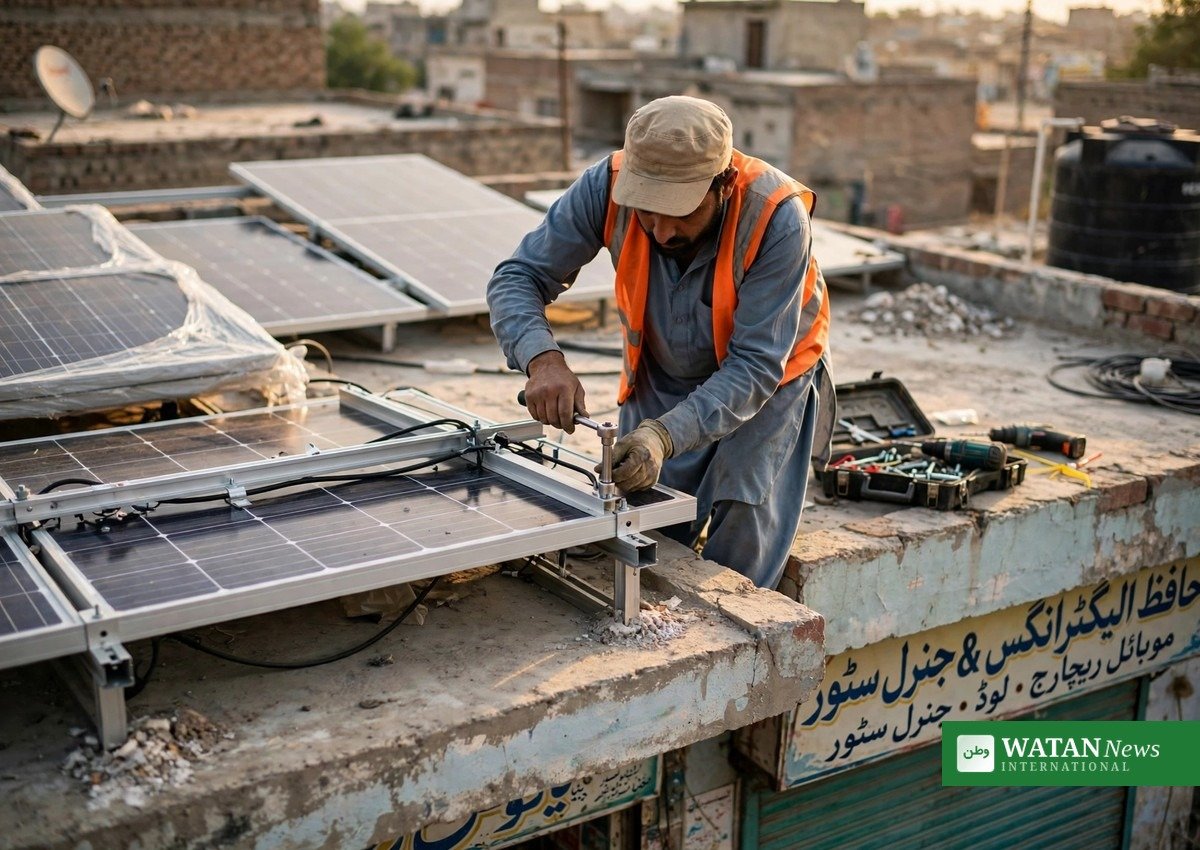
A technician installs panels on a small shop rooftop — small businesses across Pakistan are switching to solar for reliable daytime power.
Homes, shops and farms go solar
The panels are no longer a luxury good. They sit on the roofs of homes, shops, schools, mosques, farms and small factories across the country. Small businesses use them to keep sewing machines, refrigerators and lights running through outages, protecting both income and customers. Farmers have replaced diesel pumps with solar-powered irrigation, cutting one of their largest running costs.
Cheap panels have also carried electricity beyond the grid entirely. Rural homes that never had a power connection now run lights, fans and phone chargers from a single rooftop panel, making the boom the largest deployment of solar and battery storage against energy poverty anywhere in the world.
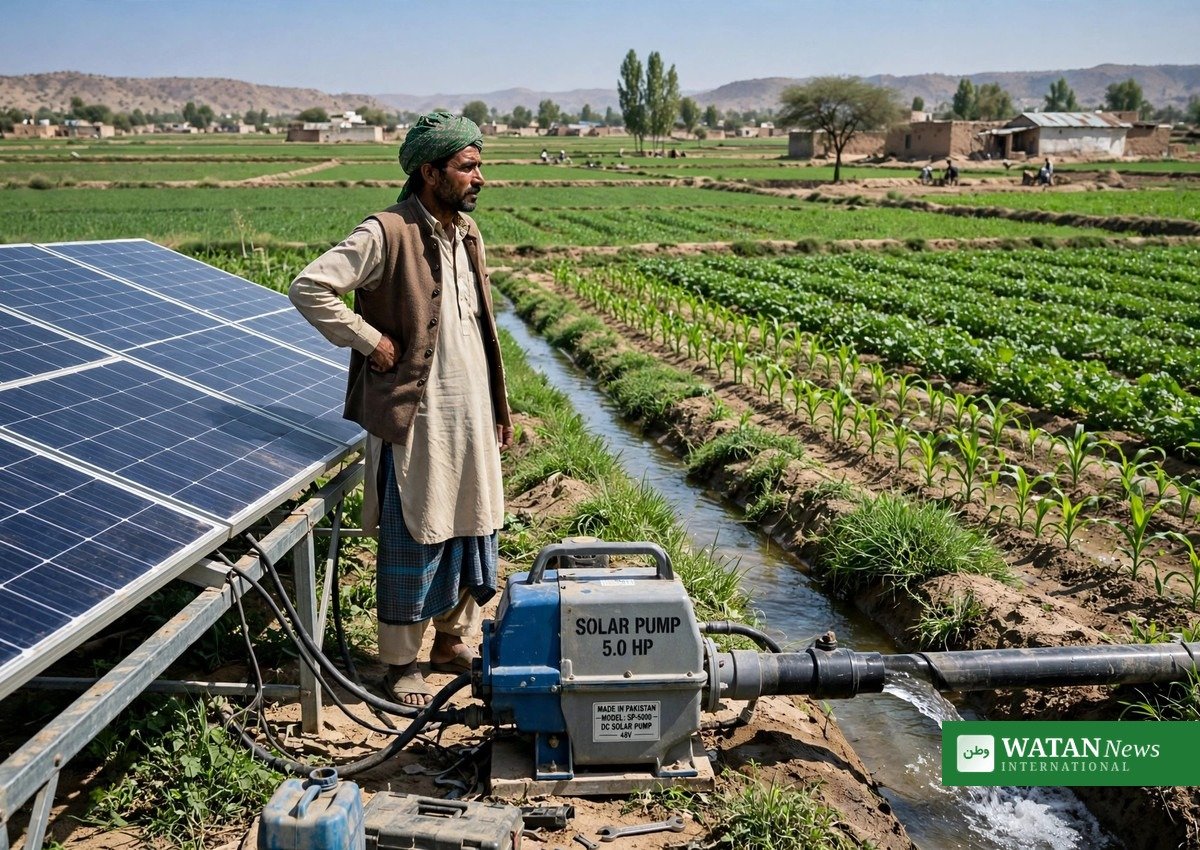
A solar-powered irrigation pump waters a farm field — agriculture has been one of the biggest winners of the solar shift.
From net metering to net billing
The boom was supercharged by net metering: a one-for-one credit system that let households sell surplus daytime electricity to the grid at up to about Rs 27 per unit. But the scale of the exodus alarmed policymakers. With paying customers leaving and expensive fossil-fuel plants sitting underused, the regulator moved to protect the grid’s finances.
Under the Prosumer Regulations 2026, new solar users are billed at the full retail tariff for electricity they draw, while their exports are credited at the much lower national average energy purchase price. Existing contracts keep their older terms until they expire, but expansions lose that protection.
| Rule | Old net metering (before Feb 2026) | New net billing (2026 onward) |
|---|---|---|
| Export credit | One unit exported wiped out one unit consumed | Exports sold at the lower average purchase price; imports billed at full tariff |
| Buyback rate | Up to about Rs 27 per unit | Roughly Rs 10–13 per unit for new users |
| Existing users | — | Keep old terms until contract expiry if the system is not modified |
| Payback period | Around 3–5 years | Longer, because exported electricity earns less |
A cleaner, cheaper energy future
The environmental dividend is already visible. By displacing diesel generators and grid electricity from fossil plants, the solar wave has cut carbon emissions and helped the country avoid billions in fuel imports — money analysts say could save another $6.3 billion as crude prices stay high. It has also shifted energy decisions from ministries to millions of households, building a more resilient system one rooftop at a time.
The policy turn will test that momentum. Lower export payments make oversized systems less attractive, but with panels this cheap and grid power this dear, the core incentive — generating your own electricity — remains intact.
Conclusion
Pakistan’s embrace of solar power marks a genuine turning point: a country-wide, bottom-up energy transition built on rooftops rather than mega-projects. Even as regulators rewrite the rules to protect the grid, the falling cost of sunlight means solar is set to remain a cornerstone of Pakistan’s energy future.