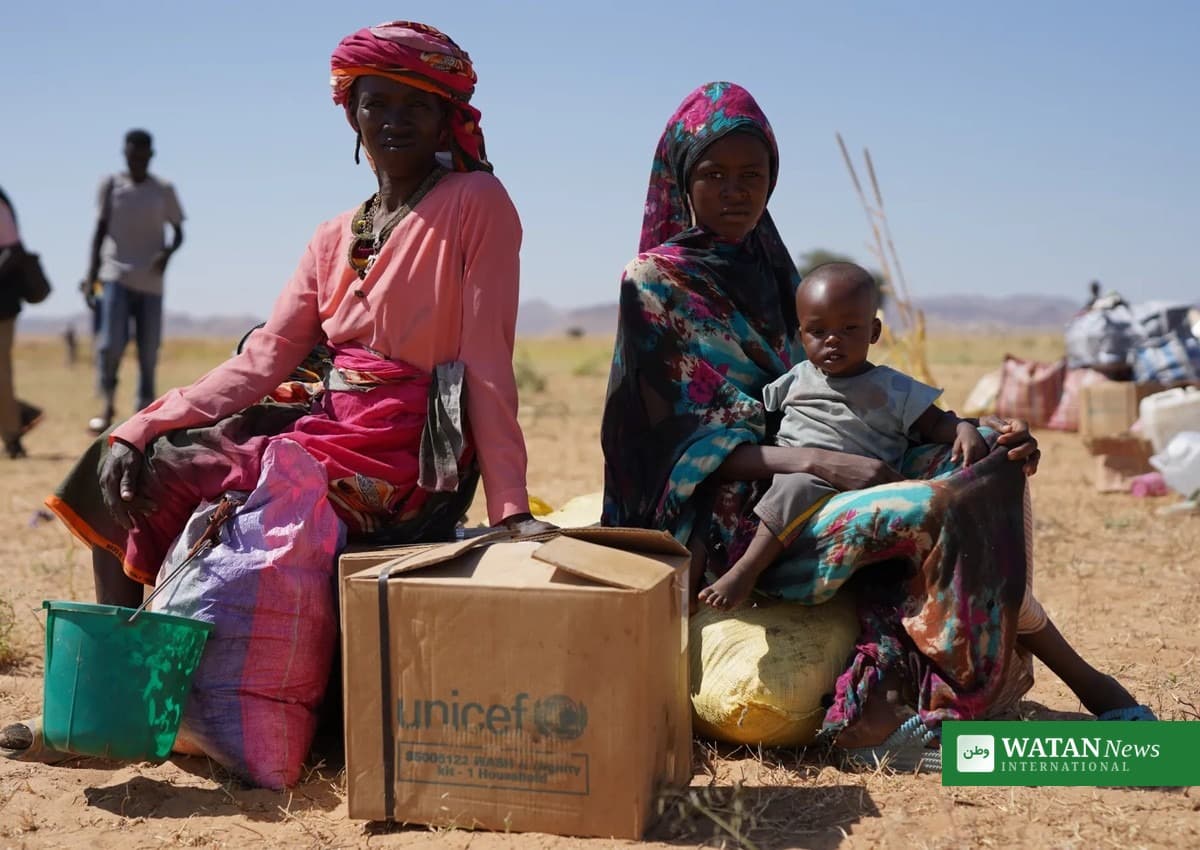
Drones and drought are closing in on Sudan’s children from both sides, the United Nations Children’s Fund (UNICEF) warned on Tuesday, 10 November, describing an assault on the country’s children unlike anything seen before in Sudan’s history. In the last week of October, not a single day passed without an armed drone striking a power station in Sudan, and up to 15 power stations were hit during the month, while drought has already damaged the next cereal harvest.
Read this story on Watan News: UNICEF: Drones and Drought Are Closing In on Sudan’s Children
FAKTA
- UNICEF spokesperson James Elder told journalists in Geneva on Tuesday, 10 November 2026: “Drones and drought are closing in on Sudan’s children from both sides. It is an assault unlike anything we have seen in Sudan’s history.”
- In the last week of October, not a single day passed without an armed drone striking a power station in Sudan. Up to 15 power stations were hit in the month of October.
- UNICEF said humanitarian agencies could not establish who was behind the strikes on power stations. Some of the drones involved travelled up to 1,500 kilometres before hitting their targets.
- Between January and September 2026, 410 children were killed or injured in Sudan, and about 270 of them — two in three child casualties — were caused by armed drones, according to UNICEF.
- More than 1,100 people were killed in drone attacks across Sudan during the first half of 2026, the United Nations reported.
- The planting window for the 2026-27 cereal harvest has largely closed, and UNICEF says even late rains cannot undo the damage already done by drought.
- An estimated 825,000 children under five in Sudan are expected to suffer from severe acute malnutrition in 2026 — the type that kills.
- UNICEF’s response in Sudan is only one-third funded. UNICEF says 33.7 million people in Sudan, including 17.3 million children, need humanitarian assistance in 2026.
Sudan Drones and Drought: A Lethal Combination for Children
Elder, speaking at the Palais des Nations in Geneva after a recent visit to Sudan, explained why the two threats together are so dangerous for children. “In Sudan, power is water,” he said. “When a power station is struck, water pumps stop and water treatment stops. Families are forced onto expensive and unsafe alternatives. Disease spreads.” UNICEF says pockets of cholera are again appearing in some of the hardest-to-reach communities, including among internally displaced families.
The damage does not stop at drinking water. The cold storage that keeps vaccines and medicines viable is threatened when power fails, and farmers lose irrigation because the pumps run on electricity, at a time of crippling fuel shortages. Harvests suffer, prices keep rising, and food slips further out of reach for more and more families. “A lethal cycle kicks in,” Elder said.
At the same time, drought has already done its damage. Amid global warnings about El Niño, Elder said the harm in Sudan had already begun: “Indeed, even if late rains arrive, they cannot undo the damage done. The planting window for the 2026-27 cereal harvest has largely closed. But still the drones keep coming.”
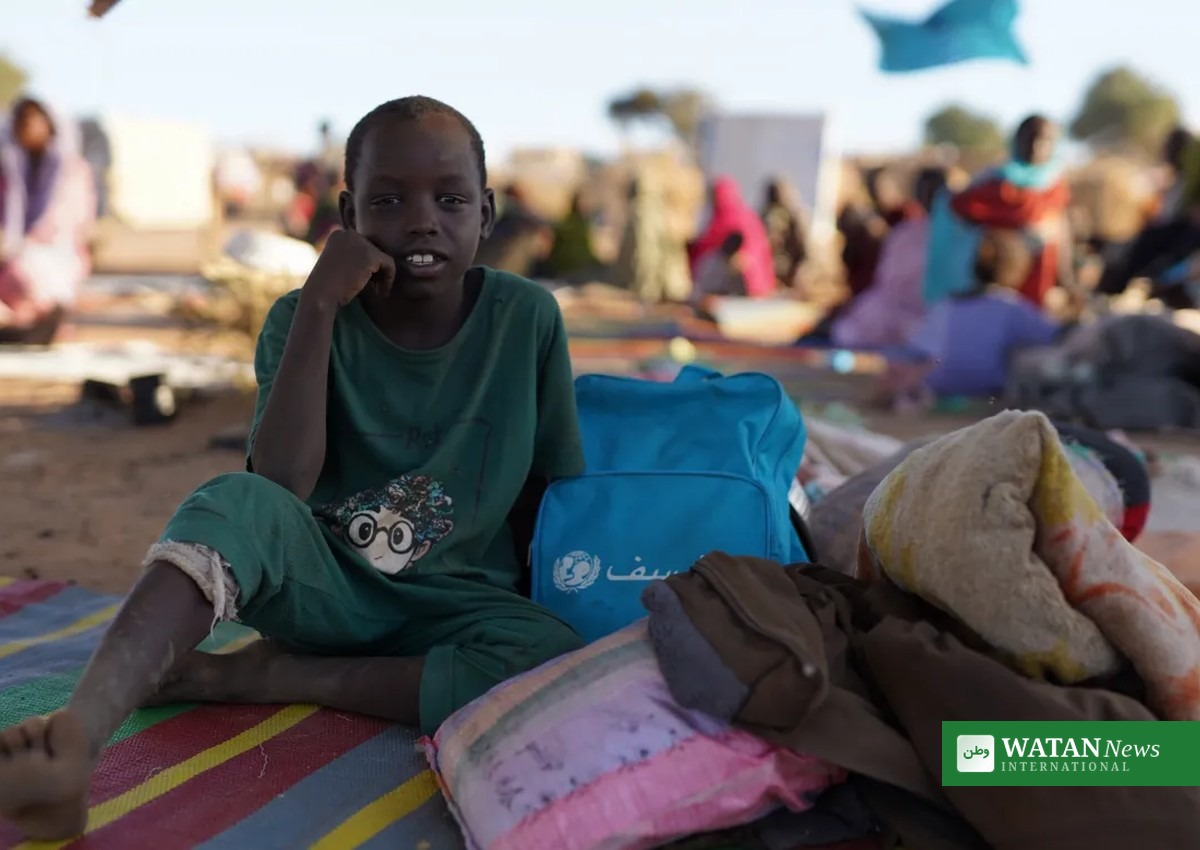
A young boy in a displacement camp in Sudan. UNICEF says drones are bringing the war to places that were once safe, while drought is pushing food further out of reach.
The Human Cost: Children Caught in the Middle
The casualty figures show how far the danger has spread. According to UNICEF, two in three child casualties in Sudan this year were caused by armed drones. “They are bringing the war to places that were once safe,” Elder said. “People here talk about three things: safety, education and water. Armed drones are taking all three.”
Elder described meeting children in camps during his visit last week. Burie, a teenager, lost both his hands in an explosion and now lives in a tent. He told Elder: “I must accept this as it is.” He spends his mornings learning online and his afternoons picking grass for the animals, with stumps for hands, helped by his friends.
Education has also been hit directly. A drone strike on a UNICEF warehouse in Al Obeid, North Kordofan, on 20 September destroyed more than 292,000 school textbooks and 40,000 Arabic-language and mathematics revision books, along with other learning materials awaiting distribution.
A War in Its Fourth Year
Sudan has been engulfed in fighting since April 2023 between the Sudanese Armed Forces and the paramilitary Rapid Support Forces, former allies turned military rivals. The conflict has displaced millions of people and left the country’s essential services under mounting strain.
The attacks on power infrastructure have escalated sharply. Repeated strikes have hit key sites across Sudan’s power grid, spreading geographically and coming in quick succession — a serious escalation in attacks on civilian infrastructure, according to UNICEF. In late October, strikes hit electricity facilities in several states, forcing stations out of service and triggering widespread power outages. On 31 October, the United Nations Secretary-General condemned the escalating drone attacks in Sudan, noting that hundreds of civilians, including women and children, had been killed across the country and the Abyei area.
Timeline: October 2026
| Date | Development |
|---|---|
| 20 September | Drone strike on a UNICEF warehouse in Al Obeid destroys more than 292,000 school textbooks and 40,000 revision books |
| 19 October | Drone strikes in Abyei kill at least 30 people, in the first attacks of their kind in the disputed area, the UN peacekeeping chief says |
| 26-29 October | A succession of drone attacks targets electricity facilities across several Sudanese states, forcing stations out of service |
| Last week of October | Not a single day passes without an armed drone striking a power station in Sudan; up to 15 hit in the month |
| 31 October | The UN Secretary-General condemns the escalating drone attacks, noting hundreds of civilians killed |
| 10 November | UNICEF warns in Geneva that drones and drought are “closing in” on Sudan’s children |
What UNICEF Is Asking For
UNICEF is calling for three things. First, an end to violence against children and attacks on power stations, water systems and the civilian infrastructure they depend on. Second, safe access across conflict lines, and for those with influence to protect children and civilians and stop the flow of weapons that are killing and injuring children. Third, urgent, sustained and flexible funding to keep essential services running: safe water, treatment for malnourished children, healthcare, education and protection for children.
Despite the funding gap, UNICEF says the response on the ground is reaching people. Working with communities and partners, UNICEF and its partners have treated hundreds of thousands of children for the deadliest form of malnutrition, helped provide healthcare to more than 2.5 million people, vaccinated millions of children against deadly diseases, and repaired and solarised water systems, helping to keep safe water flowing for close to 8 million people. Millions of children have been helped back to learning, and 1.5 million children and families have been reached with protection, mental health and psychosocial support.
But, Elder warned, everything is stretched to breaking point. “For three and a half years, the suffering of Sudan’s children has been met with silence,” he said. “When the power goes, the water pumps stop. When the rains fail, the food runs out. Sudan’s children are now facing both at once. If the world is waiting for something worse, it will be waiting at their graves.”
Conclusion
Sudan’s children are now caught between two forces at once: armed drones that strike the power stations their water, healthcare and schooling depend on, and a drought that has already closed the planting window for the next harvest. With an estimated 825,000 children under five facing severe acute malnutrition this year and UNICEF’s response only one-third funded, the agency’s warning is stark — the crisis is already here, and the world is being asked to act before it grows worse.