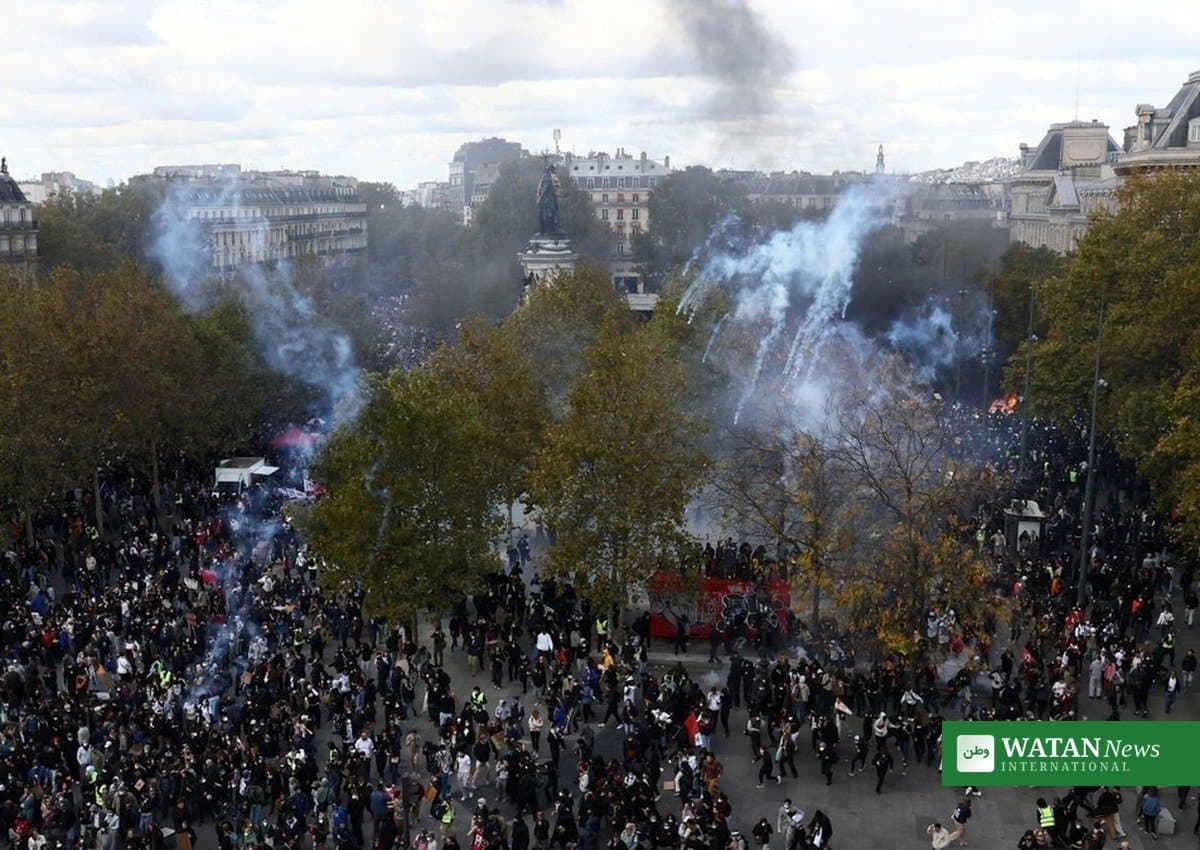
France faced a nationwide day of strikes and demonstrations on Thursday, as hundreds of thousands of workers, students and pensioners took to the streets to demand higher wages, lower living costs and better public services.
Trade unions called the mobilisation, backed by student groups and public-sector workers, with rallies planned in around 260 towns and cities. The main march in Paris was due to set off from Place de la République in the afternoon, while demonstrations began in the morning in Marseille, Lyon and Nantes.
Authorities deployed around 70,000 police officers and gendarmes nationwide, and the domestic intelligence service expected between 500,000 and 700,000 people to demonstrate outside Paris. The deployment follows riots and looting on 17 October, when shops and public buildings were damaged.
FAKTA: France protests at a glance
- When: Thursday, 5 November 2026 — a nationwide day of strikes and demonstrations
- Where: Around 260 towns and cities, including Paris, Marseille, Lyon and Nantes
- Who: Trade unions including the CGT, backed by student groups and public-sector workers
- Demands: Higher wages, action on living costs, and stronger public services and education
- Security: Around 70,000 police and gendarmes deployed; 500,000 to 700,000 demonstrators expected outside Paris
- Context: Follows unrest on 17 October; election due in about five months
Disruption across the country
Schools and public transport faced disruption as the strike took hold. The Education Ministry estimated that 17.5 per cent of public primary school teachers would take part, and unions warned of delays to rail services. The Eiffel Tower was closed for the day because of the strike.
There were early clashes in Lyon, where riot police used tear gas and charged a group of protesters who had thrown projectiles. Organisers said more than 25,000 people joined the march in the city, and police reported a small number of arrests. In Paris, students blocked a school entrance with wheelie bins.
Most demonstrations remained peaceful, but the authorities were watching for a repeat of last month’s violence, the worst civil unrest France has seen in years.
A test five months before the election
The protests come at a sensitive moment for the French government. The presidential election is due in about five months, and President Emmanuel Macron, who is serving his second term, cannot stand again. Commentators say the vote could produce a second-round contest between far-right candidate Marine Le Pen and hard-left rival Jean-Luc Mélenchon.
CGT leader Sophie Binet urged a large turnout, saying protests were planned in 260 towns and cities. Mr Macron convened a defence and security meeting on Wednesday to prepare for the day, underlining how a movement that began with student anger over school conditions has grown into a broader challenge to his government.
Unions have said further action is possible if their demands are not met. The government will now be judged on whether Thursday passed off largely peacefully — and whether the turnout forces a response on pay and public services. For more international news, visit Watan News.