Ukraine peace talks have reached a difficult new phase. Diplomacy moved faster in November than at any point this year, with American envoys shuttling between Kyiv, Moscow, Berlin and Abu Dhabi. Yet the central question remains unanswered: who would actually defend Ukraine if Russia attacked again after a deal? New reporting on 25 November exposed the gap: the United States has privately ruled out troops or bases in post-war Ukraine, even as Washington promotes guarantees modelled on NATO’s collective defence clause.
President Volodymyr Zelenskyy has welcomed the push for talks but says Kyiv still has no clear answer on how the guarantees would work. He is waiting for Washington to set a date for the next round, which he says should bring Ukraine, Europe, the United States and Russia to the same table. Moscow has not agreed to European participation.
FAKTA
- The guarantee gap: US negotiators have privately ruled out American troops or bases in post-war Ukraine, (Kyiv Independent, 25 November).
- The proposal: Washington is promoting an “Article 5-like” guarantee, modelled on NATO’s collective defence clause, without offering Ukraine NATO membership.
- The format dispute: President Zelenskyy says Ukraine is ready for four-way talks “literally tomorrow”. Moscow has not agreed to Europe taking part.
- Europe’s move: Ursula von der Leyen said on 25 November that the EU will join the next round of talks; a €45 billion loan for 2027 has been proposed.
- The battlefield: Ukrainian strikes disrupted nine of Russia’s 35 major refineries in one week in November (Reuters); Russian strikes continue to hit Ukraine’s power grid.
- The timeline: Last round: Abu Dhabi, 10-11 November. Partners hope for a four-way meeting before Christmas; no date is set.
The guarantee gap at the heart of the Ukraine peace talks
The most important development in the Ukraine peace talks this week came not from a summit stage but from a news report. The Kyiv Independent reported on 25 November that US negotiators have privately ruled out sending troops or setting up military bases in post-war Ukraine as part of security guarantees. People familiar with the talks said President Zelenskyy feared guarantees without foreign troops would not protect Ukraine against another Russian attack.
Asked by the Kyiv Independent, the Ukrainian president said Kyiv still had no clear answer about how the arrangement would work. “It’s not clear yet, because we still don’t have a clear answer, a full answer, about what this collective group would be, how it would defend us, and whether this group would be ready to repel the aggressor,” he said. “This has to be on paper. So far, I haven’t seen any such steps on paper.”
The disagreement comes as the United States pushes for guarantees modelled on NATO’s Article 5, under which an attack on one member is treated as an attack on all. US envoy Jared Kushner said after the Berlin meeting on 19 November that President Donald Trump was ready to consider such an arrangement, and that Moscow might be receptive. “Giving an Article 5-like security guarantee is a really, really big deal,” Mr Kushner said, adding Mr Trump was open to the idea if it served US interests. But an “Article 5-like” guarantee is not NATO membership: it does not establish who would respond, what the response would be, or whether force would be required. US officials have not specified what Washington would commit to; one official mentioned “support or other measures”.
President Zelenskyy wants the guarantees spelled out in writing now, while Washington wants them in the final peace deal. “We’re fighting to defend our country not just for two years,” he said. “We need security guarantees for more than two years. Preferably forever, or at least for decades.” The difficulty is structural: guarantees strong enough for Kyiv may be the ones Moscow refuses, while those on offer may fall short. Moscow has repeatedly rejected NATO-like guarantees, foreign troops and bases in Ukraine; in Abu Dhabi, Russian officials called foreign troops “absolutely unacceptable” and a “legitimate target”. One US official said President Vladimir Putin appeared more willing to “consider” an Article 5-like idea in private, but Moscow’s public position has not changed.
Europe’s multinational force and the NATO question
The Coalition of the Willing has also been considering deploying troops to Ukraine after a ceasefire. Ukraine’s NATO membership is still on the table: President Zelenskyy said on 21 November that US negotiators had asked whether Ukraine would withdraw from Donbas in exchange for joining.
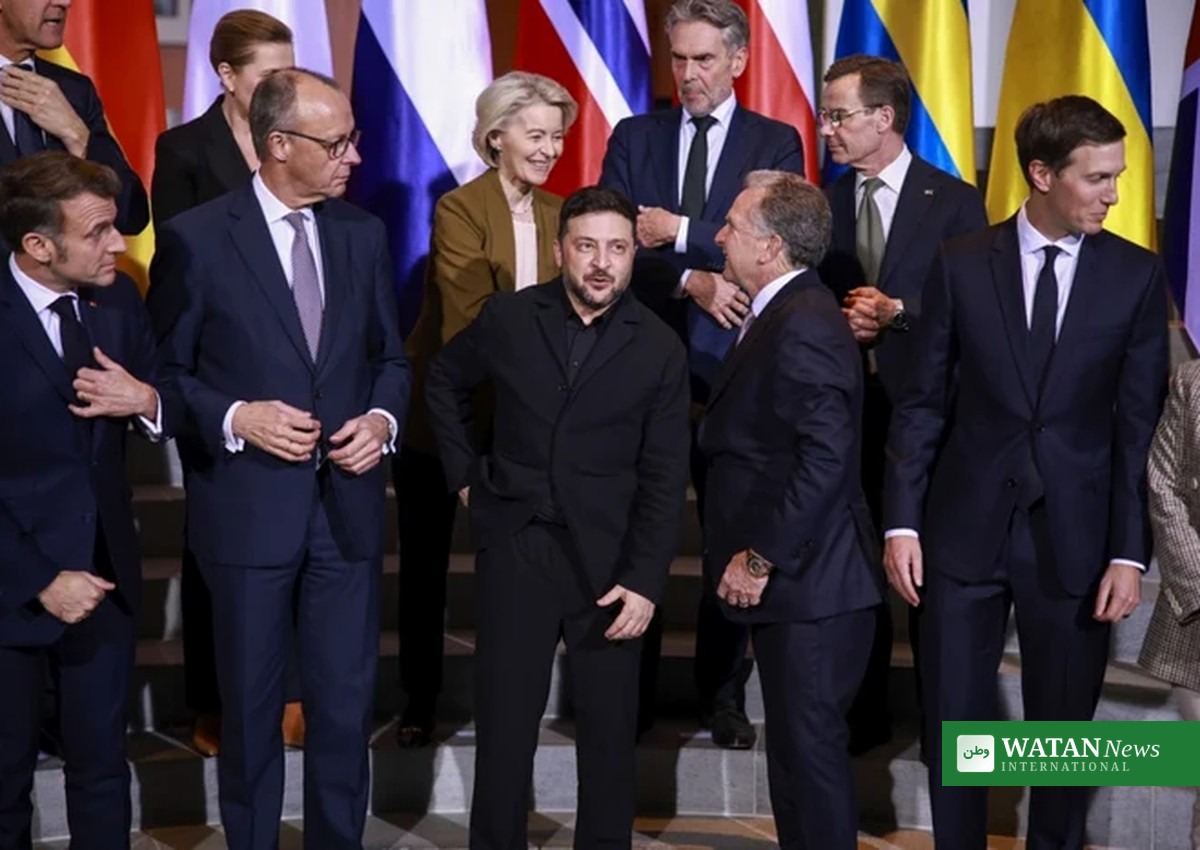
President Volodymyr Zelenskyy with European leaders and US envoy Jared Kushner in Berlin.
A four-way table still without a date
The format of the next round is as contested as its substance. On 23 November, President Zelenskyy told NATO-country lawmakers by video from Berlin that new talks with Russia and European leaders should happen as soon as possible. “We must do everything to make sure that the four-party meeting — Ukraine, Europe, America and Russia — happens as soon as possible. We are ready to do this. Literally tomorrow,” he said. “We have heard from our partners that they want to try to make it happen before Christmas. We hope it happens sooner.” On 25 November he said Kyiv was waiting for the United States to set the date.
Europe has not been represented in the US-mediated talks so far because Russia has opposed its participation. After the Abu Dhabi round on 10-11 November, Mr Kushner said both countries had agreed the next round would include European representatives. Moscow has disputed that ever since. Russian presidential aide Yury Ushakov said on 25 November that no agreements had been reached on a European visit to Moscow or on European participation, and on Thursday he added that the invitation for European envoys to visit Moscow remained in effect, according to Interfax. President Putin said after a trilateral meeting with President Trump and Chinese President Xi Jinping in Shenzhen that Russia had agreed to integrate Ukraine’s security into pan-European security, but wanted European envoys to come to Moscow first to clarify their positions.
The Abu Dhabi round, the first time American, Ukrainian and Russian officials had met together in nine months, produced a prisoner exchange agreement but no breakthrough. European delegations attended but did not formally take part, and Russia’s delegation head Vladimir Medinsky described them as “tourists”.
Berlin: Europe insists on a seat
The Coalition of the Willing summit in Berlin on 19 November was Europe’s answer to being sidelined. Hosted by German Chancellor Friedrich Merz and attended by President Zelenskyy, Mr Witkoff and Mr Kushner, it brought together leaders from around 40 countries, hours after the Trump-Xi-Putin summit in Shenzhen. Mr Merz called the Shenzhen meeting a “photo op” and warned that any deal without Europe would fail. British Prime Minister Andy Burnham said Europe was “ready to enter negotiations” with “a clear and consistent and united negotiating position”. Germany, France, Britain and Ukraine said Kyiv must receive robust, legally binding security guarantees once a ceasefire takes effect, potentially including sustained assistance, a US-led monitoring mechanism and a European-led multinational force backed by Washington. The leaders also called for an energy ceasefire during the winter and protection for Black Sea food exports, said the contact line should be the starting point for territorial talks, and heard Mr Merz offer a conditional, step-by-step lifting of sanctions if Mr Putin ended the war.
Europe’s answer: money, sanctions and a seat at the table
While the format remains unresolved, Europe has moved to strengthen Ukraine’s hand. Speaking in Strasbourg on 25 November, European Commission President Ursula von der Leyen said EU representatives will join the next round of talks with Russia, and announced a 22nd sanctions package and a proposed €45 billion loan for Ukraine.
Proposed on 18 November, the loan would cover about two-thirds of Ukraine’s estimated €70 billion financing gap for 2027: up to €25 billion for military assistance, including drones, missiles and air defence interceptors, and up to €20 billion in budget support. “We are sending a clear message to Russia: We want peace,” Ms von der Leyen said. The loan is limited-recourse, meaning Ukraine repays the principal only once Russia pays reparations, with the option to use immobilised Russian cash balances. Approval is still needed from EU governments and the European Parliament, and the related budget amendment needs unanimity. Some governments, including Slovakia, the Czech Republic, Hungary and Bulgaria, have said they will not take part. EU leaders are due to discuss the proposal at a special summit in Brussels on 26-27 November.
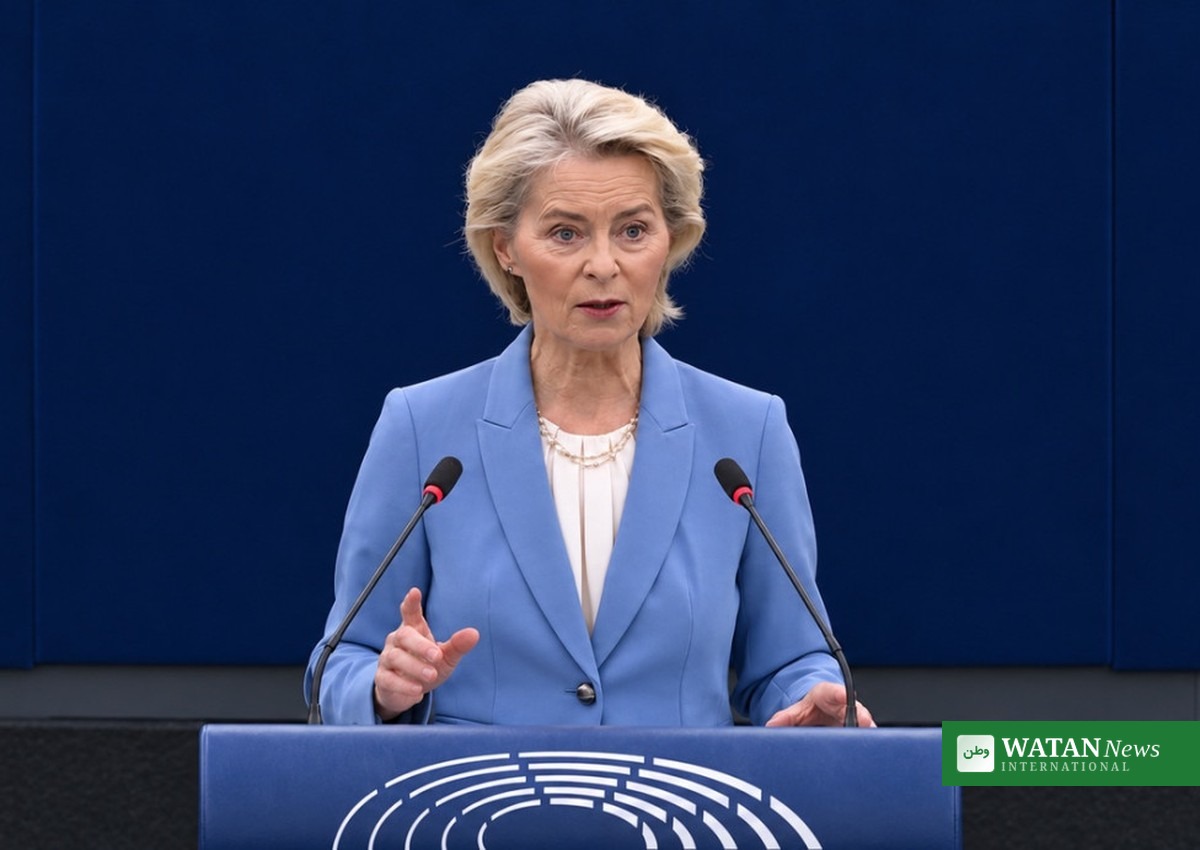
European Commission President Ursula von der Leyen addresses the European Parliament.
Pressure from the battlefield: the refinery campaign
The diplomacy is unfolding against a sharp escalation on the battlefield, where Ukraine has turned long-range drone strikes on the Russian oil industry into leverage. According to Reuters, Ukrainian attacks disrupted nine of Russia’s 35 largest oil refineries in a single week in November, and industry sources estimated crude processing may have fallen by as much as 200,000 tonnes per day, or about 30 percent. The plants hit can process about 2.2 million of Russia’s roughly 6.8 million barrels a day. The International Energy Agency said on 13 November that Russian oil processing would be “severely curtailed” through the year, hitting diesel exports. On 9 November drones set fire to the Kirishi refinery, Russia’s second-largest. On 11 November, Ukraine struck the Baltic export port of Ust-Luga, damaging five storage tanks and a loading berth. On 12-13 November, Ukraine hit Lukoil’s Volgograd refinery, the largest in southern Russia, damaging processing units, storage tanks and a loading rack. It was the ninth refinery hit since 1 November (Bloomberg tally).
On 18 November, Ukraine struck the Ilsky and Afipsky refineries in the Krasnodar region, which together can process around 95 million barrels of oil a year and supply Russian forces in southern and eastern Ukraine. Ukrainian forces also struck the Kerch Bridge linking Russia to occupied Crimea on three nights between 16 and 19 November, and further refinery strikes in the Samara region were reported on 25 November. President Zelenskyy said on 15 November that Ukraine had neutralised more than 55 percent of Russia’s refining capacity, citing a report by Major General Mykhailo Drapatyi. That is Kyiv’s own claim and has not been independently confirmed; independent estimates are lower. What is documented is the domestic impact: Rosneft began limiting fuel sales at its filling stations in every Russian region by 9 November, with drivers in some regions held to 30 litres of petrol per visit. Mr Zelenskyy calls the campaign Ukraine’s “long-range sanctions”, an answer to Russian attacks on Ukraine’s power grid. Russia has kept striking through the talks, hitting Ukraine’s energy infrastructure and, on 17 November, two major bridges in Kyiv.
What each side wants from the guarantees
| Party | Position on security guarantees | Red line |
|---|---|---|
| Ukraine | Written, binding commitments spelling out who responds, how, and with which troops in advance; NATO membership preferred. | No vague promises; guarantees must last for decades, not two years. |
| United States | “Article 5-like” arrangement without NATO membership; no American troops or bases in Ukraine. | Any deal must serve US interests and form part of a broader security package. |
| European allies | A European-led multinational force after a ceasefire, backed by the US; sustained military and financial assistance. | No peace deal without Europe at the table; no deployment without a genuine ceasefire. |
| Russia | Opposes NATO-like guarantees, foreign troops and bases in Ukraine; privately said to be willing to “consider” an Article 5-like idea. | No Ukrainian NATO membership; no Western military presence in Ukraine. |
What happens next
Partners want the four-way meeting before Christmas, but Moscow has not agreed to European participation and no date has been set. Mr Ushakov says the invitation for European envoys to visit Moscow remains in effect, while European capitals insist any contact must lead to full European participation. EU leaders meeting in Brussels on 26-27 November will also decide the fate of the proposed €45 billion loan. For now the talks have moved on process — a trilateral round, a prisoner exchange, a Berlin summit, a proposed four-way format — but not on the substance that would make a deal hold.
Conclusion
The Ukraine peace talks have advanced further in November than many expected, yet they now face their hardest test. The United States has put an Article 5-like guarantee at the centre of its proposal while ruling out the troops and bases that would give it weight. Ukraine insists on written commitments that name who will act and how. Europe demands a seat at the table it has so far been denied, backing that demand with a €45 billion loan and new sanctions. Russia has not agreed to European participation and continues to reject any Western military presence in Ukraine. Whether the four-way meeting happens before Christmas will decide whether this diplomacy ends the war.
Related Articles
- Zelensky Urges Four-Way Peace Talks With Russia, Europe and US ‘As Soon As Possible’
- Europe ready to enter Ukraine peace talks, leaders say after Berlin meeting
- Drone Strikes on Samara Refineries Kill One and Leave Homes Without Power
- EU Proposes 22nd Sanctions Package Against Russia
- Ukraine Peace Talks Hit a Guarantee Gap as US Rules Out Troops