Global markets tumbled on Wednesday, 25 November, as the United States proposed a new round of tariffs on 14 major trading partners, deepening a sell-off in technology shares and sending investors towards safe havens. It came only a day after a brief Wall Street rally had raised hopes that the worst of the autumn slide was over.
From Seoul to Taipei and on to New York, chip-heavy markets bore the heaviest losses. South Korea’s Kospi fell 5.9 per cent, Taiwan’s Taiex dropped 6.0 per cent after falling as much as 8.6 per cent at its worst point, and Japan’s Nikkei lost 2.9 per cent. On Wall Street, the technology-heavy Nasdaq fell about 4 per cent during the session, while the S&P 500 and the Dow also slid sharply.
The selling had more than one cause. The tariff proposal landed on markets already unsettled by doubts over the artificial intelligence boom, and a hotter-than-expected United States inflation report strengthened expectations that the Federal Reserve will raise interest rates in December.
FAKTA
What happened: Global markets fell sharply on Wednesday, 25 November 2026, led by Asian chip markets and Wall Street technology shares.
The trigger: The United States proposed new tariffs on 14 economies after an eight-month investigation into excess industrial capacity.
Hardest hit: China faces an extra 20 per cent tariff, on top of earlier duties. The European Union, Japan, South Korea, Taiwan and Switzerland face 15 per cent.
Asia: Kospi down 5.9 per cent, Taiex down 6.0 per cent, Nikkei down 2.9 per cent.
Wall Street: The Nasdaq fell about 4 per cent in the session, almost 20 per cent below its early-October record high.
Inflation: United States core PCE inflation rose to 3.3 per cent in October, above forecasts.
What is next: Public comments due by 5 January 2027; hearings on 25 January 2027.
The global markets tumble in numbers
MSCI’s broadest index of Asia-Pacific shares outside Japan fell more than 3 per cent, while its global gauge of stocks dropped 0.5 per cent. European shares, which had risen 0.5 per cent in morning trading, gave up their advance.
| Market | Move on Wednesday, 25 November | Note |
|---|---|---|
| MSCI Asia-Pacific ex-Japan | Down more than 3% | Chip-heavy markets led the fall |
| South Korea, Kospi | Down 5.9% | Samsung fell 9.1%, SK Hynix 9.8% |
| Taiwan, Taiex | Down 6.0% | As much as 8.6% lower at its worst point |
| Japan, Nikkei 225 | Down 2.9% | Chip stocks Kioxia and Advantest fell more than 10% |
| United States, Nasdaq | Down about 4% in the session | Almost 20% below its early-October record |
| United States, S&P 500 | Down 2.5% by late morning | Losses eased later |
| United States, Dow Jones | Down 1.2% by late morning | Fell more than 600 points |
On Tuesday, 24 November, the Dow had risen 0.85 per cent to close at 50,018.70, its first close above 50,000, while the S&P 500 fell 0.5 per cent to 7,201.09 and the Nasdaq slipped 1.5 per cent to 23,733.54.
What triggered the sell-off: tariffs on 14 economies
The immediate trigger was the announcement by United States Trade Representative Jamieson Greer that the United States had completed an eight-month investigation into what Washington calls structural excess capacity in manufacturing. The investigation, opened on 11 March 2026 under Section 301 of the Trade Act of 1974, covered 16 trading partners. Determinations were made against 14 of them, while Mexico and Norway remain under review.
The 14 economies named were China, the European Union, Singapore, Switzerland, Indonesia, Malaysia, Cambodia, Thailand, South Korea, Vietnam, Taiwan, Bangladesh, Japan and India. Washington argues that they promote production beyond what market demand justifies, through industrial policies, subsidies and other support, and that the resulting flood of cheap exports harms American manufacturers.
The proposed rates differ by economy and, in most cases, stay within limits agreed in earlier trade deals. China faces the highest burden: a proposed tariff of up to 20 per cent on top of roughly 25 per cent in duties imposed during President Donald Trump’s first term, taking the total rate on some Chinese goods to 45 per cent.
| Economy | Proposed tariff | Note |
|---|---|---|
| China | Up to 20% | Some goods reach 45% in total |
| Vietnam | Up to 35% | 20% if a trade deal is finalised |
| India | Up to 25% | 17% if a trade deal is finalised |
| Bangladesh, Cambodia, Indonesia, Malaysia, Thailand | 18% | Net of existing Section 301 tariffs |
| European Union, Japan, South Korea, Taiwan, Switzerland | 15% | Within the agreed 15% cap |
| Singapore | Up to 20% | 10% if a trade deal is reached |
Investors had been warned that the announcement was coming. The Wall Street Journal reported on Tuesday that the Trade Representative could publish the findings within days, and futures fell overnight. The proposal is not yet in force. It must go through a public notice and comment period, with written comments due by 5 January 2027 and hearings scheduled for 25 January 2027, so the duties could not take effect before January at the earliest.
The move also gives the administration a new legal footing for tariffs after the Supreme Court struck down its earlier global duties in February. A senior United States official said the rates would not exceed limits in trade deals already negotiated, and that the administration did not expect Beijing to retaliate. Watan News reported the tariff proposal in detail in US Proposes New Tariffs on China and EU in Trade Crackdown.
Asia led the falls
Asian markets were the first to react, and the selling was heaviest where the region’s economies are most tied to the global electronics supply chain. South Korea’s Kospi fell 5.9 per cent, with chip heavyweights SK Hynix down 9.8 per cent and Samsung Electronics down 9.1 per cent. Trading in Kospi constituents was briefly suspended after futures fell more than 5 per cent.
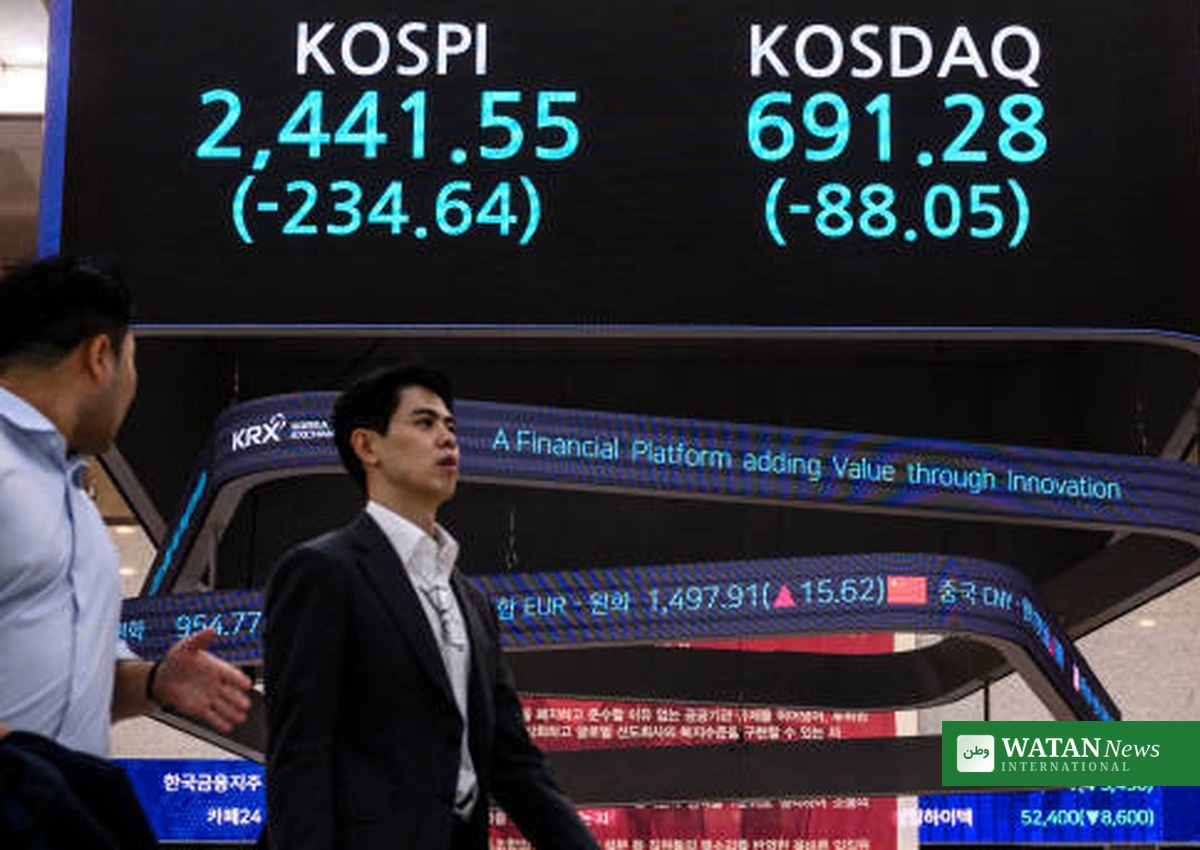
Taiwan’s Taiex fell 6.0 per cent after dropping as much as 8.6 per cent at its worst point, with chipmaker TSMC down sharply. Japan’s Nikkei fell 2.9 per cent, with chip stocks Kioxia and Advantest each sliding more than 10 per cent.
Wall Street’s bruising Wednesday
Wall Street opened sharply lower on Wednesday. At the open, the Dow fell 548.8 points, or 1.1 per cent, to 49,469.86, the S&P 500 fell 140.8 points, or 2.0 per cent, to 7,060.33, and the Nasdaq dropped 785.1 points, or 3.3 per cent, to 22,948.48. By late morning the losses had deepened: the Dow was down 602.93 points, or 1.2 per cent, at 49,415.77, the S&P 500 had lost 181.04 points, or 2.5 per cent, to 7,020.05, and the Nasdaq had dropped 899.93 points, or 3.8 per cent, to 22,833.60.
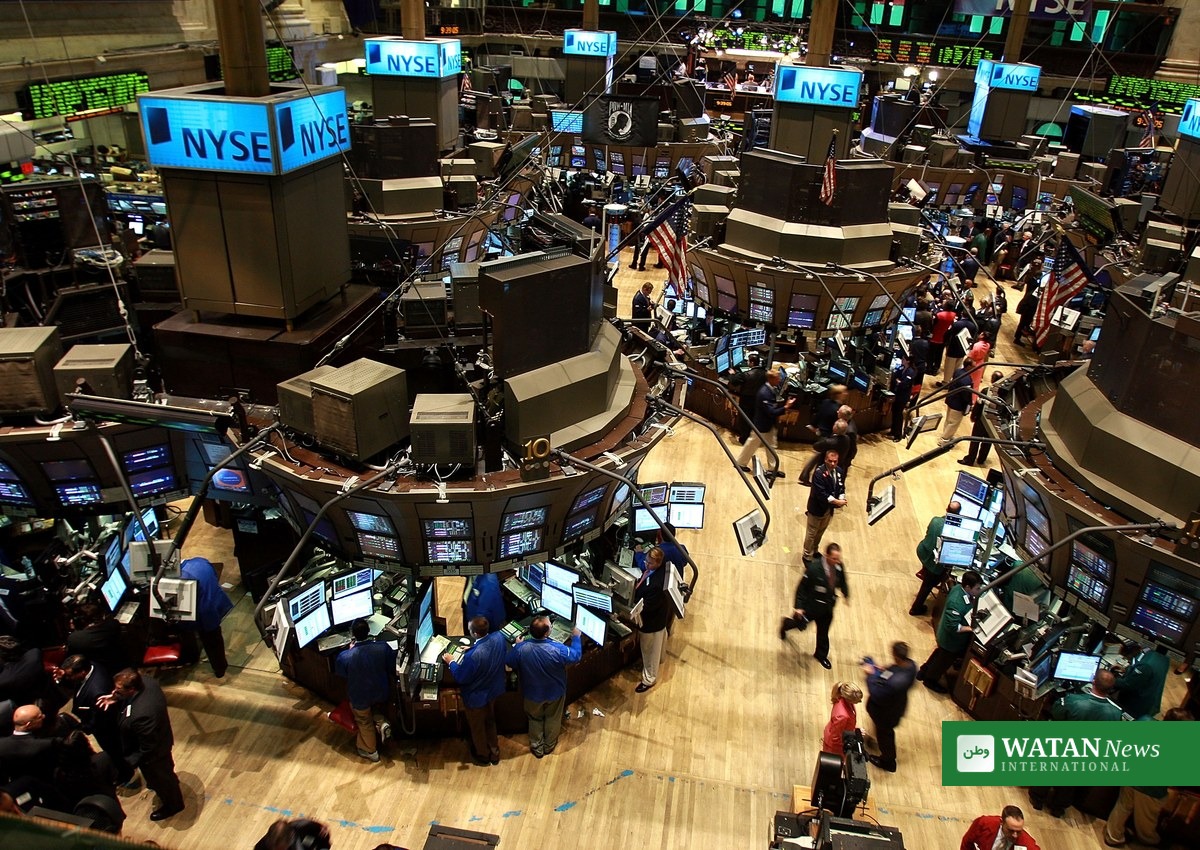
The Nasdaq is now down almost 20 per cent from its record high in early October, close to bear-market territory. The selling wiped out the gains from Monday’s rally, when Nvidia’s shares had jumped after Jensen Huang was reinstated as chief executive.
“We still have not dealt with the fresh shock of Nvidia and tech and now we have tariffs,” Aneeka Gupta, an equity strategist at WisdomTree, told Reuters. “Up until today it felt like we might get a Santa Claus rally … but the AI trade is faltering and that remains the central pillar for stocks.”
United States markets were closed on Thursday for Thanksgiving, with a shortened session on Friday.
Hot inflation adds to the pressure
The United States Bureau of Economic Analysis reported that the Personal Consumption Expenditures price index, the Federal Reserve’s preferred measure of inflation, rose 3.8 per cent from a year earlier in October. Core PCE inflation, which excludes food and energy, rose to 3.3 per cent a year, up from 3.1 per cent in September and above the 3.2 per cent forecast. It was the highest core reading in nearly three years.
The report arrived about two weeks before the Federal Reserve’s meeting on 8 and 9 December, and traders put the chance of a quarter-point rise at more than 94 per cent, taking the benchmark rate to 4 per cent to 4.25 per cent. Markets also put the chance of a further rise in January at around 56 per cent.
Higher rates raise borrowing costs for companies investing in artificial intelligence and make bonds more attractive than shares. The volatility index known as Wall Street’s fear gauge has risen by more than 60 per cent in November, one of its biggest monthly jumps since the Covid-19 shock in February 2020.
The AI rout behind the fall
The tariff proposal landed on a market already in a deep retreat in artificial intelligence shares. The Philadelphia Semiconductor Index has fallen 50 per cent from its record high in June, including a 21 per cent drop in November alone. The Roundhill Magnificent Seven exchange-traded fund, which holds the biggest technology names, is down 8 per cent.
Nvidia fell 5.9 per cent on Tuesday to $155.38, giving back much of Monday’s rally, and fell about 8 per cent in early trading on Wednesday to near $143. Micron dropped about 8.4 per cent and AMD about 7.5 per cent at Wednesday’s open.
Anthropic, whose shares recently began trading publicly, also fell below its $83 listing price on Tuesday. Kathleen Brooks, research director at XTB, told Reuters that some investors had called Anthropic the silent killer of the AI trade.
Safe havens shine as risk assets fall
As shares fell, money moved towards safer assets. Benchmark United States 10-year Treasury yields fell 6 basis points to 4.84 per cent, and 10-year German government bond yields fell 4 basis points to 3.22 per cent. The Swiss franc strengthened against most major currencies even though Switzerland is among the economies facing new tariffs.
Bitcoin also fell below $60,000, reaching as low as $57,300 early on Wednesday before recovering to just above $59,000. It has fallen about a quarter since the start of November. Gold traded below $3,500 an ounce, while Brent crude oil was 0.5 per cent lower at $91.87 a barrel.
What China and Europe said
China rejected the basis for the new tariffs on Wednesday. Foreign Ministry spokesperson Guo Jiakun said tariff wars and trade wars serve no one’s interests, and called the claim of industrial overcapacity a false proposition that should not be used as a pretext for political manipulation. The two countries are operating under a trade truce due to expire on 10 January 2027, and their leaders are expected to discuss trade again at the G20 summit in December.
The European Union also pushed back, saying its members strongly reject the premise that Europe is a source of structural overcapacity, arguing that Europe is among those most exposed to it. Olof Gill, deputy chief spokesman for the European Commission, said the bloc shared Washington’s concerns but regretted the lack of joint action with the United States.
A Reuters/Ipsos opinion poll taken after November’s midterm elections found that 62 per cent of respondents would support efforts to repeal the tariffs, which critics say have contributed to higher prices for American consumers.
What happens next
Three dates now matter. The first is the Federal Reserve’s decision on 9 December, when a quarter-point rate rise is almost fully priced in. The second is 10 January 2027, when the current United States-China trade truce expires. The third is the tariff timetable itself: written comments are due by 5 January 2027 and hearings begin on 25 January 2027, so no new duties can take effect before then.
That timetable gives trading partners time to negotiate. The United States official who briefed reporters said the new duties were expected to lead to more trade agreements being finalised, possibly at the G20 leaders’ summit in Miami in December. For countries without finalised deals, including India and Vietnam, lower rates are on offer if agreements are reached.
For investors, the question is whether the selling has run its course. Until the Federal Reserve’s decision and the next steps in the trade talks become clearer, the mood is likely to stay cautious.
Conclusion
Wednesday’s global markets tumble was not caused by a single event. It was the collision of three pressures: a new tariff proposal covering 14 economies, a deepening sell-off in artificial intelligence shares, and inflation data that points to higher United States interest rates. Together, they produced one of the sharpest days of selling in months.
The tariffs themselves are only proposals for now, and months of consultation lie ahead before any duties take effect. But markets rarely wait for the final decision, and on Wednesday that risk, added to doubts over AI spending and the prospect of dearer money, was enough to send shares tumbling around the world.
Related Articles
US Proposes New Tariffs on China and EU in Trade Crackdown
Global Markets Rebound After Brutal AI Sell-Off
US Stocks Fall for a Sixth Straight Session as Nikkei Tumbles 4.8%
Global AI Stock Selloff Hammers Hedge Funds as KOSPI Plunges to Six-Month Low
Read this article at: https://watannews.dk/en/news/global-markets-tumble-tariff-shock/