Senegal are champions of Africa once again. On Tuesday, 24 November 2026, the Court of Arbitration for Sport in Lausanne ruled that Senegal keep the Africa Cup of Nations title they won on the pitch in January, setting aside the decision that had stripped them of the trophy and handed it to Morocco. The Senegal AFCON winners CAS ruling ends more than ten months of legal uncertainty over one of the most controversial finals in the tournament’s history, confirming the result of the final in Rabat as a 1-0 victory for Senegal after extra time.
The ruling was unanimous. The court upheld the appeal by the Senegalese Football Federation against the Confederation of African Football and the Royal Moroccan Football Federation, set aside the CAF Appeal Board decision that had forfeited Senegal’s win, and reinstated the earlier CAF Disciplinary Board decision. The result obtained at the end of the AFCON 2025 final is therefore confirmed: Senegal 1, Morocco 0.
FAKTA
- Ruling: Court of Arbitration for Sport (CAS), Lausanne, Tuesday, 24 November 2026
- Decision: unanimous; Senegal’s appeal upheld, CAF Appeal Board decision set aside, CAF Disciplinary Board decision reinstated
- Confirmed result: Senegal 1-0 Morocco after extra time, AFCON 2025 final, 18 January 2026, Prince Moulay Abdellah Stadium, Rabat
- Decisive goal: Pape Gueye, in the 94th minute of extra time, assisted by Idrissa Gana Gueye
- CAS panel: chaired by French sports law expert Gérald Simon, with Luigi Fumagalli and Ulrich Haas
- Key finding: the referee’s decision to resume the match or stop it fell within his sole authority, and he committed no error of law
- Earlier ruling overturned: CAF Appeal Board, 17 March 2026, which had awarded Morocco a 3-0 forfeit win
- Morocco’s response: the Royal Moroccan Football Federation says it will pursue all available legal procedures to challenge the ruling
Senegal AFCON winners CAS ruling: what the court decided
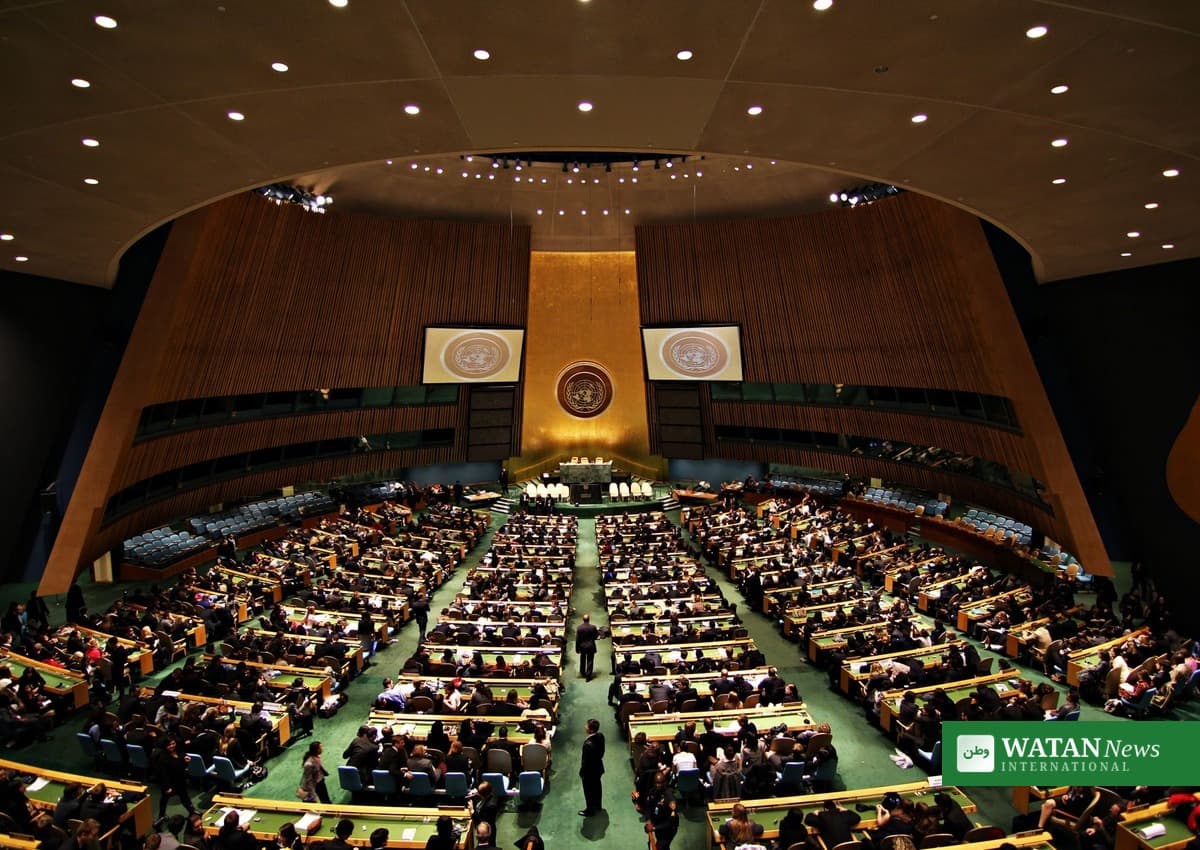
The Court of Arbitration for Sport announced its decision on Tuesday after hearing the case at a one-day hearing in Lausanne on 8 October. In its statement, the court said it had upheld the appeal by the Senegalese Football Federation against the Confederation of African Football and the Royal Moroccan Football Federation concerning the final of the Africa Cup of Nations Morocco 2025. The full grounds were issued to the parties on Tuesday, and the award will be published in due course unless confidentiality is requested.
The three-person panel was chaired by French sports law expert Gérald Simon, assisted by Italian international law professor Luigi Fumagalli and Ulrich Haas, a Hamburg-based attorney and professor of law at the University of Zurich. The ruling was unanimous, and the court’s Secretary General, Matthieu Reeb, said the panel had found that “the referee did not commit any error of law”.
At the heart of the ruling is a simple point about who decides whether a match continues. The panel found that the referee’s decision to resume the match or to stop it fell definitively within his sole authority, and that the effects of that decision were limited to the pitch. Because the referee, Jean-Jacques Ndala of DR Congo, chose to restart the final after Senegal’s players had walked off in protest — and because both teams then agreed to continue — the match was not abandoned. Articles 82 and 84 of the Cup of Nations regulations, which Morocco had relied on, apply only when a referee calls off a match permanently, so they did not apply here.
A final decided on the pitch, then undone in a hearing room
The final, played on 18 January 2026 at the Prince Moulay Abdellah Stadium in Rabat, was goalless after 90 minutes and heading for extra time when it descended into chaos. In the second minute of stoppage time, Senegal thought they had scored a late winner through Ismaila Sarr, only for referee Ndala to disallow the goal for a foul by Abdoulaye Seck on Morocco captain Achraf Hakimi.
Moments later, after a video assistant referee review, Ndala awarded Morocco a penalty for a tug by El Hadji Malick Diouf on Brahim Diaz from a corner. Senegal’s players protested furiously, both benches spilled onto the pitch, and coach Pape Thiaw called his players down the tunnel. Play was held up for around 15 to 17 minutes, with crowd trouble in the stands as well, before the Senegal players returned to the field.
When the penalty was finally taken, in the 24th minute of stoppage time, Diaz tried a chipped Panenka kick down the middle. Senegal goalkeeper Edouard Mendy stood his ground and collected the ball in simple fashion, and the match went to extra time. Four minutes into the extra period, Pape Gueye struck the decisive goal, assisted by Idrissa Gana Gueye, and Senegal held on for a 1-0 victory. Nayef Aguerd came closest to an equaliser for Morocco, powering a header against the crossbar from a corner, but the hosts’ wait for a first continental crown since 1976 went on. Senegal lifted the trophy in the rain in Rabat, their second Africa Cup of Nations title after their triumph in 2022.
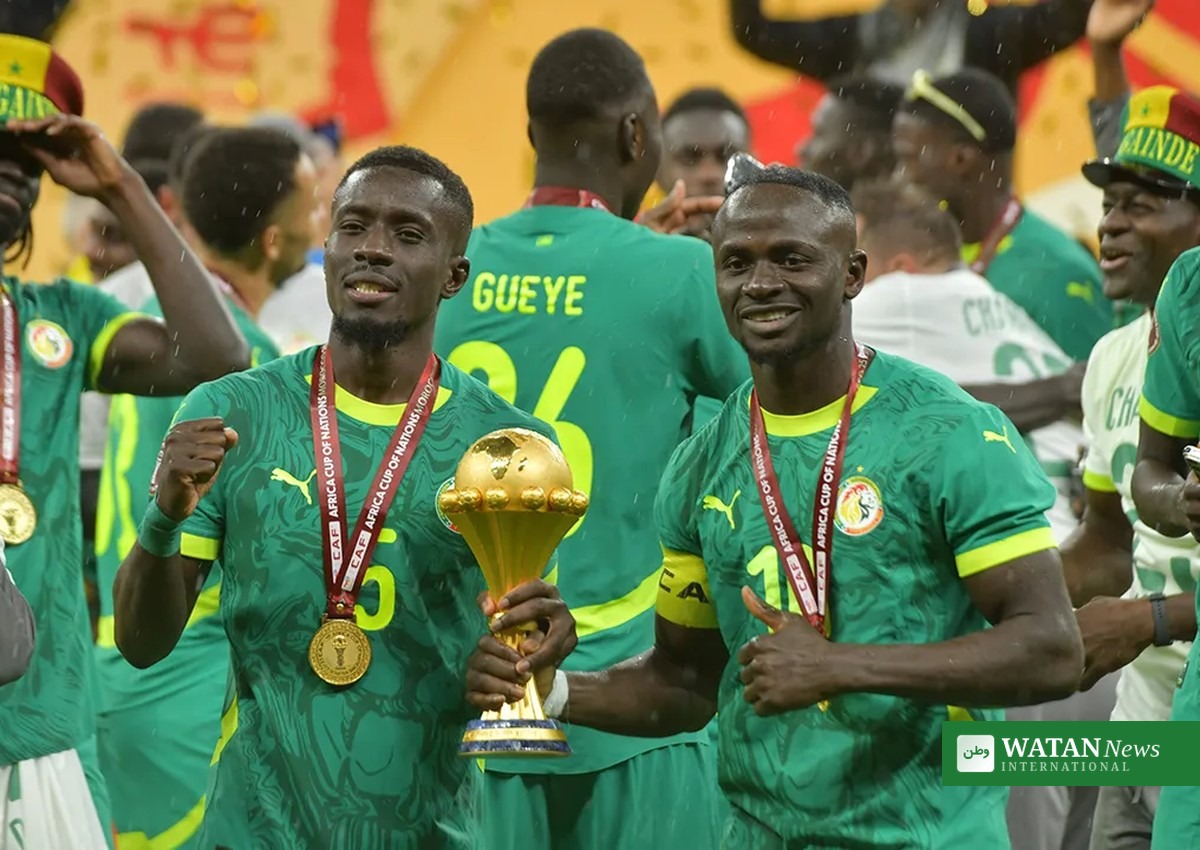
Senegal’s players celebrate with the Africa Cup of Nations trophy. The medals carry the words “Africa Cup of Nations Morocco 2025”.
How the title was taken away — and won back
The celebrations in January did not last. On 28 January, CAF issued fines to both federations, and the Senegalese federation, coach Pape Thiaw and players Iliman Ndiaye and Ismaila Sarr were sanctioned in separate disciplinary proceedings. Morocco then challenged the result, and on 17 March the CAF Appeal Board overturned it, ruling that Senegal’s walk-off had broken competition rules and forfeiting the match. The result was changed from a 1-0 win for Senegal to a 3-0 win for Morocco, and the trophy passed to the host nation.
Senegal appealed to the Court of Arbitration for Sport on 25 March. The court heard arguments from Senegal, Morocco and CAF at the hearing in Lausanne on 8 October, but no verdict was reached on the day. The court had promised a decision by the end of November, with a full written ruling setting out its reasons, and that decision arrived on Tuesday, 24 November.
| Date | What happened |
|---|---|
| 18 January 2026 | Senegal beat Morocco 1-0 after extra time in the AFCON final in Rabat |
| 28 January 2026 | CAF issues fines to both federations over the final |
| 17 March 2026 | CAF Appeal Board overturns the result and awards Morocco a 3-0 forfeit win |
| 25 March 2026 | Senegal files an appeal to the Court of Arbitration for Sport |
| 8 October 2026 | CAS hearing in Lausanne; no verdict reached on the day |
| 24 November 2026 | CAS rules unanimously for Senegal and reinstates the 1-0 result |
Celebration in Dakar, defiance in Rabat
In Senegal, the ruling was greeted as justice delayed but delivered. Abdoulaye Fall, president of the Senegalese Football Federation, said: “The Court of Arbitration for Sport has delivered justice for sport.” In Dakar, supporters celebrated the news that the title their team had won on the pitch was theirs again. Mariama Sidibé, a 35-year-old accountant in the capital, told reporters: “Senegal won on the pitch, and the court simply confirmed what we all already knew: We are the real champions of Africa.”
Morocco’s response was defiant. The Royal Moroccan Football Federation said it would seek to appeal the decision and pursue all available legal procedures to challenge it. In a statement, the federation objected that its request had not been taken into consideration, saying the request concerned the legal consequences of actions that had compromised the proceedings and called into question the integrity and credibility of the decision. The federation pointed to contact said to have taken place between German arbitrator Ulrich Haas and the president of the Senegalese Football Federation 48 hours before the ruling was issued. CAS Director General Matthieu Reeb acknowledged that a Moroccan protest had been received just minutes before the verdict was announced.
Whether a further challenge can succeed is far from certain. CAS verdicts can be challenged at Switzerland’s supreme court, but only on limited procedural grounds, and a question over an arbitrator’s integrity is one of the few grounds that could be argued. For now, the record books are clear: Senegal are the champions of Africa for 2025, and they will defend the title when the next Africa Cup of Nations takes place in June 2027, co-hosted by Kenya, Uganda and Tanzania.
Why the ruling matters beyond one trophy
The decision reaches beyond Senegal and Morocco because it settles an important question about the authority of the referee. By holding that the decision to restart a match after a protest lies solely with the referee, and that a match which resumes cannot later be treated as abandoned, the court has drawn a clear line between discipline and results. Senegal’s players were punished for walking off: the federation, the coach and two players were sanctioned in separate disciplinary proceedings. But the court ruled that punishment should not extend to rewriting a result that was decided on the pitch after play had resumed with both teams’ agreement.
The case also shows how long football’s legal battles can now run. More than ten months passed between the final whistle in Rabat and the court’s ruling in Lausanne, during which the trophy changed hands once, Morocco were listed as champions, and Senegal waited to learn whether their second continental title would stand. The unanimous ruling brings that uncertainty to an end, at least unless a further appeal succeeds.
For African football, the episode leaves lessons for organisers as well as for teams. A final that should be remembered for Pape Gueye’s extra-time winner and Edouard Mendy’s penalty save will also be remembered for a 17-minute stoppage, a disallowed goal, crowd trouble and a court case. The hope across the continent will be that the next final, in East Africa in 2027, is remembered for the football alone.
Conclusion
Senegal won the Africa Cup of Nations on the pitch in Rabat on 18 January 2026, lost it in a hearing room in March, and won it back in a courtroom in Lausanne on 24 November. The Court of Arbitration for Sport’s unanimous ruling restores the 1-0 result, confirms Pape Gueye’s extra-time goal as the winner, and settles the principle that a referee’s decision to restart a match is final. Morocco has vowed to challenge the ruling, so the legal story may not be entirely over, but for Senegal and their supporters the wait is done: the Teranga Lions are champions of Africa again, and this time the decision comes from sport’s highest court.
Related Articles
- Senegal Reinstated as AFCON 2025 Winners by Court of Arbitration for Sport Ruling
- Around 175 Migrants Unaccounted For After Boat Leaves Senegal for Europe
- Kenya and DR Congo Agree to Restore Diplomatic Ties After Three-Year Rift
- Hidden Graves Reveal Congo Ebola Death Toll Far Higher Than Official Count