Denmark’s Ministry of Immigration and Integration has confirmed that 120 rejected asylum seekers in the country meet the initial criteria for transfer to a planned Rwanda return hub in 2027, as five European countries move ahead with the first EU-linked return facility outside the bloc.
Russians, Iranians and Syrians form the three largest groups among those eligible, together accounting for 41 per cent of the cohort, according to figures the ministry provided to the Danish newspaper Politiken and the broadcaster DR.
FAKTA
- Eligible for transfer: 120 rejected asylum seekers in Denmark meet the initial criteria
- Largest groups: Russians, Iranians and Syrians, together 41 per cent of the eligible cohort
- Five countries: Denmark, Germany, the Netherlands, Austria and Greece
- Announced: 16 November 2026, at a working meeting in Vienna
- Pilot capacity: around 100 people at a time, with places reusable
- Transfers targeted: to begin in 2027, if an agreement is finalised
- Target group: adults without minor children, who do not cooperate with return and have no criminal convictions
What the Rwanda return hub plan involves
The five countries announced in Vienna on 16 November 2026 that they are negotiating with Rwanda to establish a return hub for people whose asylum claims have been fully rejected and who face enforceable return orders but cannot be sent back to their countries of origin.
The plan became possible after the EU adopted a new Return Regulation earlier this year. The regulation speeds up deportations, creates a European Return Order enforceable across member states, and explicitly permits member states to set up return hubs in third countries, provided fundamental-rights standards are met.
Low return rates have long frustrated governments: official estimates put actual departures at below 30 per cent of ordered removals. Proponents present the hubs mainly as a deterrent.
Who would be transferred from Denmark
In Denmark, the initial target group is limited to adults without minor children who do not cooperate with return and who have not been convicted of crimes. Of roughly 365 rejected-asylum cases among a broader pool of around 1,100 deportation cases, the majority of them following criminal convictions, 120 people currently meet those criteria.
The ministry has not released a full nationality breakdown beyond the 41 per cent figure for Russians, Iranians and Syrians combined. Reporting on the figures notes that Iran, Russia and Syria are among the countries with the higher single-country totals of definitive refusals.
| Figure | Number |
|---|---|
| Rejected asylum seekers meeting the criteria | 120 |
| Rejected-asylum cases in the broader pool | Around 365 |
| Total deportation cases | Around 1,100 |
| Share of Russians, Iranians and Syrians | 41 per cent |
| Pilot hub capacity | Around 100 places |
How the Rwanda return hub would work
Under the scheme still under negotiation, the facility is envisaged as a pilot with capacity for around 100 people at a time, with places reusable as people leave. Each of the five countries would be able to transfer around 20 people at a time.
It would not operate as a closed detention centre. Minors are excluded. Those transferred would receive residence permits and be offered the option of integrating into Rwandan society, with support for housing, language and vocational training, or of returning home.
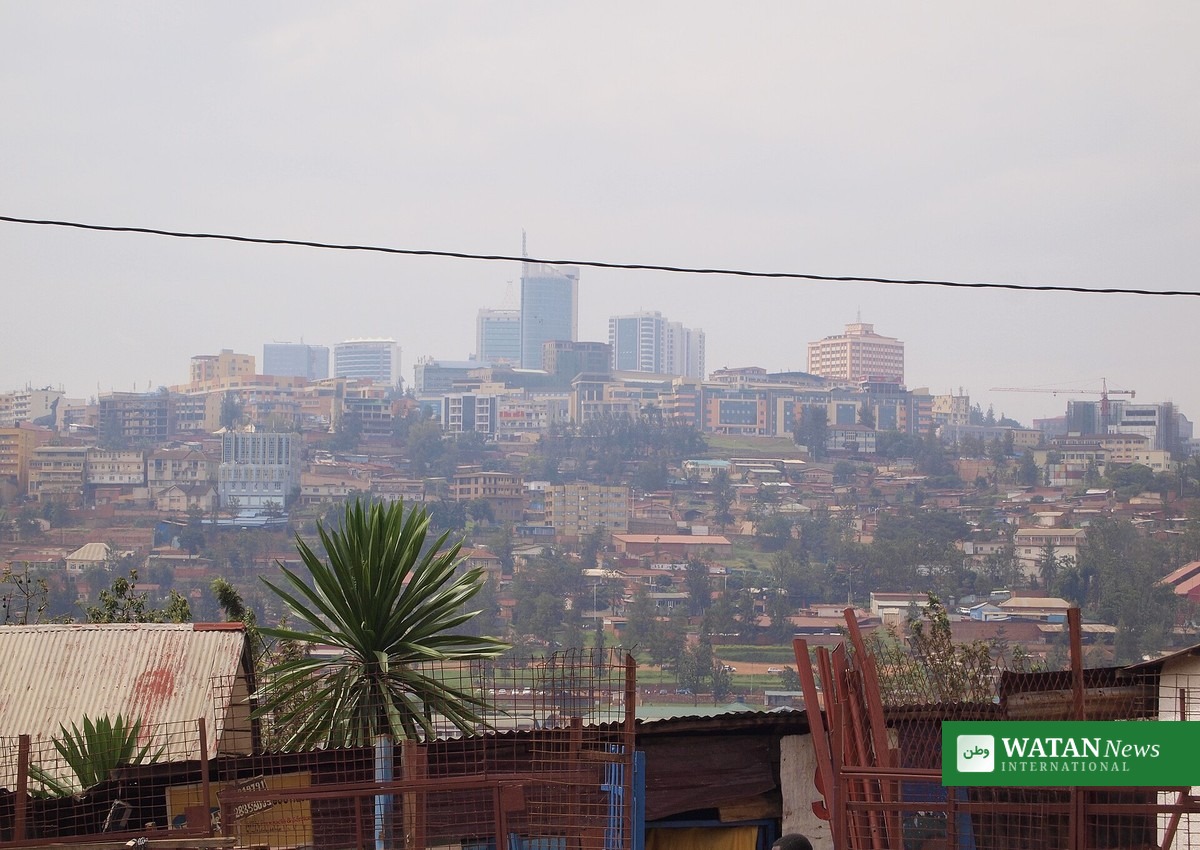
A view over Kigali, the capital of Rwanda, where the five European countries plan to open the pilot return hub.
Officials have said involvement of organisations such as the UN refugee agency UNHCR and the International Organization for Migration is envisaged to help ensure compliance with EU and international law.
A long road from Copenhagen to Kigali
Denmark has pursued an arrangement with Rwanda for years. Cooperation began in 2021, followed by a joint declaration in 2022 that envisaged transferring asylum seekers arriving in Denmark to Rwanda, where their applications would be examined. Denmark suspended the bilateral agreement in 2023 and began seeking a joint European solution instead.
That search produced the five-country plan announced in Vienna. Danish Prime Minister Mette Frederiksen has described the project as a “game changer” that would help dismantle smugglers’ business models and restore control over borders. Austrian Chancellor Christian Stocker called it a historic shift, arguing that the asylum system is undermined when people with no right to remain cannot be removed. Rwanda’s Interior Minister Vincent Biruta has framed participation as a contribution to a sustainable solution to irregular migration rather than a purely financial arrangement.
France has declined to take part, saying offshore returns clash with its legal standards.
Support and criticism
The initiative deliberately differs from the abandoned UK Rwanda partnership, which sought to send people still seeking asylum to Rwanda for processing and was ruled unlawful by the UK Supreme Court in 2023 over refoulement risks before being scrapped by the Labour government. It also differs from Italy’s Albania arrangement, which keeps jurisdiction with the transferring state.
Human-rights organisations have nonetheless criticised the plan as a “grave moral failing” and a dangerous precedent that could place people far from effective legal remedies, citing concerns over Rwanda’s human-rights record and reduced oversight.
What happens next
Negotiations on financing, the exact allocation of places among the five countries and operational details continue. No final agreement has been signed, and no binding treaty with Rwanda is yet in place. Transfers are targeted to begin in 2027 if an agreement is finalised.
For Denmark, the identification of the 120 people is a first concrete step towards putting the plan into practice, and the ministry’s figures show the initial group would be small: a fraction of the people in Denmark who have been ordered to leave.