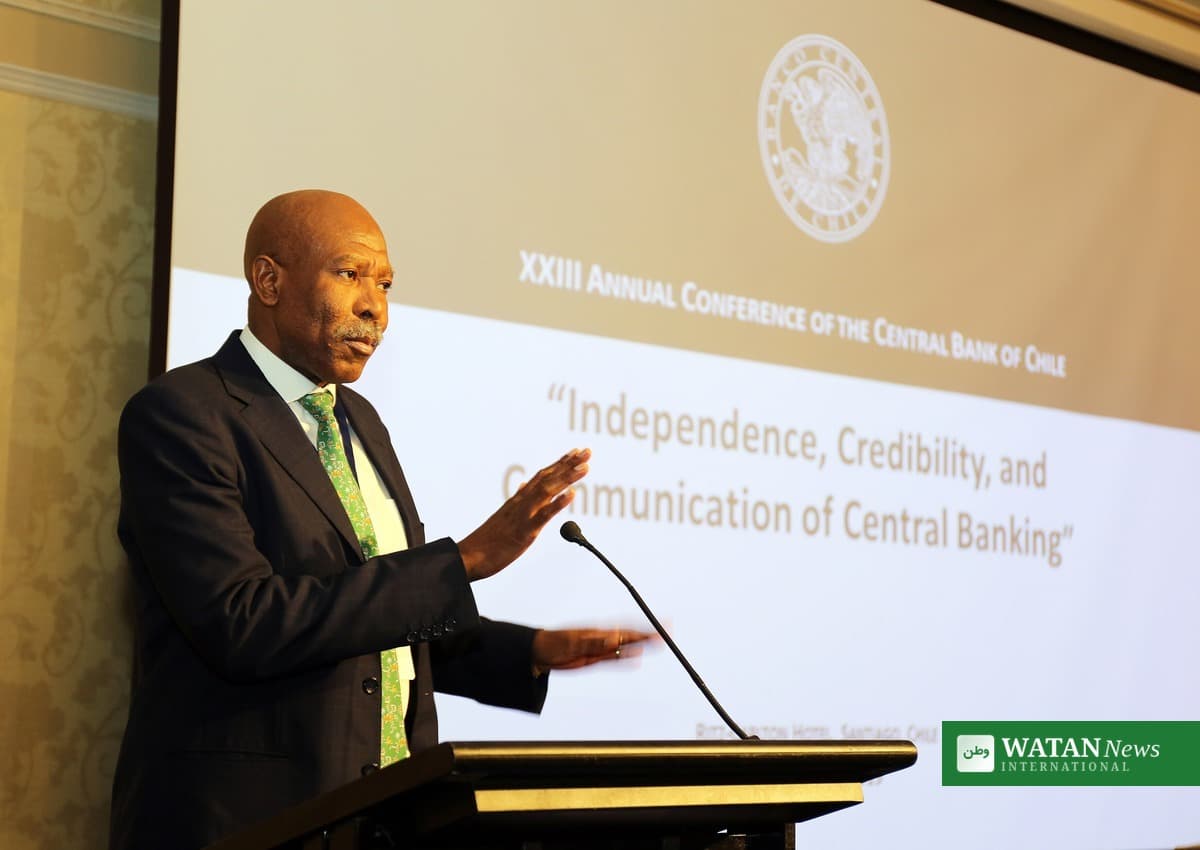
The South African Reserve Bank has kept its benchmark repo rate unchanged at 7.25 per cent, holding the prime lending rate at 10.75 per cent after a closely split vote. The decision was announced by Governor Lesetja Kganyago on Thursday, 19 November 2026, at the bank’s final rate meeting of the year.
FAKTA
- Decision: The repo rate stays at 7.25 per cent; the prime lending rate stays at 10.75 per cent.
- Vote: Four members of the Monetary Policy Committee preferred no change, while three favoured an increase of 25 basis points.
- When: Announced on Thursday, 19 November 2026, the committee’s final meeting of 2026.
- Inflation: Annual consumer inflation rose to 5.2 per cent in October, up from 4.5 per cent in September, its highest level since May 2024. The bank’s inflation target is 3 per cent.
- Governor’s words: Lesetja Kganyago said the bank would not hesitate to raise rates if needed to return inflation to target.
- Next decision: The committee’s next scheduled decision is on 28 January 2027.

The decision
The Monetary Policy Committee left the repo rate unchanged at 7.25 per cent on Thursday, pausing after two increases this year. The decision came just a day after Statistics South Africa reported a sharp rise in inflation to 5.2 per cent in October, as higher fuel costs rippled through the economy. The prime lending rate, which banks use to price home loans and other credit, stays at 10.75 per cent.
Governor Lesetja Kganyago said: “After two policy adjustments this year, and with a moderately restrictive policy stance, we decided to pause for now. We are mindful of risks, and will not hesitate to raise rates if needed, to return inflation to target over the policy horizon.”
A closely split committee
The vote was four to three, with four members preferring to hold and three favouring a 25-basis-point increase. The split showed how narrowly the committee reached the outcome most economists had forecast, and it leaves the next meeting in January as a live one: three members already wanted a rise, and the bank has said plainly that it will move if inflation does not come back towards target.
The bank’s Quarterly Projection Model still shows lower rates next year, as inflation is expected to fall back towards the 3 per cent target. The bank expects annual inflation to stay above 5 per cent into early 2027.
The numbers behind the decision
| Indicator | Latest | Previous |
|---|---|---|
| Repo rate | 7.25 per cent (held, 19 November 2026) | 7.25 per cent (raised 25 points, 23 September 2026) |
| Prime lending rate | 10.75 per cent | 10.75 per cent |
| Consumer inflation | 5.2 per cent (October 2026) | 4.5 per cent (September 2026) |
| Inflation target | 3 per cent | 3 per cent |
| Committee vote | 4 for a hold, 3 for a rise | Not unanimous |
Why the bank paused
The bank said it had room to pause after two policy adjustments this year, and described its policy stance as moderately restrictive. With inflation at 5.2 per cent, well above the 3 per cent target, the case for a rise was real, and three members voted for one. But the majority judged that the tightening already done this year, including the September increase to 7.25 per cent, was enough for now.
The decision was taken despite the recent spike in inflation and the volatility of the rand. For borrowers, the hold means no change to repayments on the day; for the bank, it keeps the option of a rise in January firmly open if inflation stays high.
What it means for borrowers
With the prime rate unchanged at 10.75 per cent, monthly repayments on variable-rate home loans, car finance and other credit stay where they are. That gives households and businesses some stability after two increases earlier in 2026, but the governor’s warning makes clear that the relief may be short-lived if inflation does not ease.
Conclusion
The Reserve Bank’s split decision to hold at 7.25 per cent is a pause, not an all-clear. Inflation is running at 5.2 per cent against a 3 per cent target, three of the seven committee members already wanted a rise, and the next decision on 28 January 2027 will be taken with two more months of inflation data in hand.