Tree planting is one of the world’s most popular climate solutions — but a major new global study warns that where the trees are planted matters as much as how many. Converting open land into planted forest was associated with a 26% rise in how often wildfires broke out and a 23% rise in the area burned, according to research published in the Proceedings of the National Academy of Sciences (PNAS) on 2 November 2026.
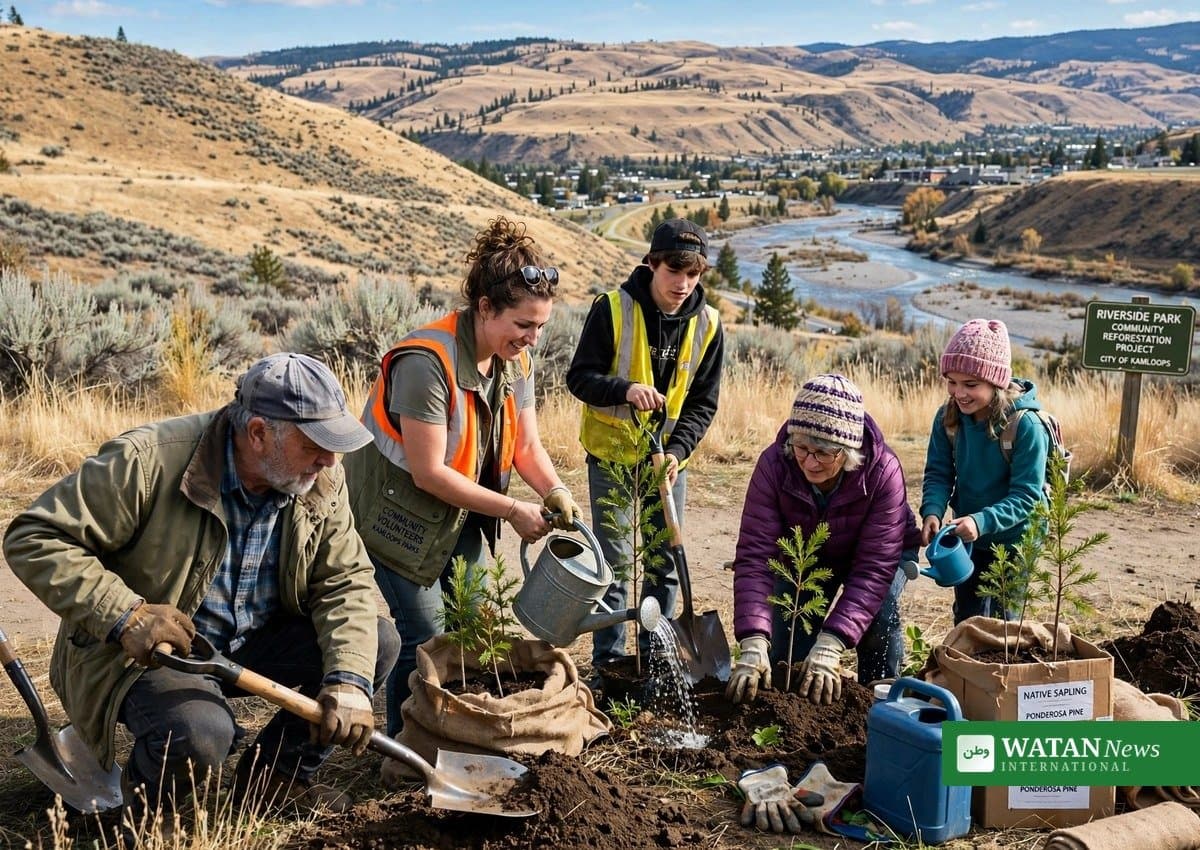
The findings land just as world leaders gather for COP31 in Antalya on 9 November, where tree planting features in the summit’s own plans — including a Peace Forest planting ceremony on 11 November — and as countries prepare for the United Nations Decade on Afforestation and Reforestation, which runs from 2027 to 2036.
What the researchers found
An international team of researchers from Spain, Chile and Finland analysed satellite records from 2001 to 2023, covering 67,248 patches of non-forested land that had been converted into planted forests. After accounting for climate, accessibility and patch size, they found that afforestation was associated with an average 26% increase in fire occurrence per hectare per year, and a 23% increase in the expected burned area when fires did break out.
“Forest plantations change the fuel conditions in which fires start and spread. We wanted to understand how these changes differ across landscapes, rather than assuming that tree planting has the same consequences everywhere,” said lead author Irene Repeto-Deudero of the University of Cádiz and the University of Eastern Finland.
The researchers stress that wildfires can also undermine the long-term carbon storage that tree planting is meant to deliver. “As the climate warms, increased wildfire risk may impact the capacity of forest plantations to store carbon in the long term,” said the study’s coordinator, Professor Susana Gómez-González of the University of Cádiz.

The risk depends on where trees grow
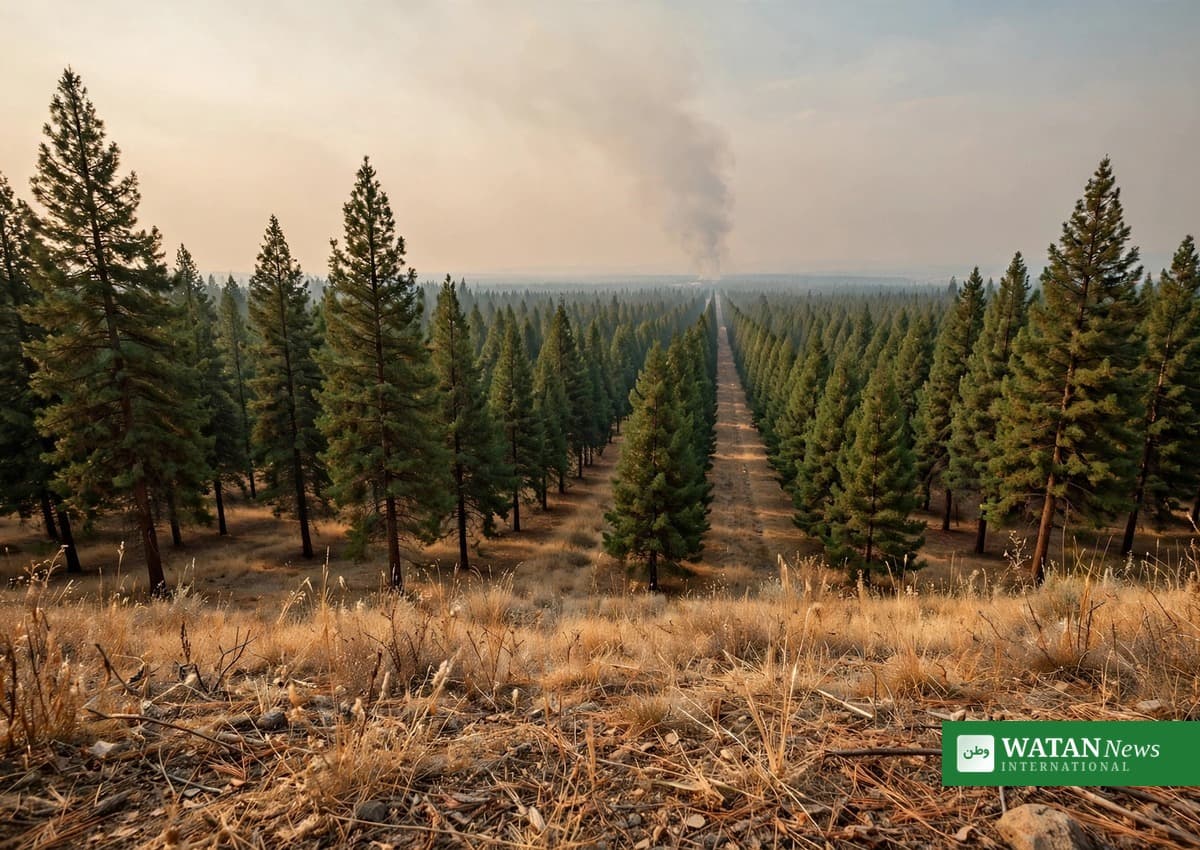
The study’s headline figures hide sharp differences between regions. In temperate conifer forests, fire occurrence rose almost threefold and the expected burned area roughly doubled — the strongest increase anywhere in the study. Mediterranean woodlands saw fire occurrence rise by 38%.
In temperate broadleaf and mixed forests, fires became less frequent but burned larger areas when they did occur. In temperate grasslands, savannas and shrublands, afforestation was linked to an 18% reduction in fire occurrence, with no significant increase in burned area.
“These contrasting responses show why local ecological conditions must guide afforestation decisions. The same intervention can have very different consequences depending on the vegetation, climate and existing fire regime,” said co-author Alejandro Miranda of the University of La Frontera in Chile.
Why it matters for climate plans
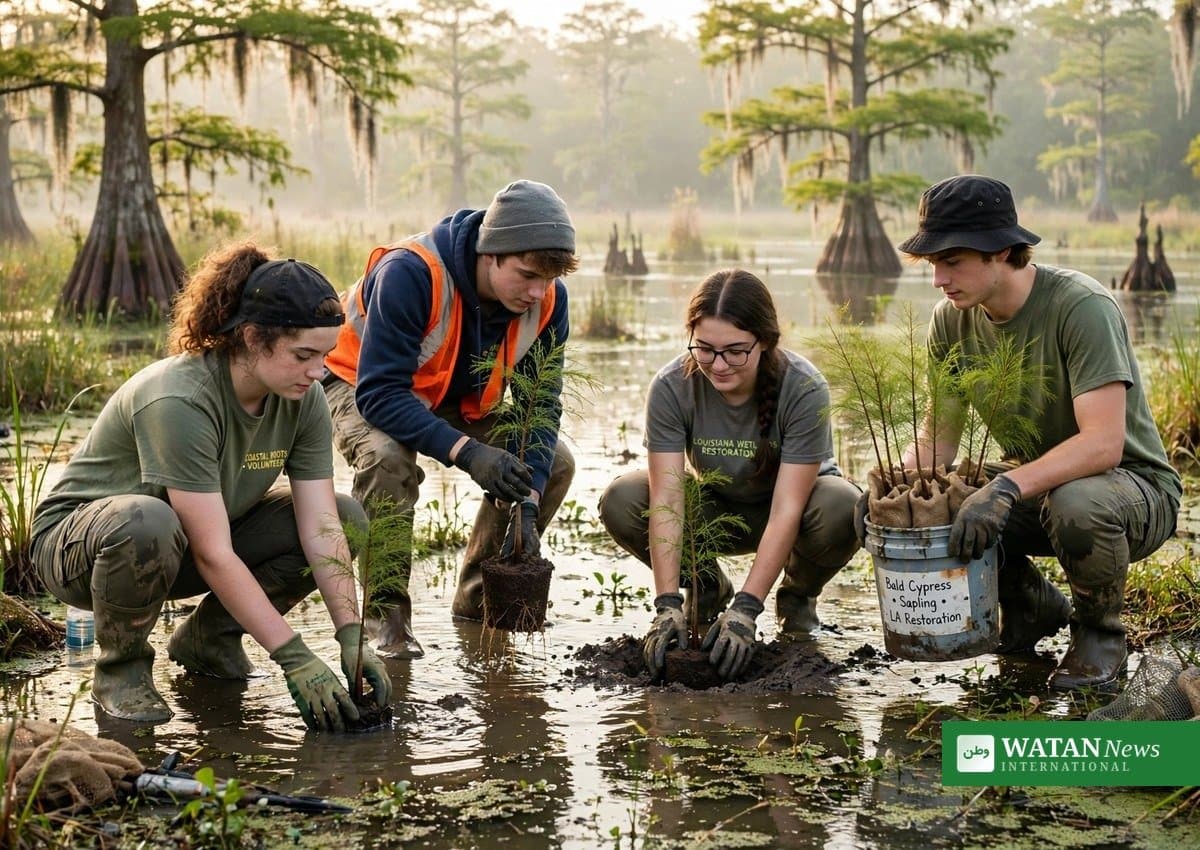
Governments and companies are planting trees at record scale. Tunisia announced a ten-year plan on 3 November to reforest 30,000 hectares after years of wildfire losses, and the Republic of Congo launched the UN afforestation decade early on 6 November with a mass planting of around 200,000 trees. Watan News reported on Tunisia’s reforestation plan earlier this week.
The study does not argue against planting trees. “Plantations are necessary in many cases to produce wood and other ecosystem services, including soil protection. However, their location must be carefully planned to avoid unintended consequences for local fire regimes,” said Professor Blas Mola-Yudego of the University of Eastern Finland. “Fire risk needs to be considered from the outset, alongside production goals and environmental benefits.”
The authors note that their figures are associations found in the satellite record after statistical controls — they describe a pattern, but on their own they do not prove that the plantations caused every change. Even so, the study’s message for planners is clear: as the climate warms and fire weather grows more severe, the fire exposure of every new plantation should be weighed before the first seedling goes into the ground.
Key facts
- The study: “Afforestation reshapes wildfire activity across global temperate biomes”, published in PNAS on 2 November 2026 (volume 123, issue 45).
- The data: 67,248 patches of land converted to planted forest, tracked by satellite from 2001 to 2023.
- The headline figures: fire occurrence up 26% on average; expected burned area up 23%.
- Highest risk: temperate conifer forests — fire occurrence up almost threefold, burned area roughly doubled.
- Lowest risk: temperate grasslands, savannas and shrublands — fire occurrence down 18%.
- The warning: wildfires can undermine the long-term carbon storage expected from tree planting.
Conclusion
Tree planting remains a powerful climate tool — but this study shows it is not risk-free. Choosing the right place, the right species mix and the right fire management may matter as much as the number of trees planted, especially as the world heads into a decade of large-scale afforestation.