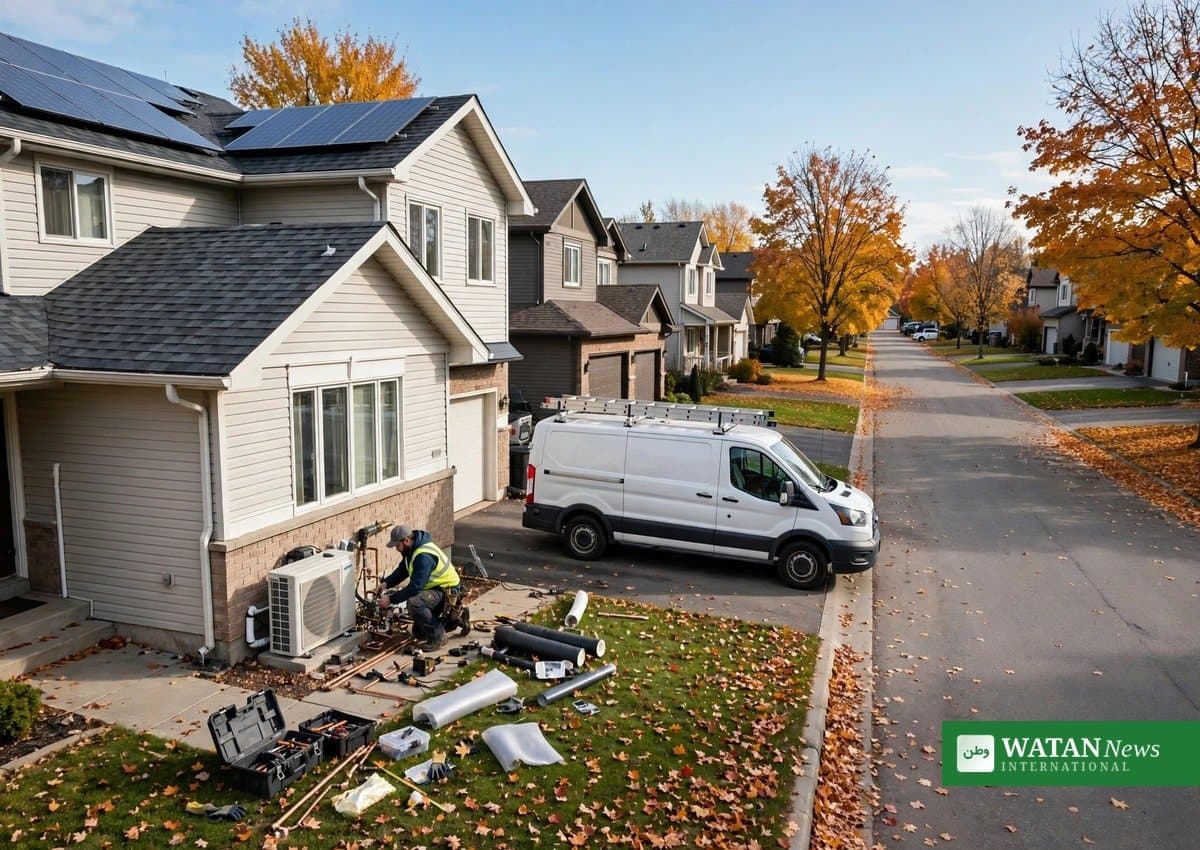
Canada has announced approximately $66.3 million in funding for 162 projects that will make homes more energy efficient across the country — supporting energy-efficient homes through community retrofit financing programmes and sustainable affordable housing construction and upgrades.
FAKTA
- Announcement: 2 October 2026, by the Honourable Julie Dabrusin, Minister of the Environment, Climate Change and Nature
- Funding: approximately $66.3 million ($66,278,761 in total) — Community Efficiency Financing $34,595,956; Sustainable Affordable Housing $31,682,805
- Scale: 162 projects in every region of Canada: 12 in Atlantic Canada, 36 in Quebec, 39 in Ontario, 36 across the Prairies, 38 in British Columbia, 1 in Nunavut
- Delivered through: the Federation of Canadian Municipalities’ Green Municipal Fund
- Announced with: Berry Vrbanovic, Chair of the FCM Green Municipal Fund, and Jennifer McKelvie, MP for Ajax and Parliamentary Secretary to the Minister of Housing and Infrastructure
- Source: Government of Canada backgrounder, canada.ca
What the two energy-efficient homes programmes do
According to the Government of Canada, the Community Efficiency Financing initiative helps municipalities and organisations develop innovative financing mechanisms that make it easier for homeowners to carry out energy-efficiency retrofits and cut greenhouse gas emissions. The projects fund residential retrofit financing programmes, feasibility studies and programme design in municipalities across Canada.
The Sustainable Affordable Housing initiative supports feasibility studies, planning projects, pilot projects and affordable housing construction and retrofit projects designed to improve energy performance and reduce greenhouse gas emissions. Together, the two programmes support energy efficiency improvements, emissions reductions, affordable housing innovation and residential retrofits nationwide.
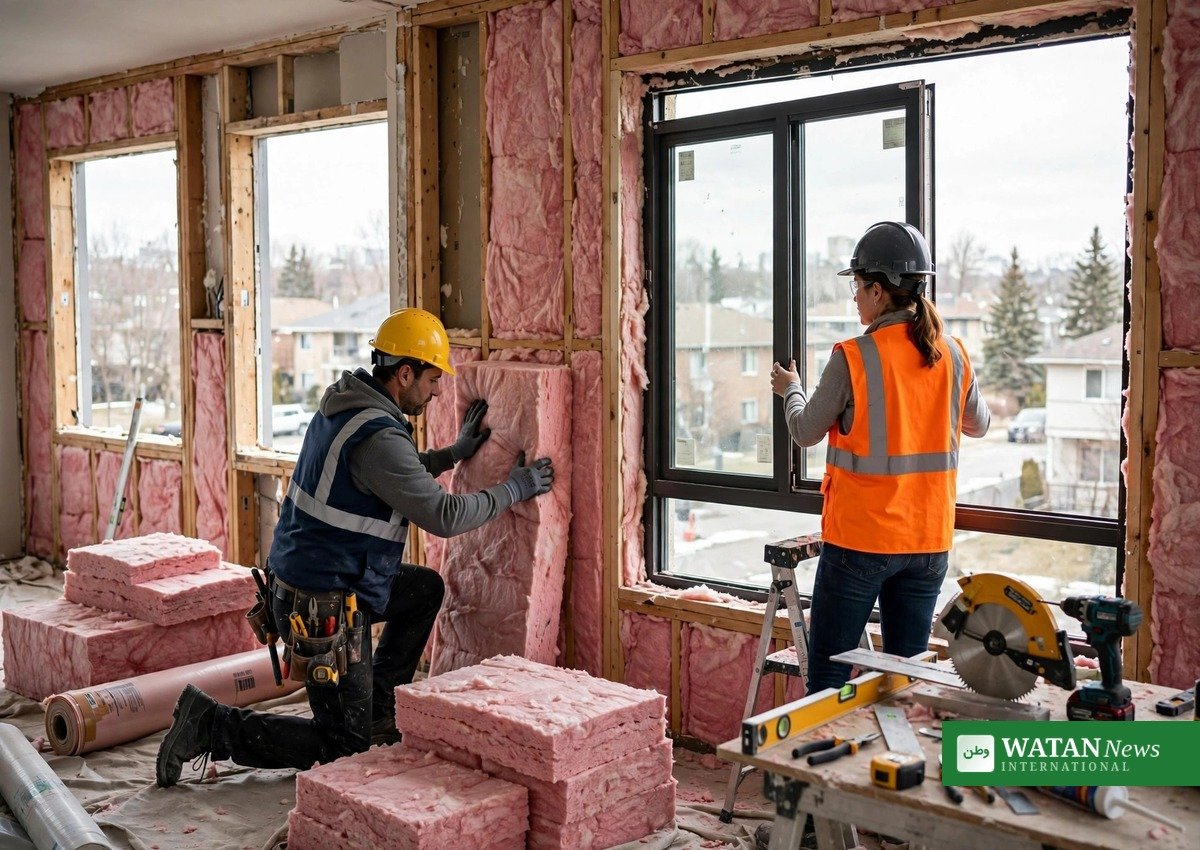
Workers installing insulation and high-efficiency windows — the kind of deep retrofit measures Canada’s new $66.3 million funding round is designed to bring to more energy-efficient homes.
Community retrofit financing: the examples
The Community Efficiency Financing projects show how local programmes turn funding into lower bills for households. Examples published by the Government of Canada include:
Clean Energy Improvement Programmes in Alberta
The Town of Drayton Valley will implement a Clean Energy Improvement Program using Property Assessed Clean Energy (PACE) financing to support residential energy upgrades, with $1,444,480 in funding. The Town of Okotoks received $1,717,280 for a residential retrofit financing programme aligned with its climate action plan and targeted at energy efficiency improvements in existing homes.
Financing models in Ontario
BetterHomes Huntsville in the Town of Huntsville ($7,999,920) will provide homeowners with long-term financing options for energy-efficient home retrofits through a PACE-based model. RetrofitWR in the Regional Municipality of Waterloo ($7,928,392) will support deep energy retrofits through an innovative utility on-bill repayment model. BetterHomes London ($5,318,788) will support residential energy-efficiency upgrades and deep retrofits through low-interest financing and energy concierge services.
Sustainable affordable housing: the examples
The Sustainable Affordable Housing projects combine climate goals with housing affordability. The largest single project is the net-zero carbon retrofit of the Weaver’s Hill affordable housing multi-residential facility in the Region of Peel, Ontario, which received $10,000,000.
Other examples include a $250,000 feasibility study for an 85-unit multi-family affordable housing project in the Town of Banff, Alberta; a $250,000 feasibility study for a 97-unit net-zero-ready affordable housing building in the City of Fredericton, New Brunswick; a $500,000 pilot project for a net-zero affordable housing building in Kazabazua, Quebec; and a $500,000 Multifaith Housing Initiative retrofit pilot in Ottawa, Ontario, designed to reduce energy use in affordable rental housing through deep-energy retrofits.
Additional Sustainable Affordable Housing projects are located in Alberta, British Columbia, Manitoba, New Brunswick, Newfoundland and Labrador, Nova Scotia, Nunavut, Ontario, Prince Edward Island, Quebec and Saskatchewan.
Announced at a building being retrofitted
According to the Federation of Canadian Municipalities, the announcement was made from a Regional Municipality of Durham multi-unit rent-geared-to-income building that is currently undergoing retrofits to increase energy efficiency while enhancing comfort and air quality for senior residents. That four-building retrofit project, announced in 2025, received a $4.8 million grant and a $5.2 million loan through the Sustainable Affordable Housing initiative.
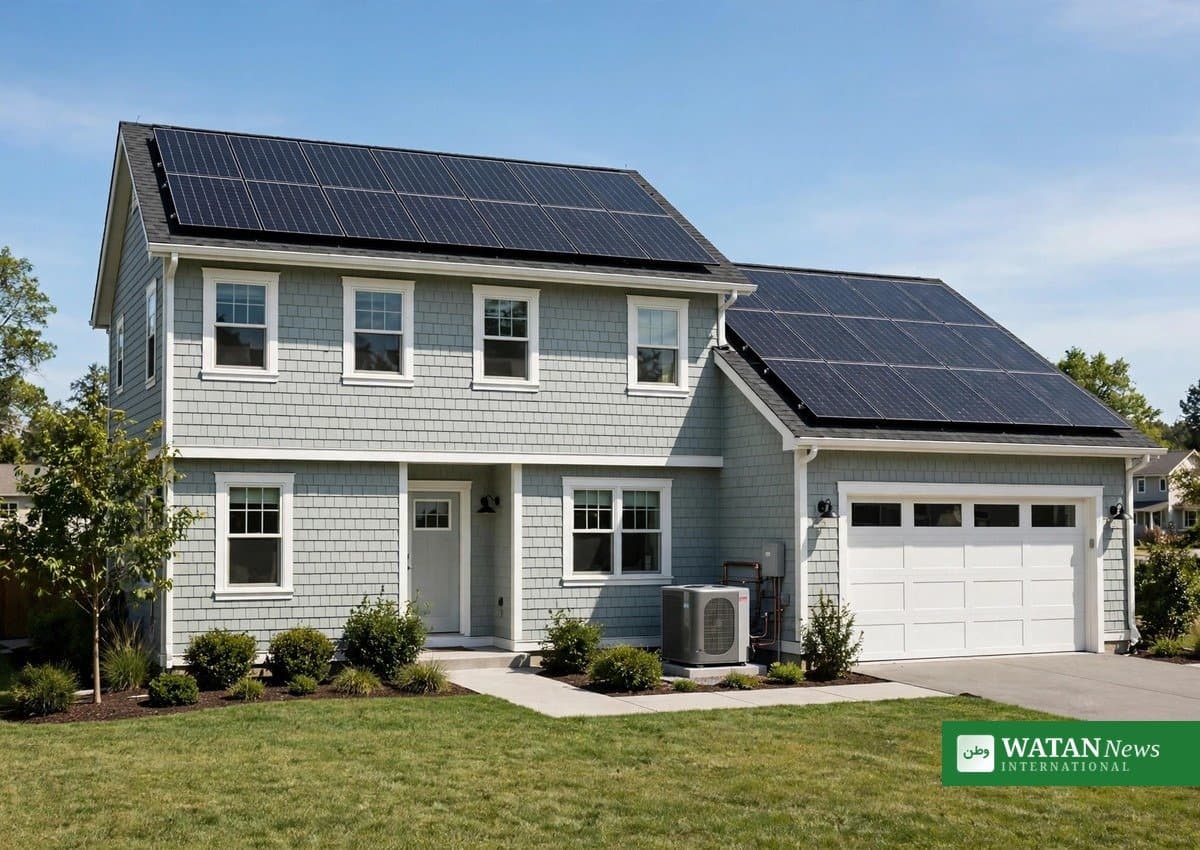
The Government of Canada says the $66.3 million investment will make it easier for homeowners to undertake energy-saving upgrades such as improved insulation, high-efficiency windows, heat pumps and other retrofit measures — reducing energy consumption, lowering household costs and strengthening community resilience in the face of a changing climate.
As energi.media noted in its analysis of the announcement, Canada’s broader challenge is electrifying its economy: electricity supplies only about 17 per cent of the country’s energy use, which makes building-level efficiency and electrification measures central to long-term climate action.
More climate stories: Watan News climate coverage. Source: Government of Canada — Community Efficiency Financing and Sustainable Affordable Housing projects.