
India is preparing to move thousands of people away from its eastern coastline as Cyclone Arnab bears down on the Bay of Bengal, with landfall expected in Andhra Pradesh on Wednesday morning and winds gusting at up to 140 kilometres per hour.
Two states, Andhra Pradesh and neighbouring Odisha, have put emergency plans into motion, calling fishing boats back to shore, readying cyclone shelters and closing schools, as the storm — which formed over the Bay of Bengal and strengthened into a cyclonic storm — continues to gather force.
FAKTA
- Storm: Cyclone Arnab, over the Bay of Bengal
- Expected landfall: Wednesday morning, 28 October, in Andhra Pradesh
- Peak gusts: Up to 140 kilometres per hour, according to India’s weather office
- People identified as vulnerable in Andhra Pradesh: 570,000
- Evacuations: Begin on Monday evening in Andhra Pradesh
- Odisha: Schools and colleges closed for two days in five districts; residents of low-lying areas to move to cyclone shelters
- Rainfall: Heavy to extremely heavy rain expected in coastal Andhra Pradesh and southern Odisha
Evacuations under way in Andhra Pradesh
A senior Andhra Pradesh disaster management official said the state government had identified 570,000 people as vulnerable, and that evacuations would start on Monday evening. Andhra Pradesh has called for boats at sea to return ashore and ordered speedy restoration of power in case of disruptions, as heavy to extremely heavy rainfall is expected across the state’s northern and central coastal districts.
The storm is forecast to cross the coast between Bapatla and Visakhapatnam in the forenoon of Wednesday, 28 October, according to forecasts from the India Meteorological Department, with sustained winds of 115 to 125 kilometres per hour and gusts reaching 140 kilometres per hour.
Odisha closes schools and opens shelters
In Odisha, the government announced the closure of schools and colleges in five districts for two days and said it was preparing to move residents of low-lying areas to cyclone shelters. The five districts named in official preparedness plans are Ganjam, Gajapati, Rayagada, Koraput and Malkangiri, in the state’s south, where heavy rainfall and strong winds are expected.
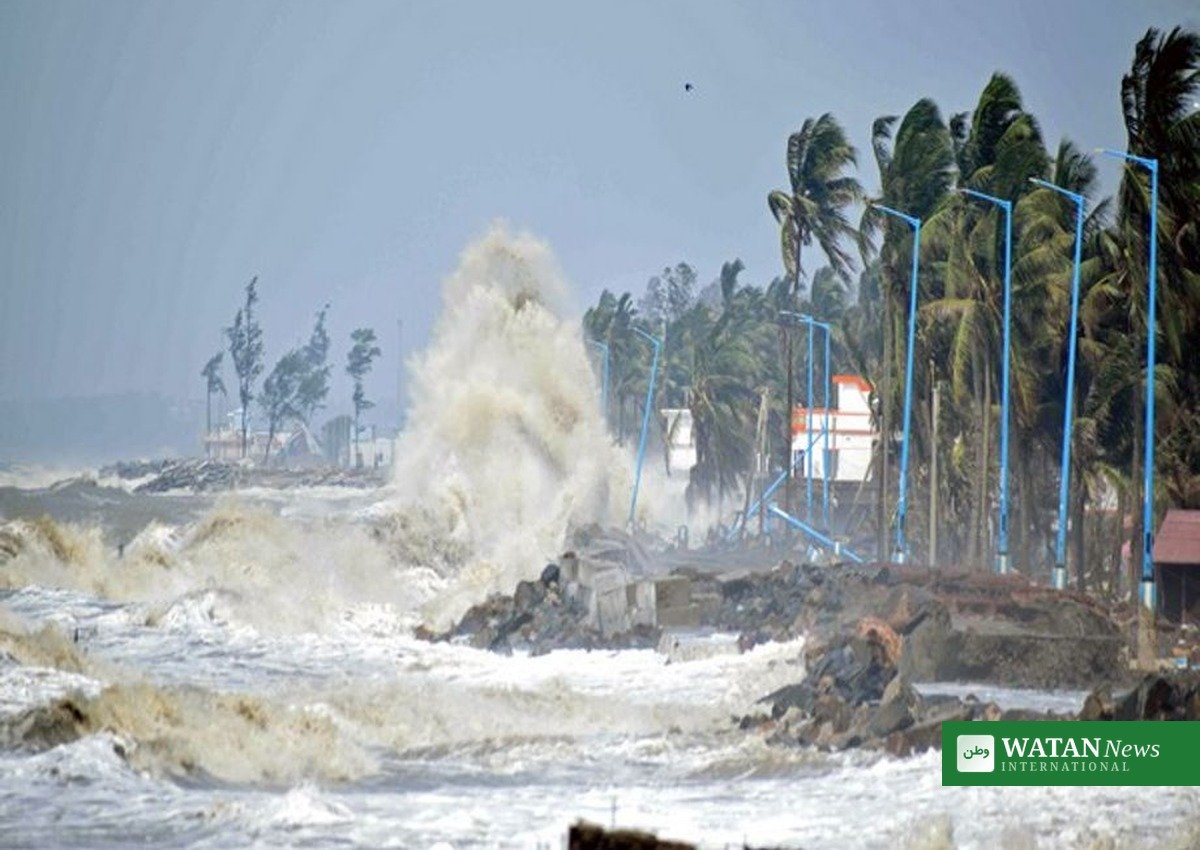
Waves crash onto India’s eastern coast as Cyclone Arnab approaches. Coastal states have ordered boats back to shore and readied shelters.
What forecasters expect from Cyclone Arnab next
India’s weather office said Cyclone Arnab would probably intensify further before landfall, after forming over the Bay of Bengal and strengthening into a cyclonic storm. The Bay of Bengal is one of the world’s major regions for tropical cyclones, and Arnab is the first cyclone to develop over the bay in 2026.
Authorities in both states are continuing to monitor the storm’s movement and intensity, with forecasts subject to change as it approaches land. Residents in coastal areas have been urged to follow official advisories, avoid unnecessary travel in flooded areas and stay away from rough seas while restrictions are in place.
More on Asia: Watan News Asia coverage.