
Estonia has formally accused Russia’s security services of orchestrating an arson attack on an Estonian defence company that supplies unmanned military vehicles to Ukraine, escalating tensions between the NATO member state and Moscow over what Western officials call Russia’s campaign of sabotage across Europe.
The Estonian government announced the conclusion of a six-week investigation into the August fire at a Tallinn building used by Milrem Robotics, saying the attack was a deliberate act of sabotage commissioned by Russian special services. Russia has denied the accusation as baseless.
FAKTA: Estonia accuses Russia of Milrem arson sabotage
- What: Estonia’s Internal Security Service concluded an arson attack on Milrem Robotics in Tallinn was “a deliberate and pre-planned act commissioned by Russian security services.”
- When: The fire broke out overnight on August 14–15, 2026; the conclusion was announced on Tuesday, September 29, 2026.
- Who: Three Latvian suspects were detained in Latvia on August 17–18 and handed over to Estonia.
- Diplomacy: Estonia summoned Russia’s chargé d’affaires in Tallinn over the incident.
- Russia’s reply: Kremlin spokesman Dmitry Peskov called the claims “unfounded” and not reflecting reality.
- Context: The Associated Press has tracked around 200 incidents of sabotage and malign activity across Europe blamed on Russia since February 2022.
Attack on Milrem Robotics: what investigators found
A fire broke out overnight on August 15 at a building in the Estonian capital used by Milrem Robotics, a defence technology company whose THeMIS unmanned ground vehicles have been supplied to Ukraine. The fire was quickly brought under control, according to the BNS news agency.
On August 17, two Latvian suspects were detained in neighbouring Latvia, and a third followed the next day. All three were handed over to Estonia.
Estonia’s Internal Security Service said the modus operandi of the Milrem attack “is consistent with other acts of sabotage carried out in Europe on behalf of Russia,” adding that it assesses “the attack is directly attributable to the Russian Federation.”
Foreign Minister Margus Tsahkna said on social media that such actions were “absolutely unacceptable” and announced that Russia’s chargé d’affaires in Tallinn was being summoned to his ministry.

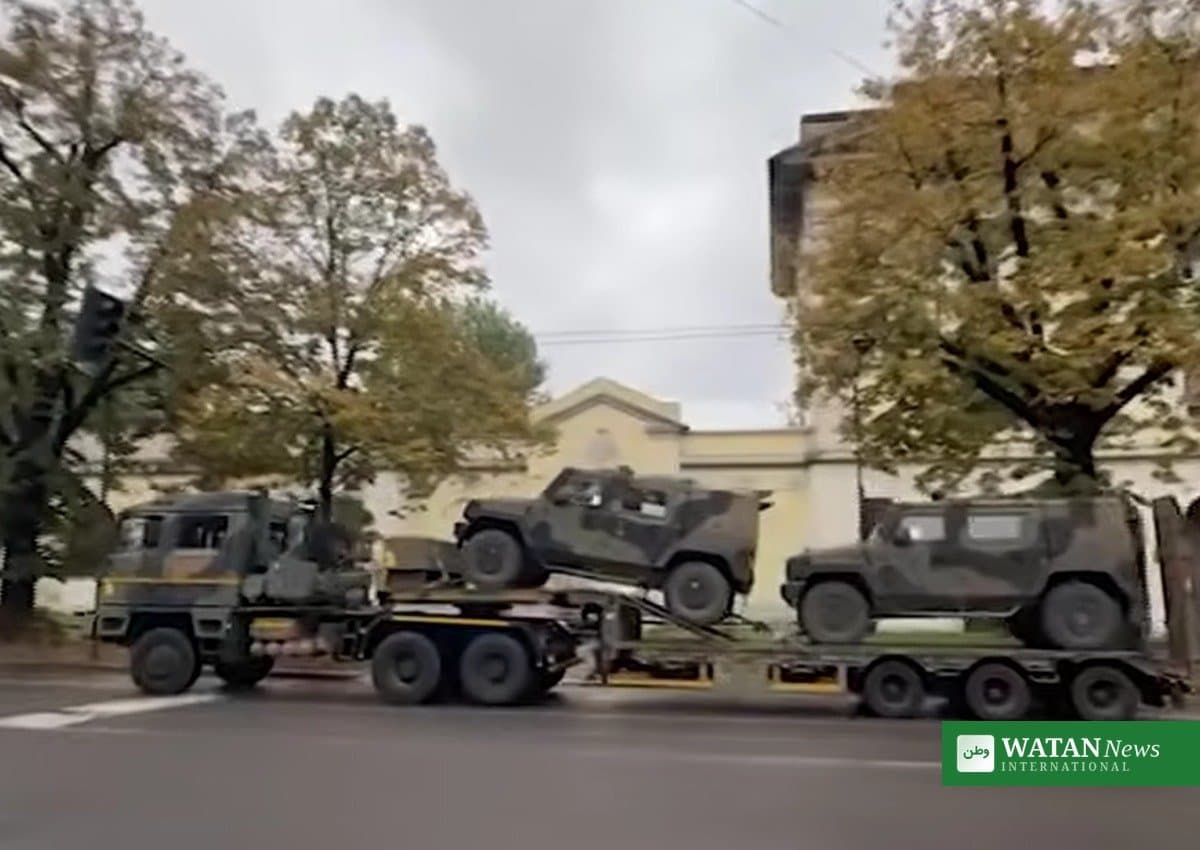
Milrem Robotics’ THeMIS unmanned ground vehicles have been supplied to Ukraine for use in combat operations. (Image: Watan News)
Kremlin rejects the accusation
Moscow has strongly rejected the allegation. Kremlin spokesman Dmitry Peskov said that “such statements are unfounded, ill-considered, absolutely not reflecting the reality, not containing any substantiation whatsoever.”
“We cannot take such statements seriously, and we won’t,” Peskov said.
Russia has repeatedly denied involvement in alleged sabotage operations targeting European countries. The central allegation therefore remains disputed: Estonia says its intelligence assessment provides grounds to attribute the attack to Russian security services, while Moscow denies any responsibility.
NATO and European allies rally behind Estonia
Estonian Prime Minister Kristen Michal vowed that Estonia’s response would be “the opposite” of what Moscow intends: “stronger security at home, more support for Ukraine and greater pressure on Russia. We will not be intimidated.”
NATO Secretary General Mark Rutte backed Estonia while urging allies to remain calm, saying alleged Russian sabotage and hybrid operations would not force NATO countries to reduce their support for Ukraine.
French President Emmanuel Macron responded to Estonia’s assessment, saying “the multiplication of these hostile acts represents a dangerous escalation by Russia, which will only lead it into a dead end.”
Tsahkna said the investigation allowed authorities to “conclude with certainty” that the arson was “an act of sabotage ordered by the special services of the Russian Federation,” describing it as part of a “broader campaign across Europe aimed at intimidating us and weakening our support for Ukraine.”
Read more Europe and world coverage in Watan News’ English edition, and see the Associated Press report on Estonia’s accusation for full details.