Summer 2026 was the hottest summer ever recorded in western Europe, according to the EU’s Copernicus Climate Change Service — surpassing the previous record set in 2003. France, the United Kingdom and Belgium each endured their hottest summer on record. From mid-June to mid-August, heatwaves pushed temperatures above 40°C in areas home to 80 million people, and above 35°C in regions covering 80% of Europe’s residents — meaning well over half the continent endured intense heat stress.
Key facts
- Summer 2026 was the hottest summer ever in western Europe (Copernicus C3S), beating the 2003 record.
- France, the United Kingdom and Belgium each recorded their hottest summer on record.
- 80 million people lived in areas that faced 40°C or higher from mid-June to mid-August (AFP analysis).
- Temperatures above 35°C reached regions covering 80% of Europe’s residents — around 490 million people.
- Heat killed more than 25,000 people across Europe this year; Germany alone recorded about 11,900 through July, its highest annual toll in the modern record (Bloomberg).
- Half of all Europeans were exposed to dangerous ground-level ozone levels from June to August (Copernicus CAMS).
- August 2026 was the hottest August globally since records began in 1940, averaging 16.96°C.
Western Europe’s record summer
The heat arrived early and never really let up. In May 2026, western Europe suffered an unusually early and intense heatwave: Portugal, the UK and Ireland recorded their highest May temperatures ever, while France saw its hottest May day on record, according to national weather services cited by Copernicus. Spain reported 101 heat-related deaths in May — the highest May figure since monitoring began in 2015.
The June–July period was the hottest on record for western Europe, and August brought yet more heatwaves. In France, the country endured 53 days of heatwaves, with rainfall about 40% below average — making it the second-driest summer since 1959. Persistent high-pressure systems trapped heat over the region from late May onward, giving soils no chance to recover moisture between events.
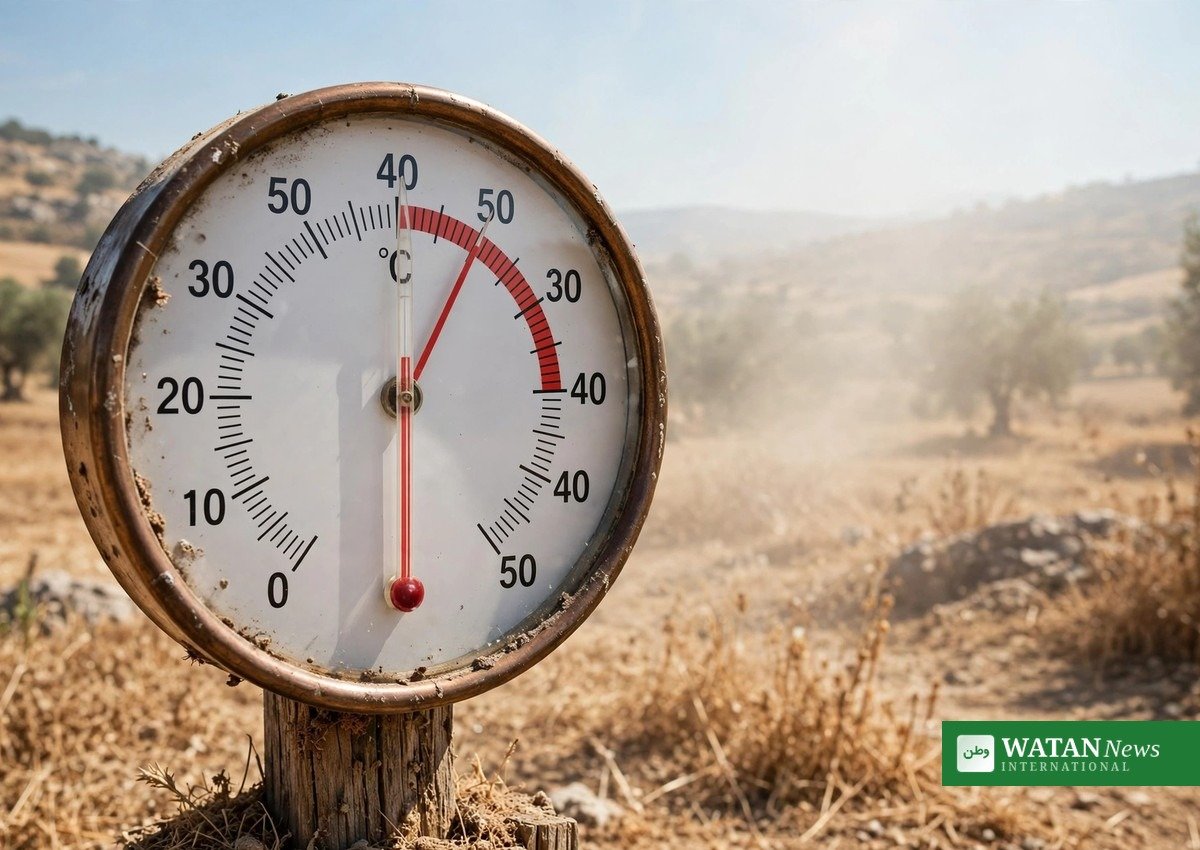
A thermometer climbs past 40°C in a sun-scorched landscape. From mid-June to mid-August, areas home to 80 million Europeans faced such heat. (Illustrative image)
The human toll of Europe’s heat stress
Europe is the world’s fastest-warming continent, and it is particularly ill-equipped to withstand heat: older infrastructure and historically low rates of residential air conditioning leave even hospitals, schools and care homes exposed. Many of the areas that exceeded 40°C — including parts of the UK, Belgium, the Netherlands and Poland — are not used to such temperatures.
The summer’s heat also poisoned the air. The Copernicus Atmosphere Monitoring Service found that 50% of Europeans were exposed to poor, very poor or extremely poor ground-level ozone levels between June and August, as extreme heat and wildfires supercharged the chemical reactions that form the pollutant. “Ozone pollution is a stark reminder of how interconnected our atmosphere, climate, health, and livelihoods really are,” said CAMS director Laurence Rouil. People with asthma face the greatest risk.
Drought, rivers and wildfires
Widespread dryness gripped much of western Europe and large parts of central and eastern Europe, in some areas persisting since May. Copernicus reported severe drought conditions in France, the United Kingdom, Hungary, Romania and Serbia. Major rivers — including the Rhine, Danube, Southern Bug and Dnieper — saw exceptionally low flows, disrupting water supply, irrigation and energy production.
In July, prolonged hot and dry conditions in western Europe fuelled the spread of extreme wildfires, while surface soil moisture across the region fell “significantly lower” than in July 2022 — the last summer of extreme drought. Crops withered across southern Europe, threatening yields and food security.
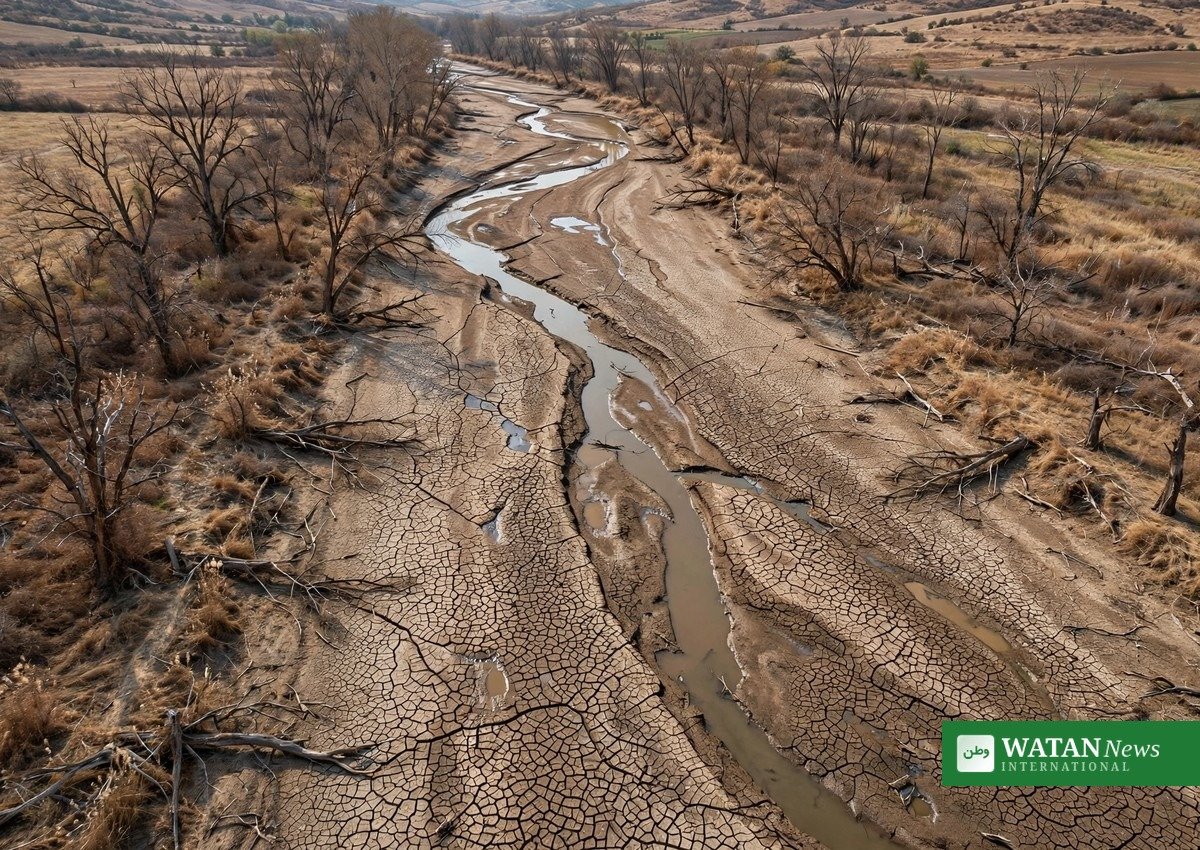
A nearly dried-up riverbed during the 2026 drought. The Rhine, Danube and other major European rivers saw exceptionally low flows. (Illustrative image)
“Hellish heat” and the economic fallout
The heat is now an economic force. Addressing a European Parliament committee on 10 September, UN climate chief Simon Stiell warned that Europe’s extreme summer was compounding the cost of living. “The EU’s summer of hellish heat comes on top of the ongoing fossil fuel cost crisis — and both are driving up prices for households, businesses and governments, in a deathly double-blow,” he said.
Stiell cautioned that dependence on volatile fossil fuel imports could tip the continent toward another winter fuel crisis. For more of our climate coverage, see Watan News’ Climate section on the main portal, and read the same story on watannews.dk.
Why Europe heats up faster than anywhere else
Europe has warmed by around 2.5°C compared with the pre-industrial period — roughly twice the global average rate — making it the fastest-warming continent on Earth, according to the European Environment Agency and Copernicus. Parched ground amplified this summer’s extremes: dry soils feed heat back into the air instead of cooling it through evaporation, creating a feedback loop that compounds with every successive heatwave.
Globally, August 2026 was the hottest August recorded since 1940 at 16.96°C, nearly matching the all-time monthly record of July 2023. Read the authoritative breakdown of the early-season heatwave: Copernicus: What do we know about Europe’s early and intense heatwave in May 2026?
Conclusion
Summer 2026 was not an anomaly to shrug off — it was the new benchmark for a continent warming twice as fast as the rest of the planet. Record heat across western Europe, 25,000 excess deaths, poisoned air for half the population and rivers running dry all point to the same conclusion: Europe’s heat stress crisis is a lived reality, and the adaptation — and emissions cuts — it demands can no longer wait.