People who struggle to put enough food on the table are significantly more suspicious of climate science — and less supportive of climate policies — according to a new peer-reviewed study published on 28 November 2026. The finding adds a new dimension to the climate awareness debate: distrust is not only about politics or knowledge, but also about daily hardship.
FAKTA
- Study: Savoia, Su and Arzilli, published in Frontiers in Public Health on 28 November 2026
- Survey: 1,000 adults in the United States, interviewed in February 2025
- Food insecurity: 11.5% said they could not get enough food almost every time or every time in the past year
- Key result: greater food insecurity was linked to greater suspicion of climate science and lower support for climate policies
- Trust: 65% of respondents had moderate or less trust in the climate information they receive
Food insecurity and climate science suspicion
The researchers measured suspicion through six statements, including that climate policies are created to limit people’s freedom, that scientists manipulate data to support human-caused climate change, and that climate change is a hoax. Between 9.8% and 21.2% of respondents endorsed these suspicious beliefs.
Each step up the study’s five-point food insecurity scale was associated with a 0.120-point higher suspicion score, a result the authors report as highly statistically significant. The same step was associated with a 0.077-point lower score for support of environmental policies, including renewable energy, cutting fossil fuel use, reducing plastic and cutting chemical fertilisers.
The authors describe food insecurity as a factor “largely absent from prior evidence” on climate attitudes, calling the finding hypothesis-generating. Because the survey is cross-sectional — a single snapshot in time — it shows an association, not proof that food insecurity causes suspicion. But the pattern held after accounting for age, education, income, political views and trust in information.
In the survey, 40.9% of respondents said they had never worried about not having enough money or resources for food in the past year, while 29.6% said they worried occasionally or sometimes, and 11.5% said they could not get enough food almost every time or every time.
Extreme weather experience did not work as expected
The study also produced a counterintuitive result. Direct experience of extreme weather — heat waves were reported by 66.2% of respondents, hurricanes by 44%, tornadoes by 34.4% and floods by 33% — was linked to greater suspicion of climate science and lower support for climate policies, not the other way round.
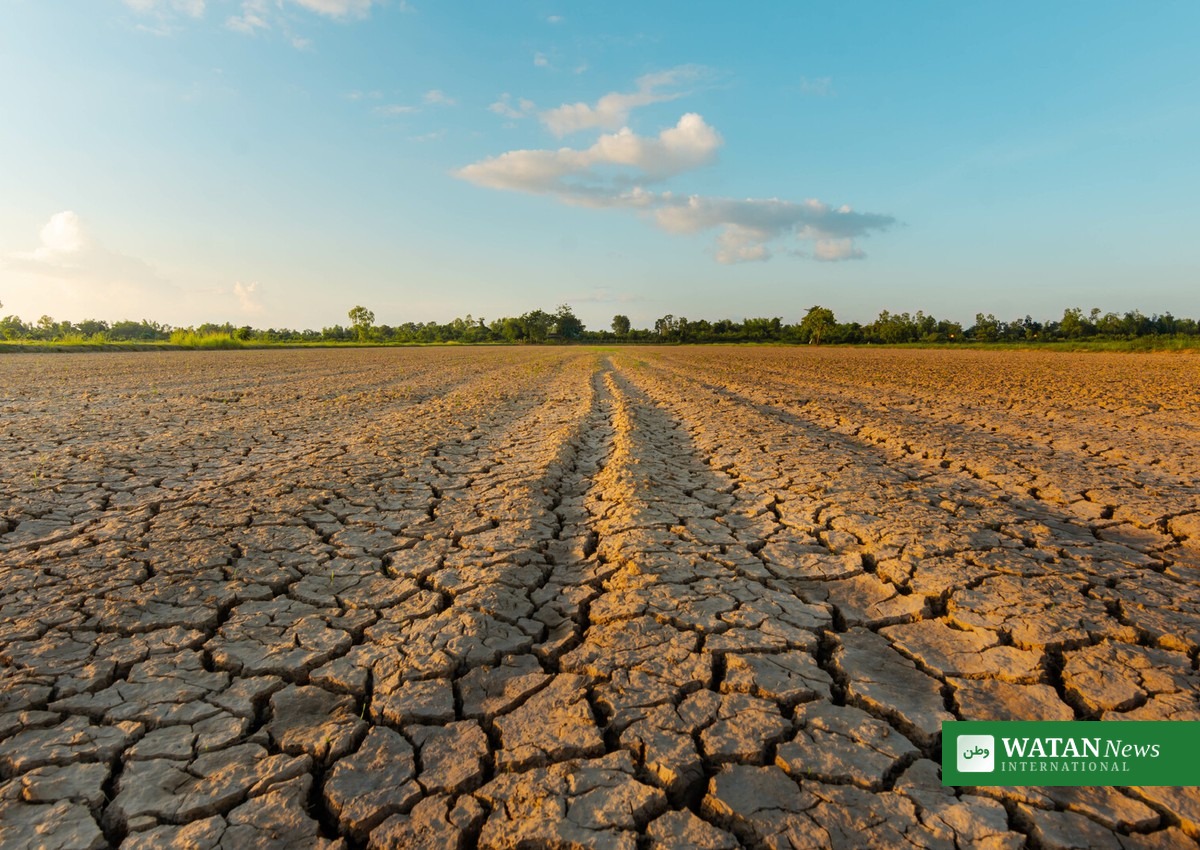
The authors urge caution in interpreting this pattern. They note that a recent cross-national study found population-level exposure to most extreme-weather hazards was not consistently associated with climate policy support — suggesting that lived experience alone does not automatically build trust in climate science or policy.
Trust is the hinge
Trust in information emerged as a central thread. Almost two in three respondents — 65% — reported moderate or less than moderate trust in the climate information they had received so far. Scientists studying the environment were the most trusted voices, trusted by 55%, followed by people working for non-governmental organisations at 23% and state and local government agencies at 19%. More than half, 52.6%, said they had encountered contradictory information about climate change.
Knowledge gaps were also visible. While 76.8% of respondents said they believe climate change is happening, 12.4% denied it and 10.8% were unsure. On causes, 36.2% said climate change is caused equally by human and natural factors, 31.9% said mostly by human activities and 13.7% said mostly by natural factors. Only 23.1% reported good or high knowledge of the concept of net zero — the term at the centre of many climate policies.
Political views mattered too: each step from liberal toward conservative was associated with a 0.131-point higher suspicion score. Among very conservative respondents, 48.2% expected climate change to have neither positive nor negative effects over the next 100 years, and 22% expected positive effects.
What this means for climate communication
The authors argue that the way forward is not simply more information. Their conclusion is that climate messages must be locally relevant, use simple terminology, and connect with people’s daily concerns and material interests — including the cost of living and food. Framing climate policies around direct benefits to health, and delivering messages through trusted messengers such as health professionals, may work better than technical language that many people say they do not understand.
The finding fits a wider pattern in recent research. A GlobeScan survey found the public ahead of its leaders on climate after COP31 ended without a deal, and an Afrobarometer survey found Africans increasingly looking to rich countries to lead. Together, the surveys suggest the awareness gap is as much about trust and relevance as about knowledge.
The study has limits. Its sample was drawn through the Pollfish mobile survey platform rather than by random probability sampling, it was older than the US population on average at 54 years, and it covered the United States only. The research was funded by the NATO Science for Peace and Security Programme and approved by the Institutional Review Board of the Harvard T.H. Chan School of Public Health.
Conclusion
Climate awareness does not grow in a vacuum. When people worry about affording food, or when the information they receive feels contradictory and distant from daily life, suspicion can grow instead. The study’s message to communicators and policymakers is direct: meet people where they live, in language they trust, on the concerns they already carry.