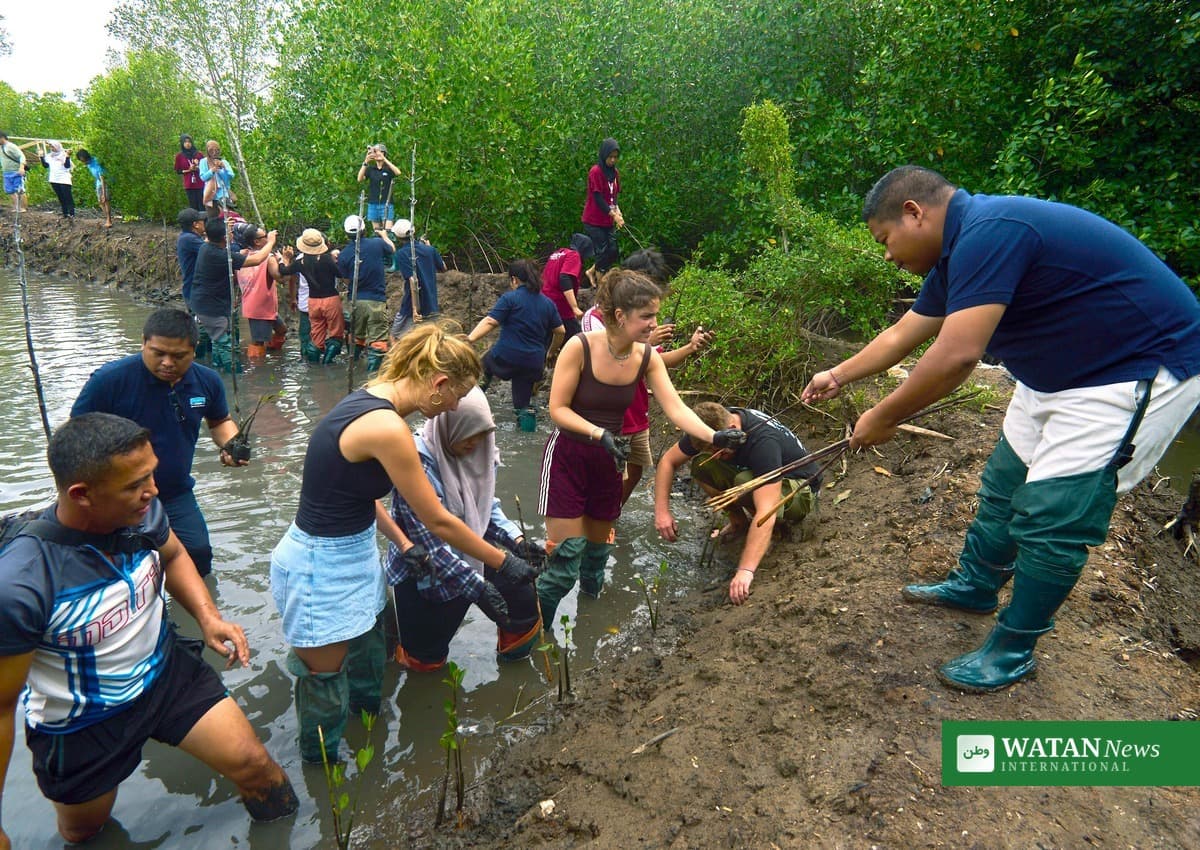
Indonesia has marked its national Tree Planting Day with a wave of mangrove plantings along its coasts, from youth volunteers in Banda Aceh to 500 new seedlings in North Sulawesi — part of a national push to restore 600,000 hectares of mangroves by 2030.
The plantings took place across the archipelago between 26 and 28 November 2026, as communities, students, state companies and religious groups joined events marking the day, known in Indonesia as Hari Menanam Pohon Indonesia. Mangroves were the focus almost everywhere, chosen for their power to store carbon and to shield coasts from erosion and tidal flooding.
Key facts
- Tree Planting Day: Indonesia marks Hari Menanam Pohon Indonesia on 28 November each year.
- North Sulawesi: 500 mangrove seedlings planted in Sarawet Village, North Minahasa, on 28 November 2026.
- Central Java: 2,000 mangrove seedlings planted in Pekalongan on 27 November, with around 500 participants.
- Jakarta: around 1,000 mangrove seedlings planted in the Angke Kapuk Protected Forest on 26 November, alongside river bioremediation.
- Tangerang: 6,000 mangrove seedlings planted on 16 November, with an 80 percent survival target and six months of care.
- National scale: Indonesia holds about 3.44 million hectares of mangroves and aims to rehabilitate 600,000 hectares by 2030.
From Aceh to North Sulawesi
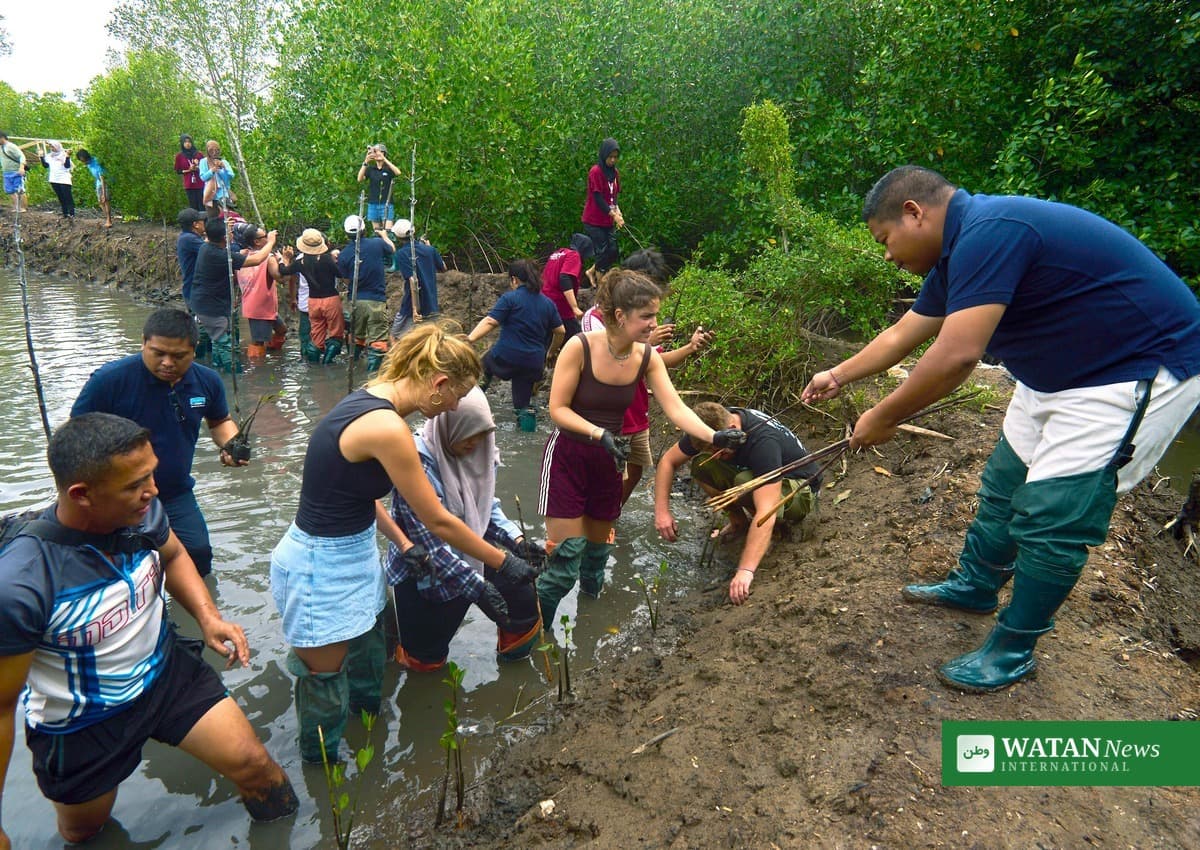
On Saturday 28 November, participants planted 500 mangrove seedlings in Sarawet Village in North Minahasa, North Sulawesi, in an event held to mark Tree Planting Day and to protect the coastal ecosystem, according to ANTARA Foto.
A day earlier, students joined civil servants and teachers in Degayu, Pekalongan City, Central Java, where the city government planted 2,000 mangrove seedlings with around 500 participants. The planting aimed to reduce coastal abrasion that can cause tidal flooding, ANTARA Foto reported.
Also on 27 November, youth volunteers from the Kutaraja Mangrove Care group carried mangrove seedlings to the coast of Lampulo in Banda Aceh, Aceh. ANTARA Foto described the planting as concrete action for climate change mitigation and adaptation, noting that mangroves can absorb significant amounts of blue carbon while protecting coastal areas from extreme weather.
In North Jakarta, around 1,000 mangrove seedlings were planted on 26 November in the Angke Kapuk Protected Forest, in an initiative by the Jakarta Religious Research and Development Centre and the North Jakarta branch of the Indonesian Association of Religious Extension Workers. Participants also carried out river bioremediation using fermented bioenzymes to improve water quality, EnviroNews Asia reported.
Planting is only the start
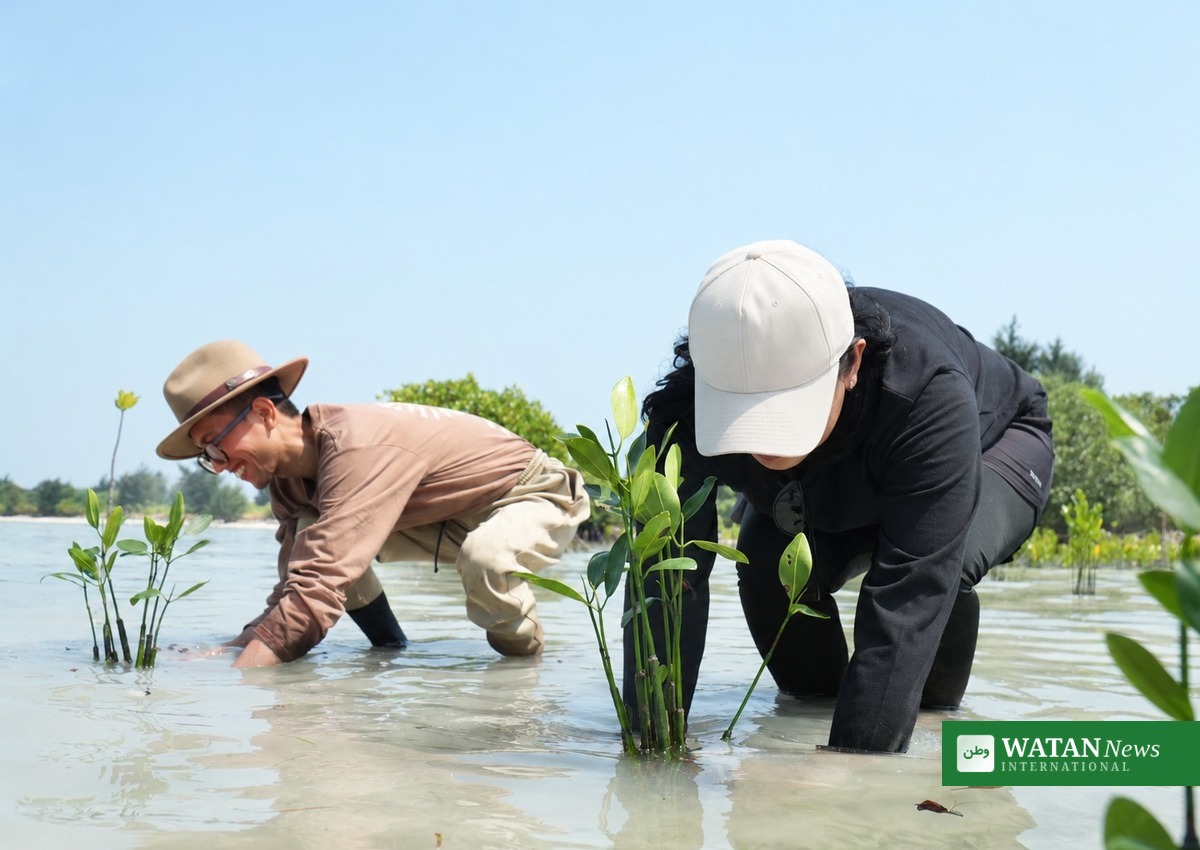
The week also showed that the work does not end when the seedlings go into the mud. On 16 November, the state electricity company PLN’s training centre planted 6,000 mangrove seedlings in Patramanggala Village, Tangerang, Banten, under its “Roots of Energy” programme, covering 700 square metres. The programme targets at least an 80 percent survival rate — at least 4,800 of the 6,000 seedlings — with the local Tunas Harapan Mangrove farmers group and the community maintaining the site for six months until May 2027, replacing dead seedlings and monitoring growth, Aktualita reported.
That focus on follow-up was echoed in Jakarta, where environmental activist Aris of the Indonesian Conservation Cadre Communication Forum said conservation should continue beyond planting, with waste removal and ecosystem maintenance essential to the site’s long-term protection.
Indonesia made the same point to the world at COP31 in Antalya, where its forestry ministry said restoration must move “beyond planting” — from counting seedlings to restoring whole landscapes. Read Watan News on Indonesia’s COP31 message that planting trees alone is not enough.
Why mangroves matter
Mangroves are among the most powerful natural climate tools on Earth. According to the UN Environment Programme, mangroves and other blue carbon ecosystems can absorb and store as much as 10 times as much carbon as terrestrial ecosystems — yet they are being lost three to five times faster than other forests, and over a third of the world’s mangroves have been lost over the last 100 years.
Indonesia has more at stake than almost any other country. Its Ministry of Forestry puts the country’s mangrove area at about 3.44 million hectares — around a fifth of the world’s total of roughly 15 million hectares. Under the National Mangrove Rehabilitation Roadmap for 2021–2030, Indonesia aims to rehabilitate 600,000 hectares of mangroves, a target also written into its Second Nationally Determined Contribution under the Paris Agreement.
There are signs the tide is turning. A NASA Earth Observatory report on satellite data published in November 2026 found that the world’s mangrove forests are growing again, gaining about 2,000 square kilometres since 2010 after losing about 3,000 square kilometres between 1984 and 2010.
The COP31 backdrop
The plantings come a week after COP31 closed in Antalya on 22 November 2026 without an adopted agreement. At the summit, Indonesia pledged not to expand agriculture into forests, especially primary forests, and said it would grow its corps of forest rangers and firefighters from 8,000 to 70,000. It also created a National Peatland and Mangrove Management Agency and plans a bill on climate change management.
Indonesia’s forestry ministry told COP31 that the country faces restoring about 12 million hectares of degraded land, with estimated financing needs of around US$42 billion. The Tree Planting Day events show that work beginning at community level — one seedling, one shoreline, one village at a time.
Conclusion
Thousands of seedlings planted in a week will not by themselves restore Indonesia’s coasts. But the combination on display this week — students and volunteers planting, a state company committing to six months of care, and a national target of 600,000 hectares — is what turns a symbolic day into lasting coastline. The test now is survival: whether the seedlings planted this week are still standing when the next Tree Planting Day arrives.