Indonesia used COP31 in Antalya to deliver a blunt message to the world’s tree-planters: planting trees is not enough. At a session at the Indonesia Pavilion on Tuesday, the country’s forestry ministry said forest restoration must move “beyond planting” — from counting seedlings to restoring whole landscapes of watersheds, forests and mangroves.
The session, titled “Beyond Planting: From Watersheds to Mangroves for Climate-Resilient Landscapes”, was led by Dyah Murtiningsih, director general of watershed management and forest rehabilitation at Indonesia’s Ministry of Forestry. Her argument was that a tree planted is not a forest restored — and that Indonesia’s climate goals depend on keeping whole ecosystems alive, not on planting numbers alone.
What ‘Beyond Planting’ means
Under the new approach, Indonesia is shifting its focus from simple tree-planting programmes to comprehensive, long-term ecosystem restoration. The strategy links three things that are usually handled separately: managing watersheds, rehabilitating forests and degraded land, and restoring mangroves along the coast.
The aim is to support Indonesia’s FOLU Net Sink 2030 target — the goal that the forestry and other land use sectors should absorb more carbon than they emit by 2030. The target combines cutting emissions through forest protection with increasing carbon absorption through rehabilitation of forests, peatlands, mangroves and other degraded ecosystems.
The scale of the task is enormous. Indonesia faces restoring about 12 million hectares of degraded land, with estimated financing needs of US$42 billion, according to the ministry’s presentation at COP31.
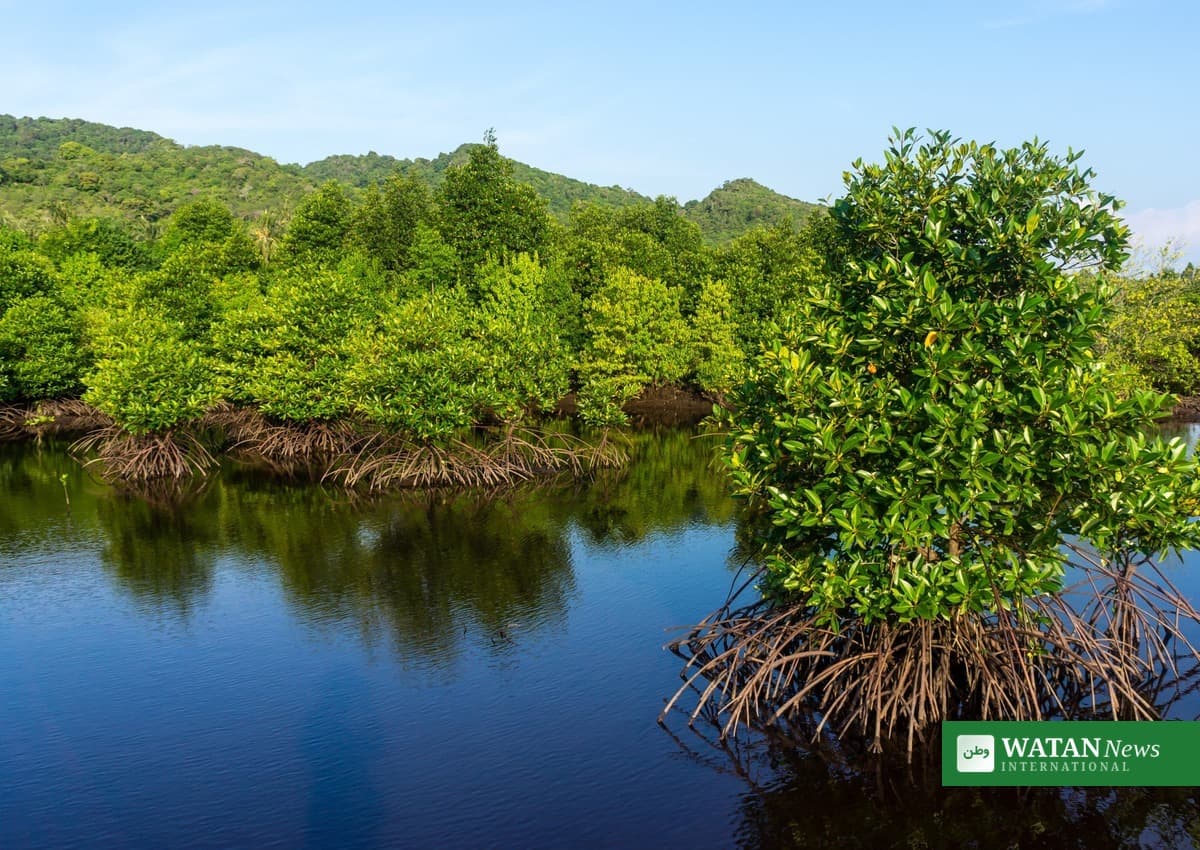
Mangroves at the centre of the plan
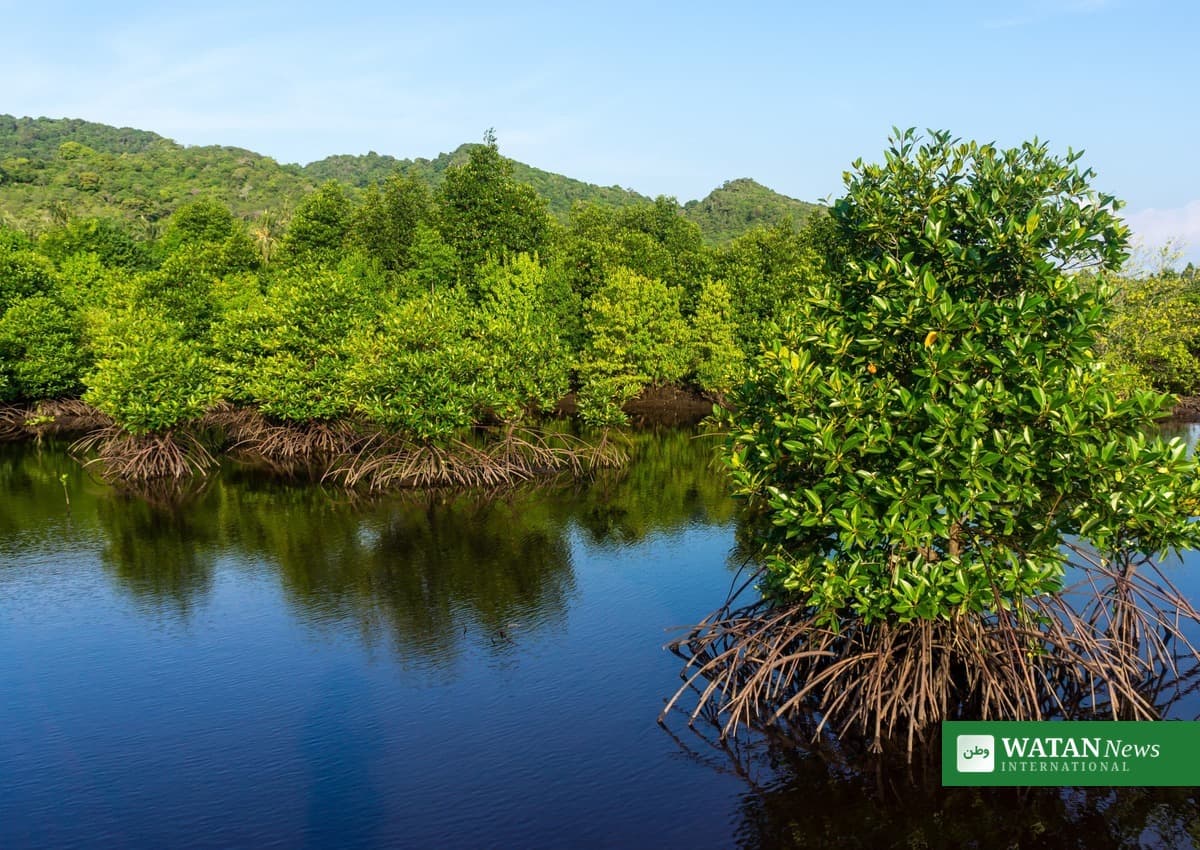
Mangroves are a large part of the story. Indonesia has about 3.44 million hectares of mangrove ecosystems, and under its National Mangrove Rehabilitation Roadmap for 2021–2030 it aims to rehabilitate 600,000 hectares of them.
The ministry is also developing the World Mangrove Center as a platform for international cooperation, knowledge exchange and capacity building in mangrove management, with discussions at COP31 involving international participants.
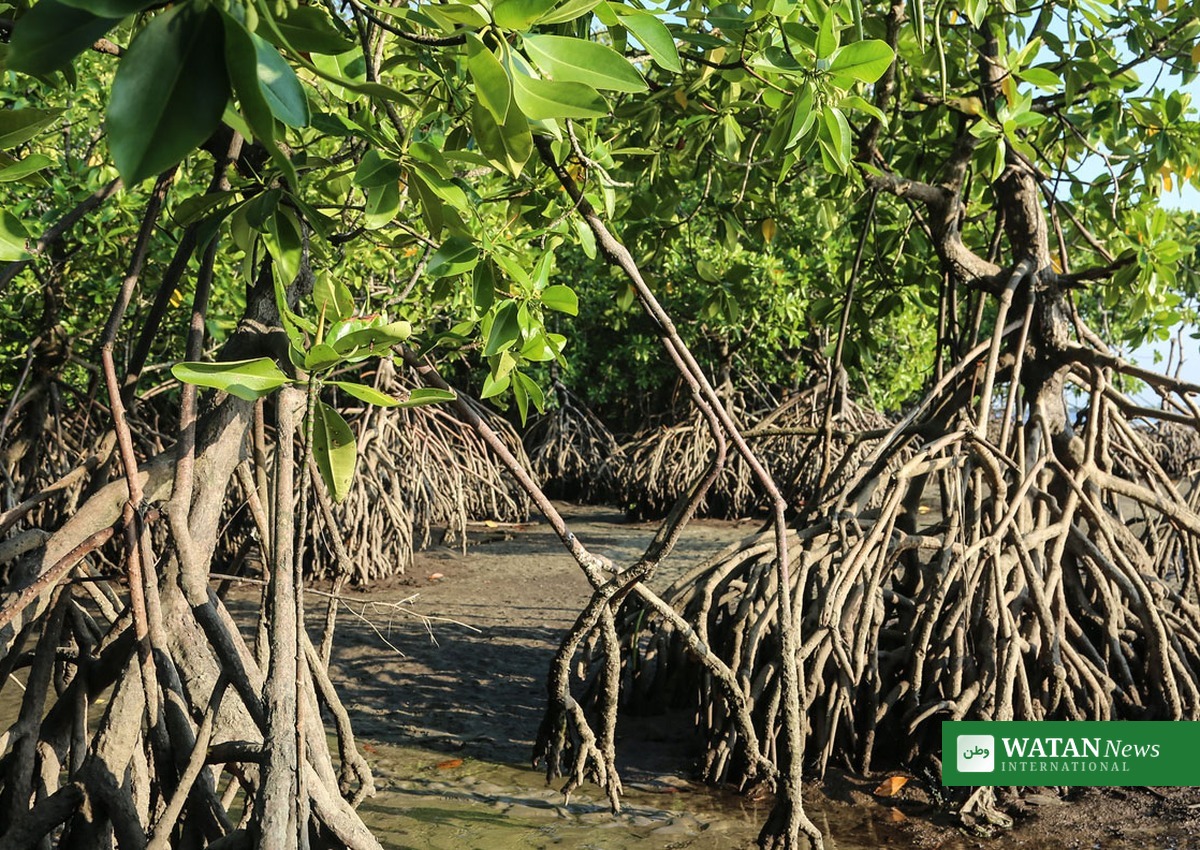
One example presented at the session came from the Menoreh region, where collaborative rehabilitation work across the Serayu Opak Progo watershed planted more than 901,000 multipurpose trees across about 1,656 hectares and created around 87,000 person-days of work for local people.
Peatlands join the restoration push
The restoration message was echoed elsewhere at COP31. On 14 November, governments, scientists and conservation groups launched the Peatland Breakthrough, a global call to conserve, rewet and restore the world’s peatlands, with targets of bringing at least 30 million hectares of degraded peatland under rewetting and restoration by 2030 and mobilising at least US$100 billion for peatland action.
Germany, Ireland, Peru and Uganda joined as champion countries, and Canada endorsed the initiative, which is led by Wetlands International, the UN Environment Programme, the Food and Agriculture Organization and the Greifswald Mire Centre. According to UNEP, peatlands hold nearly 30 per cent of the world’s soil organic carbon, and rewetting and restoring degraded peatlands covering only 0.4 per cent of global land area could cut global emissions by 4 to 5 per cent by 2050.
Carbon finance and the wider forest picture
Indonesia’s restoration push sits alongside its forest carbon plans. At COP31, Watan News reported on Indonesia’s forest carbon trading programme, which covers 38.6 million hectares across nine provinces. Indonesia is also working with Japan under the Joint Crediting Mechanism, with four commitments set out at the Indonesia Pavilion on 9 November: restoring 12 million hectares of degraded land, protecting 50 million hectares of forest from deforestation and degradation, developing social forestry carbon projects across 8.3 million hectares, and supporting customary forests covering 1.4 million hectares.
The restoration theme runs through the whole summit. The latest draft of COP31’s cover decision, published on Thursday, calls for enhanced efforts to halt and reverse deforestation and forest degradation by 2030 and welcomes the Brazil-led roadmap on deforestation. On 12 November, the President of the Republic of Congo, Denis Sassou Nguesso, used COP31 to call for a worldwide tree-planting effort, urging all UN member states to take part. And the UN General Assembly has already declared 2027–2036 the UN Decade for Afforestation and Reforestation. Watan News reported this week on Kazakhstan’s nine-million-tree plan, presented at its COP31 pavilion.
FAKTA
- The message: Indonesia’s forestry ministry told COP31 that tree-planting targets alone are not enough — restoration must cover watersheds, forests and mangroves together.
- The session: “Beyond Planting: From Watersheds to Mangroves for Climate-Resilient Landscapes”, Indonesia Pavilion, COP31, Tuesday 17 November 2026.
- The goal: FOLU Net Sink 2030 — Indonesia’s forestry and land use sectors absorb more carbon than they emit by 2030.
- The scale: about 12 million hectares of degraded land to restore; estimated financing needs of US$42 billion.
- Mangroves: about 3.44 million hectares of mangrove ecosystems; 600,000 hectares to be rehabilitated under the 2021–2030 roadmap.
- Peatlands: the Peatland Breakthrough, launched at COP31 on 14 November, aims to rewet and restore 30 million hectares by 2030 and mobilise US$100 billion.
What to watch
Whether the final COP31 text keeps its call to halt and reverse deforestation by 2030 will show how far the restoration message has travelled from the pavilions into the negotiations. For Indonesia, the test is delivery: the 12-million-hectare restoration task needs US$42 billion, and the shift from planting numbers to measurable ecosystem recovery will be judged on survival rates, water flows and mangrove cover — not on seedlings counted.