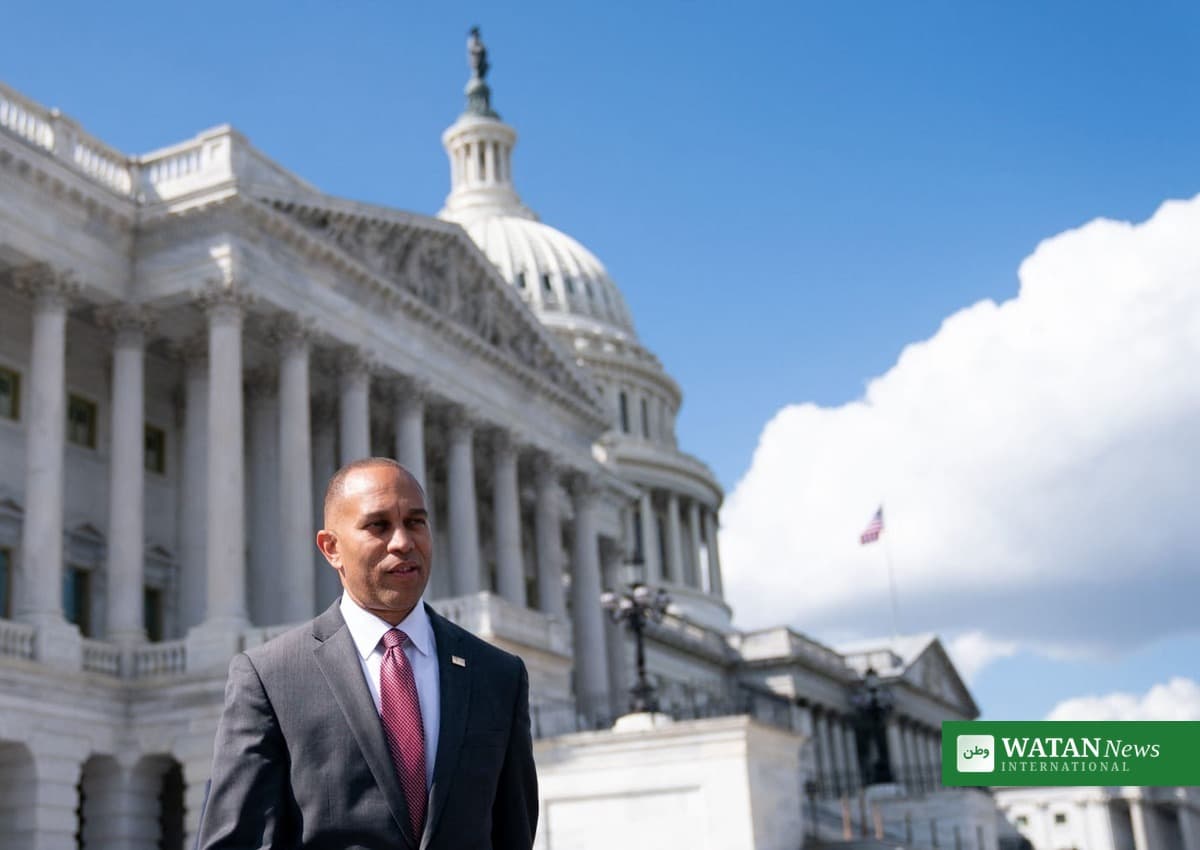
Hakeem Jeffries has won the House Democrats’ nomination for speaker, putting him on course to become the first Black speaker in United States history when the new Congress convenes in January. House Democrats backed their leader in a closed-door caucus vote on Wednesday, 18 November, with only 11 members voting against him in the secret ballot.
FAKTA
- Vote: House Democrats nominated Hakeem Jeffries as speaker on Wednesday, 18 November 2026; 11 Democrats voted against him in the secret ballot.
- Historic first: Jeffries would be the first Black speaker in US history when the full House votes on 3 January 2027.
- Leadership team: Katherine Clark is set to become majority leader, the first woman to hold the job; Pete Aguilar is set to become whip, the first Latino in the House’s number-three role.
- Opposition: seven newly elected progressive members voted no, seeking commitments on Medicare for All and on ending arms sales to Israel.
- Context: Democrats won control of the House in the 3 November midterm elections, two weeks before the leadership vote.

A near-unanimous vote
Jeffries had been expected to win the nomination comfortably. Democrats hold a large majority in the incoming House after their midterm victories, leaving little room for a small group of lawmakers to change the outcome. According to a source familiar with the vote, just 11 Democrats voted against him, and his allies expect him to win the gavel easily in the formal vote by the full chamber on 3 January.
The vote came roughly two weeks after the midterm elections, in which Democrats won control of both the House and the Senate. Jeffries has led House Democrats since 2023, and the nomination confirms him as the party’s choice to lead the chamber in the new Congress.
Seven progressives held out
A small group of newly elected progressive members had refused to commit publicly to Jeffries before the leadership election, pressing for concessions on their priorities. Seven of them said in a statement that they voted no because they were still seeking commitments from Jeffries on votes for Medicare for All and on ending arms sales to Israel.
Democratic Representative-elect Don Leonard also told reporters he voted against nominating Jeffries. The dissent did not come close to blocking the nomination, and Jeffries’ supporters said the party was united behind its leadership team for the new Congress.
A leadership team of firsts
Jeffries’ leadership team will itself make history. Representative Katherine Clark of Massachusetts is set to become House majority leader, the first woman to hold that job, while Representative Pete Aguilar of California is set to become whip, the first Latino to hold the House’s number-three post. All three ran unopposed for their positions.
Last week, Jeffries announced that he supports major elements of a universal healthcare system, including lowering the age at which people qualify for Medicare, creating a programme that guarantees universal coverage for children, and adding hearing, dental and vision cover to the programme.
What happens next
The formal election of the speaker takes place on 3 January 2027, the first act of the new Congress, when all members are sworn in. Jeffries’ allies, and even his critics, expect him to survive that vote easily. Once in the chair, he will oversee the largest Democratic House majority in years, with an agenda that includes healthcare, affordability and government funding.
Conclusion
The nomination vote settles the question of who will lead the House in January. Jeffries will take the gavel as the first Black speaker in American history, at the head of a leadership team that breaks new ground of its own — and with a small progressive bloc still pressing him for commitments on healthcare and foreign policy.