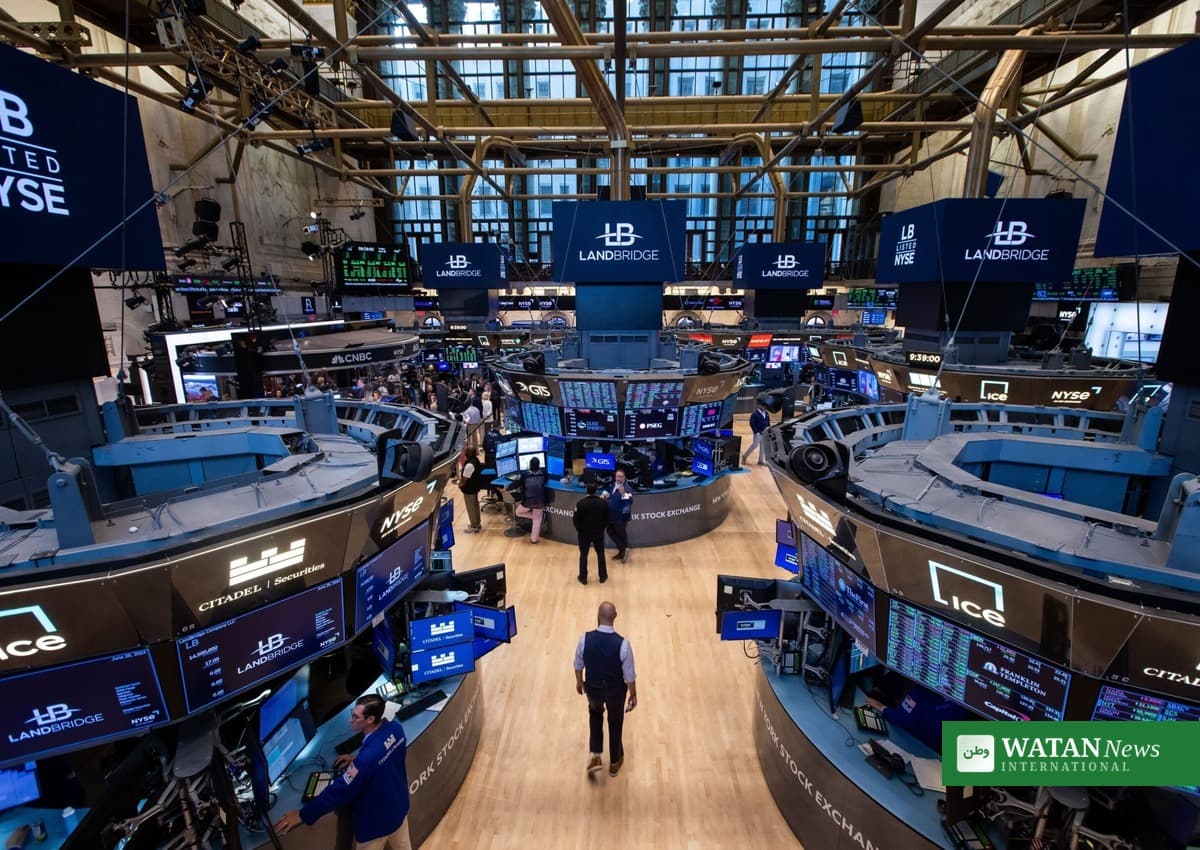
Global markets slid on Tuesday as rising tensions in the Middle East, a sharp rise in the fear index and caution ahead of Nvidia’s earnings combined to drive broad selling. The Dow Jones Industrial Average fell 848.75 points, or 1.64 per cent, to 50,759.42, while European shares ended 1.8 per cent lower and stocks fell across Asia the following morning.
FAKTA
- Dow Jones: down 848.75 points, or 1.64 per cent, to 50,759.42 on Tuesday, 17 November.
- S&P 500: down 1.03 per cent to 7,340.53, its lowest close since late July and its fourth straight loss.
- Nasdaq: down 0.74 per cent to 24,328.38, also a fourth consecutive decline.
- Europe: stocks ended 1.8 per cent lower; Deutsche Bank fell 6 per cent.
- Oil: Brent crude traded around $92.45 to $92.75 a barrel on Wednesday, down about 3 per cent since Friday.
- Gold: spot gold fell 0.09 per cent to $3,852.59 an ounce.
- Fear index: the VIX rose to 25.46, signalling clear risk-off moves.

Wall Street’s broad sell-off
All three major US stock indexes fell on Tuesday, and all 11 sectors of the S&P 500 declined. The Dow extended its losing streak, the S&P 500 closed at its lowest level since late July, and the Nasdaq fell for a fourth straight session. MSCI’s gauge of stocks across the globe fell 1.21 per cent to 1,079.50, and emerging-market stocks fell 1.31 per cent.
The main factors weighing on the market were heightened tensions in the Middle East and caution ahead of Nvidia’s earnings release after the close. Reports that Iran had attacked a US military radar system in Bahrain added to the tension, and US forces had struck a site on Qeshm Island. Reports of a temporary outage in a classified network of the US National Security Agency also strengthened risk-averse sentiment among investors.
Europe and Asia follow lower
Stocks in Europe ended 1.8 per cent lower, with Deutsche Bank falling 6 per cent on renewed scrutiny of the lender’s past dealings with clients. In Asia, early trading on Wednesday was mixed despite Nvidia’s results: the Nikkei fell 0.28 per cent, the Hang Seng fell 0.91 per cent, and South Korea’s KOSPI rose 0.44 per cent.
The technology-led sell-off of the previous week continued into Monday and Tuesday, with virtually every major market taking a hit. Japan was particularly hard hit, and even traditional safe havens did not escape the weakness.
Oil and gold send mixed signals
Crude oil prices were little changed at first, with traders jittery about continued tanker attacks in the region, but they fell on Wednesday as traders weighed the prospect of a global supply surplus against the tensions. The International Energy Agency said the global oil market was expected to return to a surplus in the final quarter of the year, and an industry estimate pointed to a 5.30 million-barrel build in US crude inventories.
Spot gold fell 0.09 per cent to $3,852.59 an ounce. Copper tumbled below $13,000 a metric ton on Wednesday, its lowest since April, as a stronger US dollar, concerns over Chinese industrial demand and the sell-off in AI-related stocks overshadowed tightening supplies.
| Index | Close, 17 November | Change |
|---|---|---|
| Dow Jones | 50,759.42 | -1.64% |
| S&P 500 | 7,340.53 | -1.03% |
| Nasdaq Composite | 24,328.38 | -0.74% |
| MSCI world gauge | 1,079.50 | -1.21% |
Nvidia results offer some relief
After the close on Tuesday, Nvidia reported record quarterly revenue of $115.8 billion and forecast about $130 billion for the current quarter, above market expectations. The results lifted US equity futures and a tech-heavy Korean exchange-traded fund, offering some relief after the broad falls. The focus now will be on developments in the Middle East, crude oil price trends and the reaction in semiconductor stocks.
Conclusion
Tuesday’s sell-off showed how quickly geopolitical tension can spread through global markets, from Wall Street to Europe and Asia. With oil caught between supply-surplus expectations and the risk of disruption around the Strait of Hormuz, and Nvidia’s strong results only partly steadying sentiment, investors are braced for further swings.