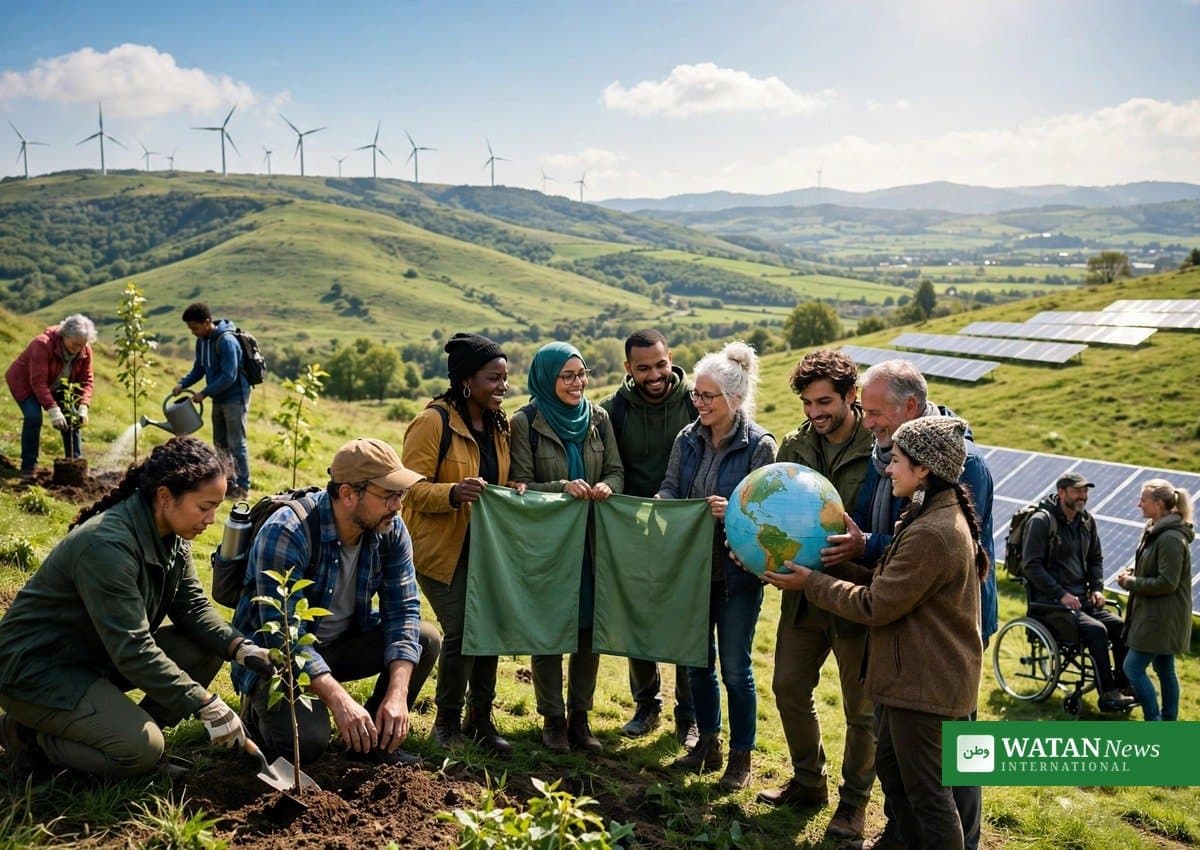
Centenary Bank, the Catholic Church in Kabale Diocese and Good Forests Foundation Uganda have extended their environmental restoration partnership to Kabale Diocese, where they are planting 12,000 trees, with Nyamwegabira Parish in Kanungu District as the pioneer beneficiary.
The planting exercise at Nyamwegabira Parish is part of the Cente Green Programme, a five-year initiative that will support the establishment and management of 500,000 trees across Catholic dioceses in Uganda. The programme was launched in August 2026 as a key part of Centenary Bank’s sustainability agenda.
A partnership taking root in Kanungu
Speaking during the tree planting exercise at Nyamwegabira Parish, Benon Nsimenta, Centenary Bank’s Kihihi Branch Manager, thanked Kabale Catholic Diocese for choosing the parish as a pioneer beneficiary, and said the bank will ensure the project is well implemented as part of its environmental, social and governance agenda and its broader commitment to sustainable and responsible banking.
“At Centenary Bank, we are a values-based bank that recognises the critical connection between financial services, businesses, communities and the environment in which they operate,” Nsimenta said. “This partnership demonstrates how private sector financing, faith-based institutions and local technical organizations can work together to deliver woodlot restoration across the country.”
The Catholic Church provides the land and mobilises communities and church members to take part in establishing and managing the woodlots. Msgr John Vianney Sunday, Vicar General of Kabale Catholic Diocese, said the diocese has set aside 30 acres of land for tree planting and will mobilise communities to plant, protect and nurture the trees.
“As a Church, we have a responsibility to care for the environment God has entrusted to us and restore areas that have been degraded,” Msgr Sunday said. “We will also mobilise communities to plant, protect and nurture these trees to ensure they grow and contribute to a healthier environment for future generations.”
The five-year Cente Green Programme
The Cente Green Programme aims to support the planting and management of 100,000 trees every year for five years, contributing to landscape restoration and the responsible management of natural resources. Twelve Catholic dioceses are participating in the programme in 2026: Kasese, Fort Portal, Kiyinda-Mityana, Masaka, Mbarara, Kabale, Jinja, Tororo, Arua, Nebbi, Moroto and Kotido.
Together, Centenary Bank and its partners aim to restore approximately 213 acres of land in 2026 through the establishment of well-managed woodlots using appropriate indigenous tree species.
Good Forests Foundation Uganda provides the technical guidance for the work: site selection, appropriate tree species, planting, establishment, maintenance and monitoring, so that the investment delivers lasting environmental benefits. Ronald Mwikirize, the foundation’s Forest Field Coordinator, said the organisation brings extensive experience in community-led reforestation, agroforestry and sustainable land management across central, eastern and western Uganda.
“We are going to provide technical guidance on site selection, species selection, planting, establishment, maintenance and monitoring which will ensure tree survival so that this partnership investment translates into long term environment restoration,” Mwikirize said.
Western Uganda’s share this season
In the western region alone, about 38,000 trees will be planted this season as part of the 100,000 trees being planted across the country: Fort Portal 6,000, Mbarara 12,000, Kabale 12,000 and Kasese 8,000.
The partners say the work goes beyond planting. Indigenous timber and fruit trees can help protect soils, improve food security, diversify household incomes and strengthen resilience to erosion, floods and droughts. Centenary Bank has supported the growth of more than 250,000 trees across Uganda since 2023, and began measuring its carbon emissions in 2025, when they stood at more than 6,000 tonnes of carbon dioxide equivalent, according to Business Focus.
The effort also fits Uganda’s wider forest recovery. According to the country’s Third Voluntary National Review Report of 2024, Uganda’s forest cover rose from 9.5 percent in 2015 to 13.3 percent, with a national target of 15 percent forest cover by 2026.
Key facts
- What: 12,000 trees being planted across Kabale Diocese, launched at Nyamwegabira Parish, Kanungu District.
- Who: Centenary Bank, Kabale Catholic Diocese and Good Forests Foundation Uganda.
- Programme: Cente Green Programme, launched August 2026, targeting 500,000 trees over five years.
- Scale in 2026: 12 dioceses participating; about 213 acres to be restored; 38,000 trees in western Uganda this season.
- Land: Kabale Diocese has set aside 30 acres for tree planting.
- Focus: Indigenous timber and fruit species, with monitoring for survival, not planting alone.
Related reading on Watan News: Ethiopia’s 47 Billion Seedlings: A Green Legacy Tested by Survival.
The Kanungu planting shows how banks, churches and technical organisations can combine finance, land, community mobilisation and forestry expertise. Its real test, as the partners themselves stress, will be whether the seedlings survive and grow into woodlots that serve both the landscape and the people who live in it.