Malaysia has set one of Southeast Asia’s most ambitious municipal-waste targets: diverting 53 per cent of solid waste from landfills by 2035 under its zero waste 2035 plan, up from 42 per cent this year. The announcement was made by Housing and Local Government Minister Nga Kor Ming during an oral question session in the Dewan Rakyat, the country’s lower house of parliament, on 5 October 2026.
The minister said Malaysia needed to move away from a linear “use and dispose” model towards a circular economy built on waste reduction, reuse, recycling and resource recovery, according to Malaysian media reporting on the parliamentary session.
Malaysia’s zero waste 2035 roadmap
The target is anchored in the Circular Economy Blueprint for Solid Waste in Malaysia 2025-2035, which sets staged milestones: landfill diversion rises from 42 per cent in 2025 to 48 per cent by 2030 and 53 per cent by 2035.
Nga told parliament that reducing waste generation and strengthening the circular economy could no longer be delayed if Malaysia was to ensure sustainable national development.
Where Malaysia stands today
The national recycling rate has climbed from 31.52 per cent in 2021 to 37.9 per cent in 2024, and the government is confident of exceeding 40 per cent by the end of this year.
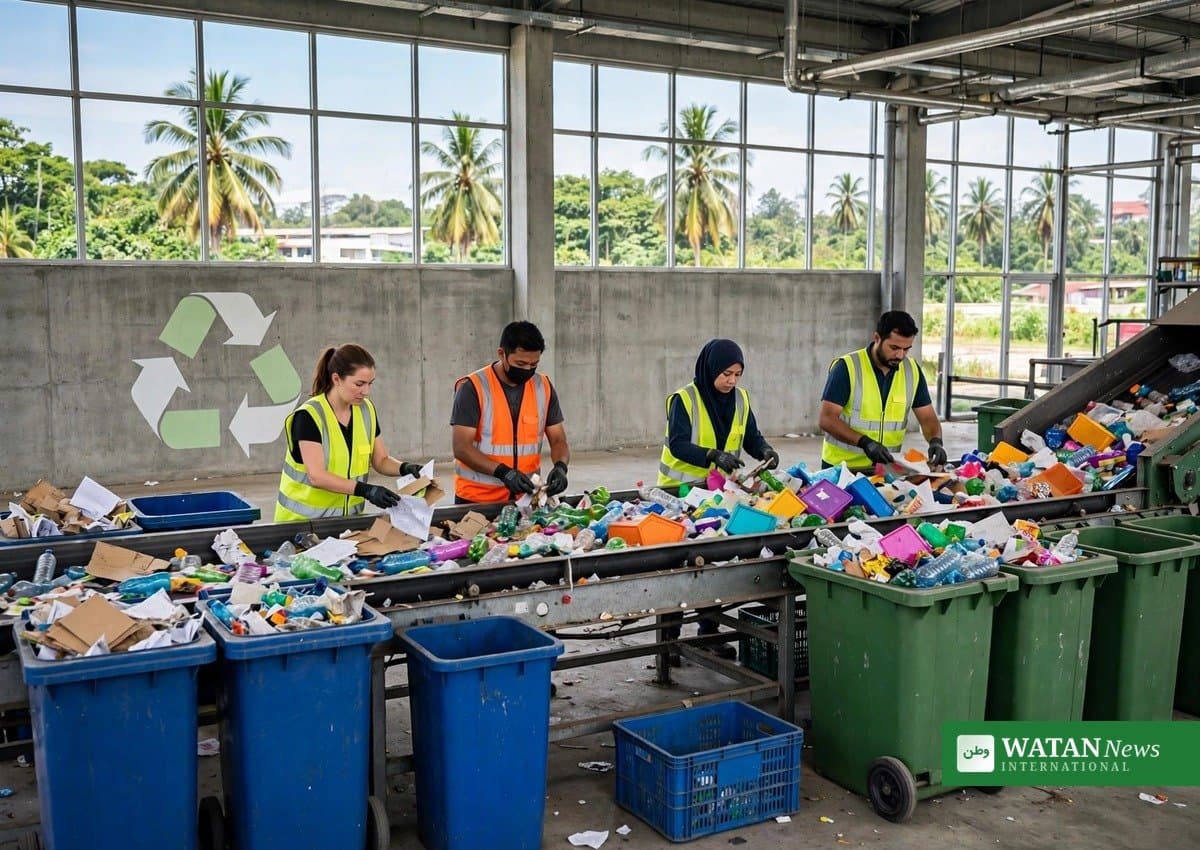
As of August 2026, a total of 6,256 recycling facilities had been provided at shopping centres in the states covered by the Solid Waste and Public Cleansing Management Act 2007 (Act 672) — after the ministry made recycling facilities a condition, in phases, for the approval and renewal of business premises licences by local authorities.
The scale of the challenge is significant: Malaysia’s solid waste generation is projected to rise from 14.5 million tonnes in 2024 to 17 million tonnes by 2035, and nearly 40 per cent of the waste generated each day is food waste.
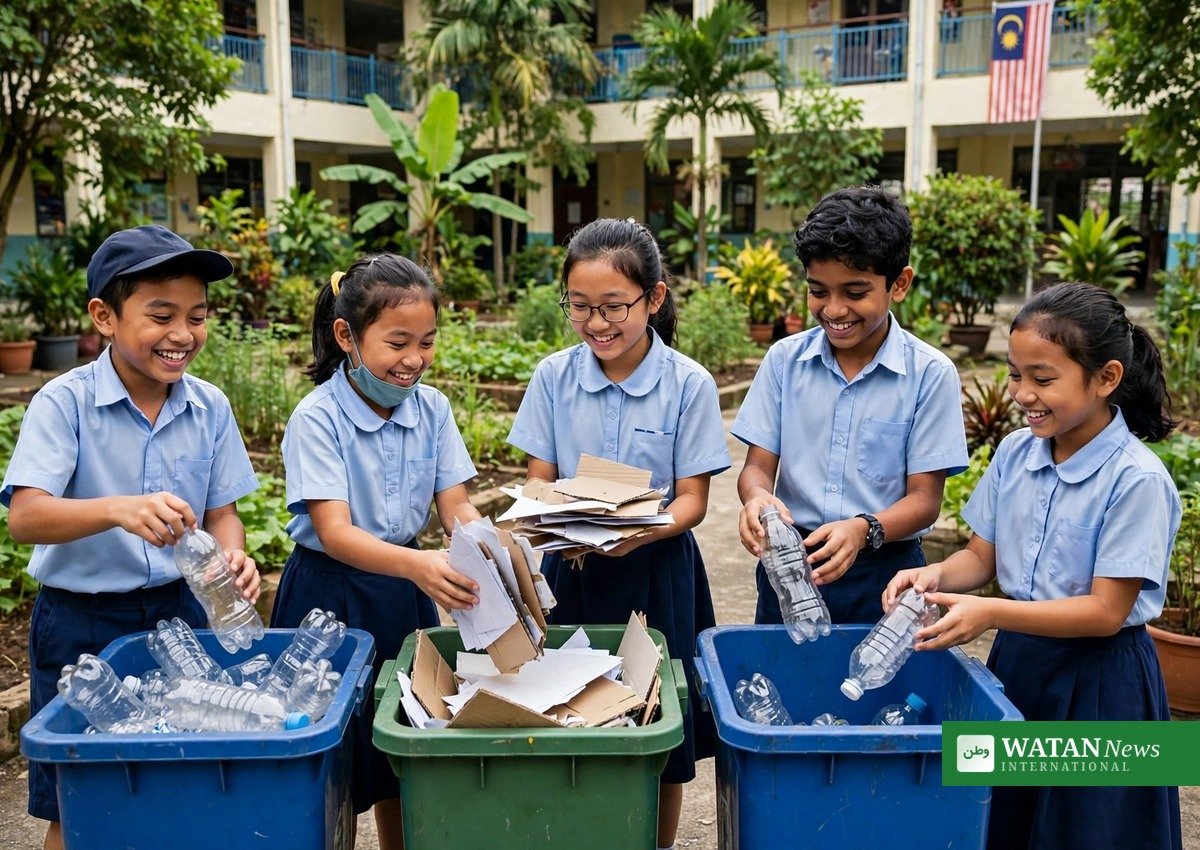
Schoolchildren take part in a school recycling competition — Malaysia’s zero-waste push relies heavily on youth and community programmes.
How Malaysia plans to get there
To accelerate the transition, the ministry has introduced Extended Producer Responsibility (EPR), a National Recycling Campaign themed “From Waste to Resources” and a campaign against single-use plastics.
The Solid Waste Management and Public Cleansing Corporation (SWCorp) is actively promoting waste separation at source among households as well as the commercial and industrial sectors, and a National Circular Economy Council is coordinating efforts across ministries, local authorities and industry players.
Public education programmes are already showing results: under the Trash to Cash programme, more than 7.86 million kg of recyclable materials were collected between January and August, generating sales of over RM2.85 million. Seventeen active zero-waste community centres collected more than 111,504 kg of recyclables in the same period, while a school-based recycling competition involving 1,680 schools collected 4.95 million kg, generating RM2.98 million in proceeds.
FAKTA: Malaysia’s zero-waste targets
- 2035 target: 53% of solid waste diverted from landfills, up from 42% in 2025.
- 2030 milestone: 48% landfill diversion under the Circular Economy Blueprint 2025-2035.
- Recycling rate: 31.52% in 2021 → 37.9% in 2024; government expects to exceed 40% by end of 2026.
- Results so far: 7.86 million kg of recyclables collected via Trash to Cash (Jan–Aug); 6,256 recycling facilities at shopping centres.
- Announced: 5 October 2026 by Housing and Local Government Minister Nga Kor Ming in the Dewan Rakyat.
Why it matters for the climate
Landfills are a major source of methane, a greenhouse gas far more potent than carbon dioxide in the short term. Cutting landfill dependence while recovering valuable materials cuts emissions twice over — fewer methane releases and less demand for virgin raw materials.
If Malaysia hits its 2035 target, it would set a benchmark for the region: a rapidly industrialising, middle-income economy decoupling economic growth from the landfill. More zero-waste and climate coverage in English is available on Watan News English.