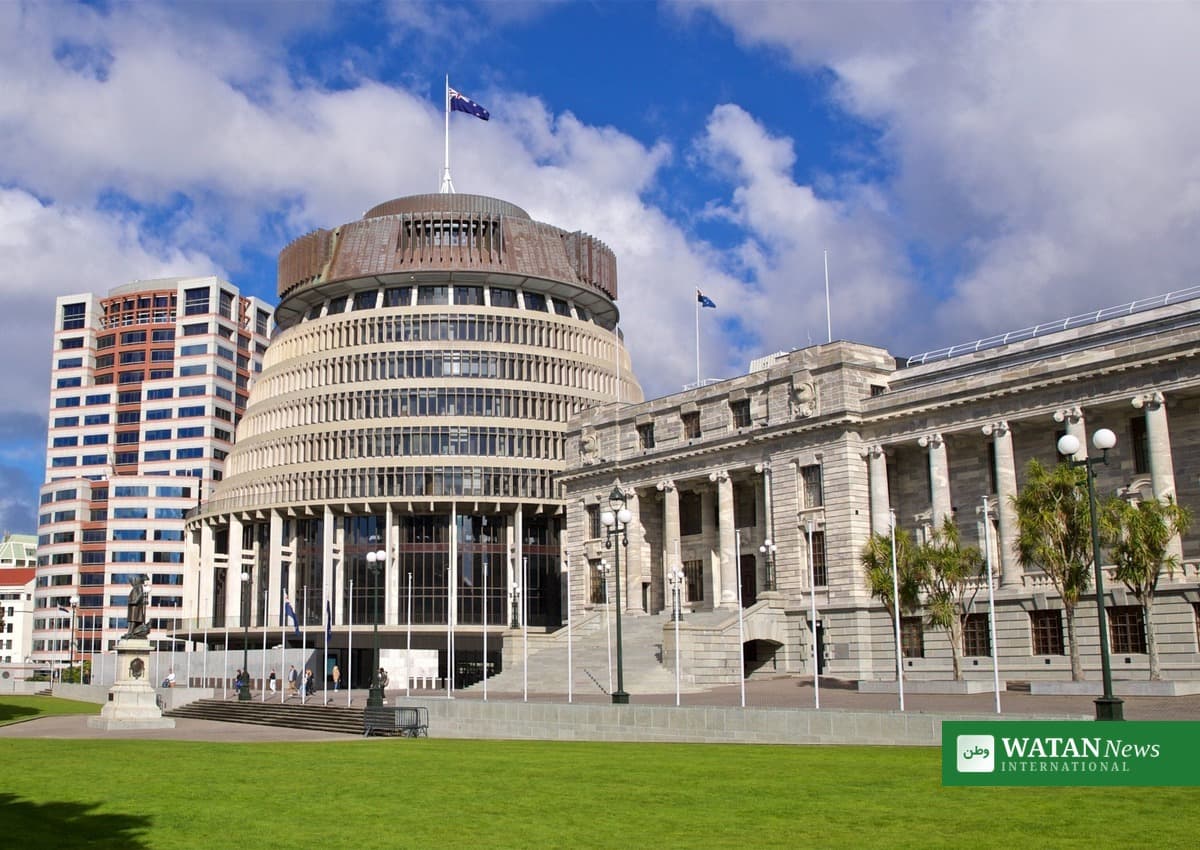
New Zealand’s general election has ended without a clear winner, after voters handed the country’s two major parties their weakest combined result of the modern era. Preliminary results put opposition Labour fractionally ahead of Prime Minister Christopher Luxon’s governing National Party, but neither side can be sure of forming a government until almost 400,000 special votes are counted.
FAKTA
- Election: Saturday, 7 November 2026; preliminary results published.
- Party vote: Labour 29.36% (710,330 votes); National 29.21% (706,680 votes) — a gap of just 3,650 votes.
- Electorate seats: National 42; Labour 21.
- Parliament: 131 seats after an overhang; 66 needed for a majority.
- Provisional balance: National, ACT and New Zealand First together hold 67 seats.
- Smaller parties: Greens 13.3% (16 seats); ACT 10.9% (13); New Zealand First 9.8% (12); Opportunity Party 6.0% (7); Te Pāti Māori 5 electorate seats.
- Still to count: about 399,365 special votes; the official result is due on 27 November.
- Turnout: 74.6% of enrolled voters, down from 78.2% in 2023.
New Zealand Election 2026: A Near Tie at the Top
The two main parties finished within 0.15 percentage points of each other — a gap of only 3,650 votes out of more than 2.4 million cast. Both fell below 30% for the first time, and together they took only 58.6% of the party vote — the first time the pair has dropped under 60%.
National won 42 of the 71 electorate seats, far more than its 29.2% party-vote share would earn. Under New Zealand’s mixed-member proportional system, that mismatch produced an overhang enlarging Parliament to 131 seats, and National receives no list seats — a first for a major party.
The provisional arithmetic gives the three-party coalition 67 seats, one more than the 66 needed for a majority. But special votes — about a seventh of the total, including nearly 97,000 overseas votes — have historically favoured the left, and the final count on 27 November could erase that margin.
Smaller Parties Hold the Balance
The Greens took 13.3%, close to the record for a third party, while ACT won 10.9% and New Zealand First 9.8%. The biggest surprise was the centrist Opportunity Party, which crossed the 5% threshold for the first time with 6.0% and is set to enter Parliament with seven seats. Its leader, Qiulae Wong, said public trust in politics had fallen to a very low level.
If the coalition loses its one-seat cushion, Luxon may need Opportunity’s support — and he must govern without Finance Minister Nicola Willis and Transport Minister Chris Bishop, who both lost their seats.
A Wider Global Pattern
The result mirrors elections across the developed world, where established parties have lost ground to smaller rivals — the Greens and Reform UK in Britain, One Nation in Australia, and far-right parties in France, Germany and Austria. Analysts say the trend reflects a broad shift away from the political establishment.
New Zealand now faces weeks of negotiation before its next government takes shape.
More international news is available on Watan News.