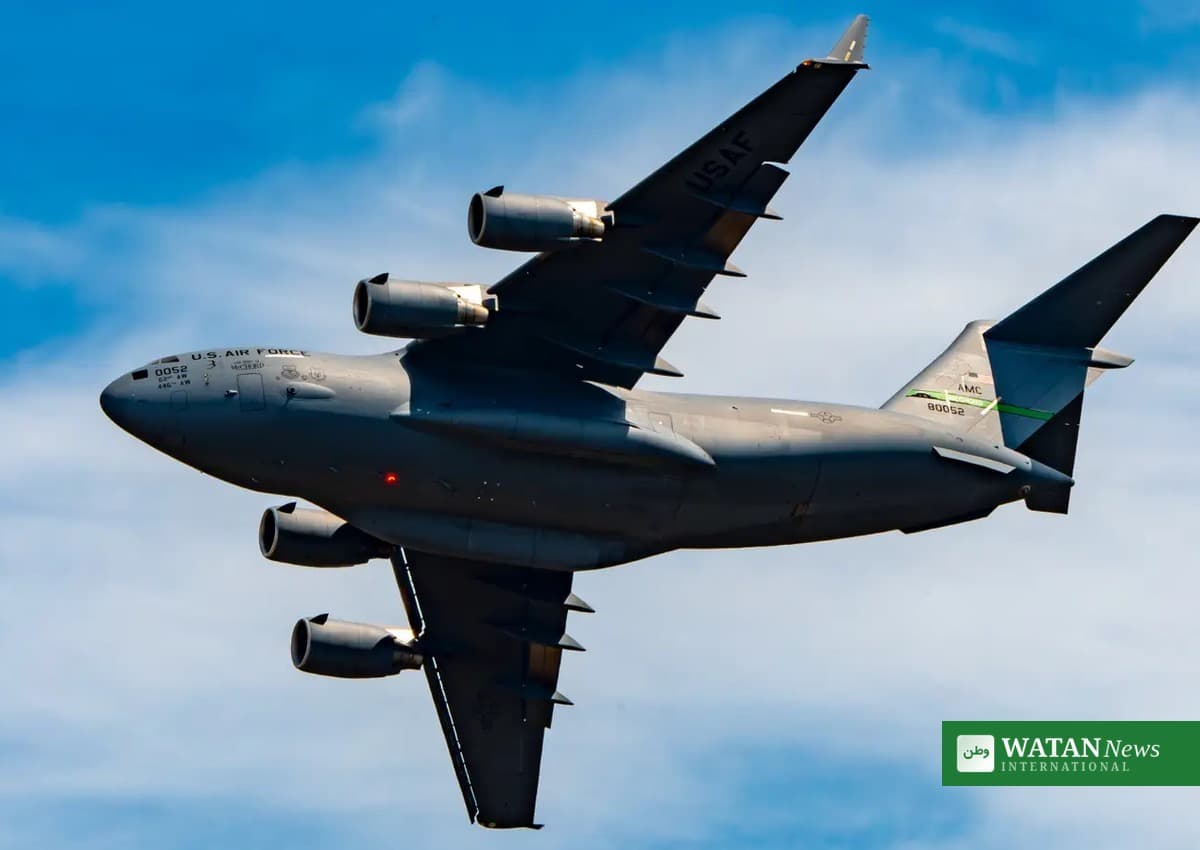
The United States Air Force is preparing to give its workhorse cargo aircraft a new combat role, turning C-17 and C-130 transport planes into launch platforms for cruise missiles. The service’s most senior officer, Chief of Staff General Kenneth S. Wilsbach, outlined the plan on 6 November at the Airlift/Tanker Association’s 2026 Symposium in Kissimmee, Florida, saying the capability could be fielded as early as 2027.
FAKTA
- What: C-17 and C-130 cargo aircraft to launch palletised cruise missiles
- Programme: Family of Affordable Mass Missiles (FAMM); palletised version FAMM-P; effort now called Dragon Cart
- Announced: 6 November 2026, by Gen. Kenneth S. Wilsbach in Kissimmee, Florida
- Fielding target: 2027
- Cost: about $218,000 per FAMM-P missile, roughly a tenth of a JASSM
- Budget: $355 million requested for 1,000 missiles in fiscal 2027; about 28,000 planned over five years at $12.6 billion
How the system works
The concept packs several cruise missiles into a container mounted on a standard airdrop platform. Crews roll the pallet out of the aircraft’s rear cargo ramp, as they would with any airdrop load, and a parachute steadies the container before the missiles are released in flight. No structural changes to the aircraft are needed, and the same pallets can be used across the airlift fleet.
The idea began in 2019 as an Air Force Research Laboratory experiment known as Rapid Dragon, which used JASSM-ER missiles as its payload. In April 2026 the effort was renamed Dragon Cart and made a formal programme of record, giving it secure funding and a clear path to service.
Why the Air Force wants cheaper missiles
The programme is built around affordability and scale. Each FAMM-P missile is expected to cost about $218,000, roughly a tenth of a Joint Air-to-Surface Standoff Missile, and can be produced in months rather than years, according to Wilsbach. The Air Force’s fiscal 2027 budget request seeks $355 million to buy 1,000 of the weapons, with plans to acquire about 28,000 across both variants over five years at a total cost of $12.6 billion.
In July 2026 the Pentagon signed framework agreements with three companies, Anduril, CoAspire and Zone 5 Technologies, to develop the missiles, although final orders still depend on testing and approval from Congress.
A bigger strike fleet
Air Mobility Command chief Lieutenant General Dan Tulley told the same symposium that the cargo fleet could deliver “mass fires on the adversary” through the new weapon. By arming its hundreds of transport aircraft alongside its bombers and fighters, the Air Force would sharply expand the number of aircraft able to launch long-range strikes.
Wilsbach cautioned, however, that the concept “is more complex than just rolling dumb munitions off the back of an airplane”, noting that the weapons are networked and the system is modular and smart. If fielding proceeds on schedule, the first missile-carrying cargo aircraft could be in service in 2027. More international coverage is available on Watan News.