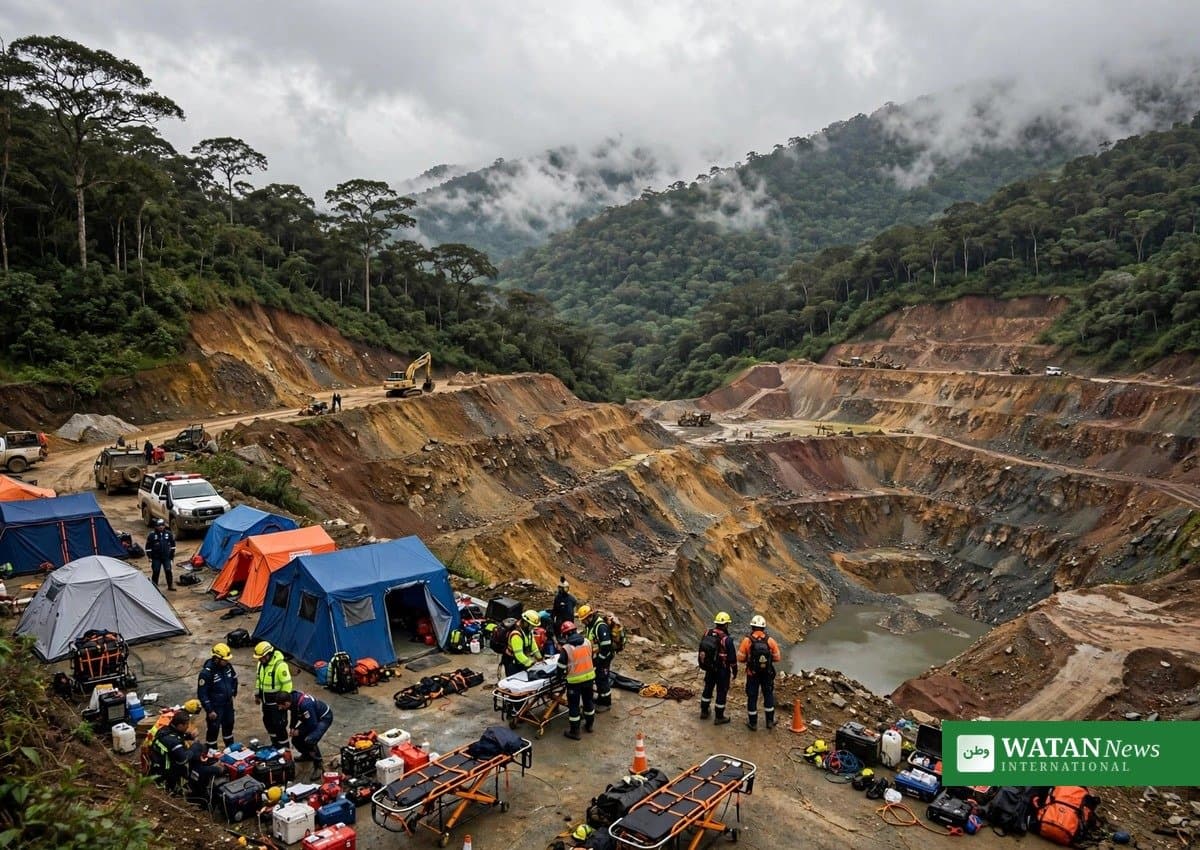
At least 14 people were killed and seven injured when an illegal gold mine collapsed in southwestern Colombia, renewing pressure to regulate the country’s informal mining sector. The Colombia gold mine collapse struck the rural Chambero sector of Santa Bárbara de Iscuandé in Nariño province, and authorities confirmed on Monday that search and rescue operations had concluded.
FAKTA
- What: An illegal open-pit gold mine collapsed, killing at least 14 people and injuring seven
- Where: The rural Chambero sector of Santa Bárbara de Iscuandé, in Nariño province, southwestern Colombia
- When: Authorities confirmed the toll on Monday; rescue operations have concluded
- Who confirmed: Nariño Governor Luis Alfonso Escobar, quoted by the wire services
- Context: The second fatal mining accident in Nariño in about two months — 13 people died in a similar collapse in Policarpa in August
- Official response: The governor urged the national government and the National Mining Agency to speed up formalization of small-scale mining
Colombia Gold Mine Collapse Strikes Remote Nariño Village
The mine was operating without permits in remote Nariño province surrounded by dense rainforest, an area that can only be reached by boat or small aircraft. That isolation slowed the emergency response, and Colombia’s Ombudsman’s Office called for military air support to evacuate the injured, including a deployment of the Benkos Biojó hospital ship from Guapi.
The office also warned that illegal armed groups in the area could hinder rescue work and demanded safe access for aid teams. Some reports suggested between 12 and 15 more miners might be missing, though authorities said the initial search phase had ended. “Entire families have been killed in this regrettable accident. It is very sad,” Governor Escobar said, adding that support for the families was the immediate priority.
Calls to Formalize Informal Mining
The governor used the tragedy to press Bogotá to bring informal miners into the formal economy faster. He called on the National Mining Agency and the Ministry of Mines and Energy to accelerate formalization, arguing that oversight would improve working conditions and safety at dangerous sites.
Hundreds of small mines across Colombia operate without government permits, and in many rural communities mining remains an important source of income despite the risks. Safety infrastructure is often poor or absent, and without inspections, structural failures can turn fatal within minutes. Watan News continues to follow developing stories across the Americas, including the human cost of unregulated industries.
Second Deadly Accident in Two Months
The collapse is not an isolated event. In August, 13 people died in a similar accident in the town of Policarpa, also in Nariño. The two disasters have killed 27 people in less than three months, according to the regional government, sharpening the debate over whether protections for miners are adequate.
Officials now face renewed pressure to combine enforcement with help that lets small-scale miners work legally and safely. Stronger inspections and basic safety requirements could reduce the risk of another disaster — but for the families of Iscuandé, that help comes too late.