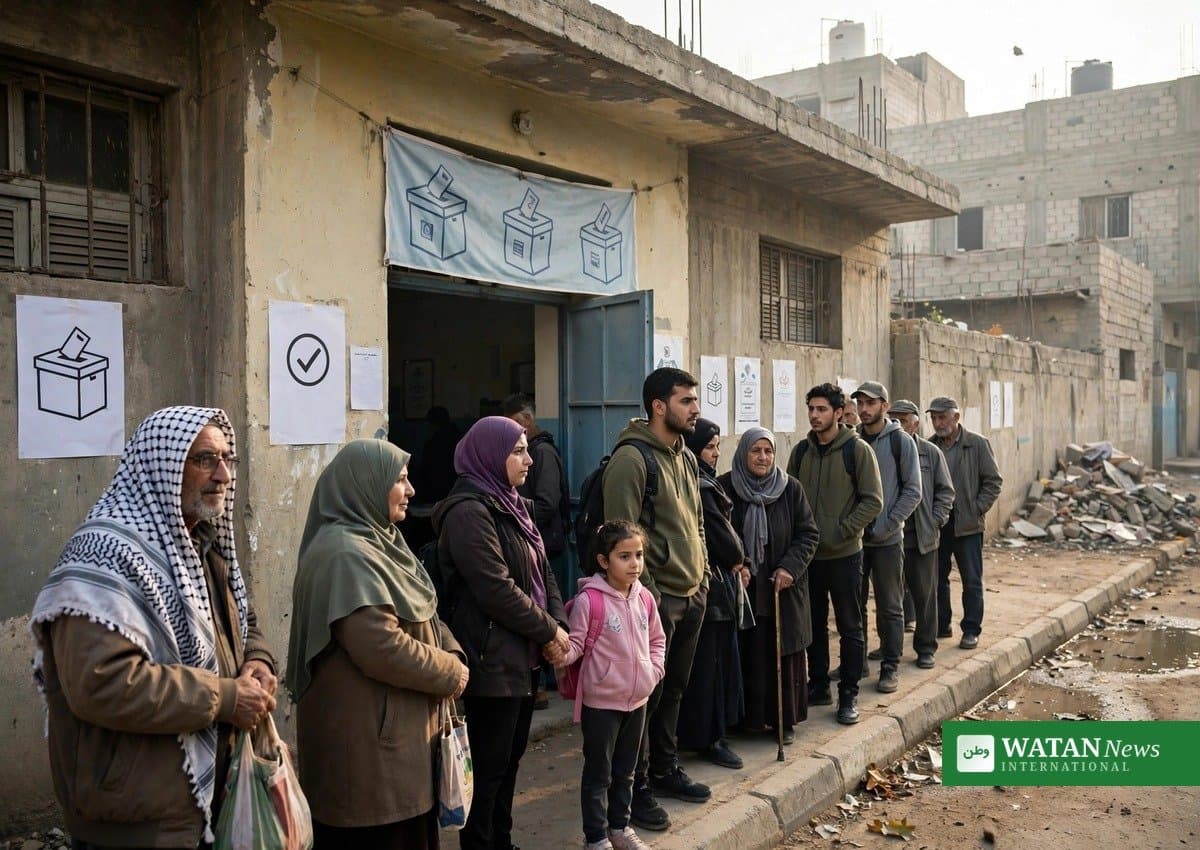
Gaza’s residents say they will vote on the basics of daily life — stable Palestinian legislative elections are approaching, and voters want candidates who will deliver jobs and security rather than political slogans. The Central Elections Commission is preparing for a national legislative vote on 28 November, the first since 2006, while unemployment estimated at around 80 percent and persistent insecurity shape what Gazans expect from their next parliament.
FAKTA: Palestinian legislative elections
Election day: Saturday, 28 November 2026 — the first Palestinian legislative election since 2006, set by a presidential decree issued on 9 July 2026.
Electorate: About 2.97 million Palestinians are eligible to vote — roughly 1.24 million in the Gaza Strip, 1.59 million in the West Bank and around 140,000 in East Jerusalem. 53 percent are under 38 and have never voted in a general election.
Electoral timetable: Registration of candidate lists ran from 26 September to 7 October; official campaigning begins on 6 November.
Gaza logistics: Election authorities are preparing up to 110 polling centres in the Gaza Strip for approximately 1.25 million voters, according to Anadolu Agency, with contingency plans in case ballot boxes, ballot papers or electoral ink cannot be brought into the enclave.
International backing: A UN report by UNSCO to the Ad Hoc Liaison Committee commends the Central Elections Commission’s professional independence and calls the vote crucial for renewing Palestinian institutions.
Lingering doubts: Analysts warn the vote could still be delayed again because of political divisions, Israeli restrictions and the devastation in Gaza.
Palestinian legislative elections: the road to 28 November
The road to polling day began with the presidential decree of 9 July 2026, which fixed Saturday, 28 November as election day in the West Bank, including East Jerusalem, and the Gaza Strip. The European Council on Foreign Relations’ tracker confirms the full timetable: electoral lists — representing parties, coalitions or groups of voters — registered between 26 September and 7 October, with campaigning scheduled to start on 6 November.
The vote would be the first legislative election in two decades. The previous attempt, scheduled for May 2021, was cancelled by President Mahmoud Abbas, who cited Israel’s refusal to permit the inclusion of East Jerusalem under the existing arrangements. Hamas has indicated it intends to participate this time.
Gaza’s electoral machinery gears up
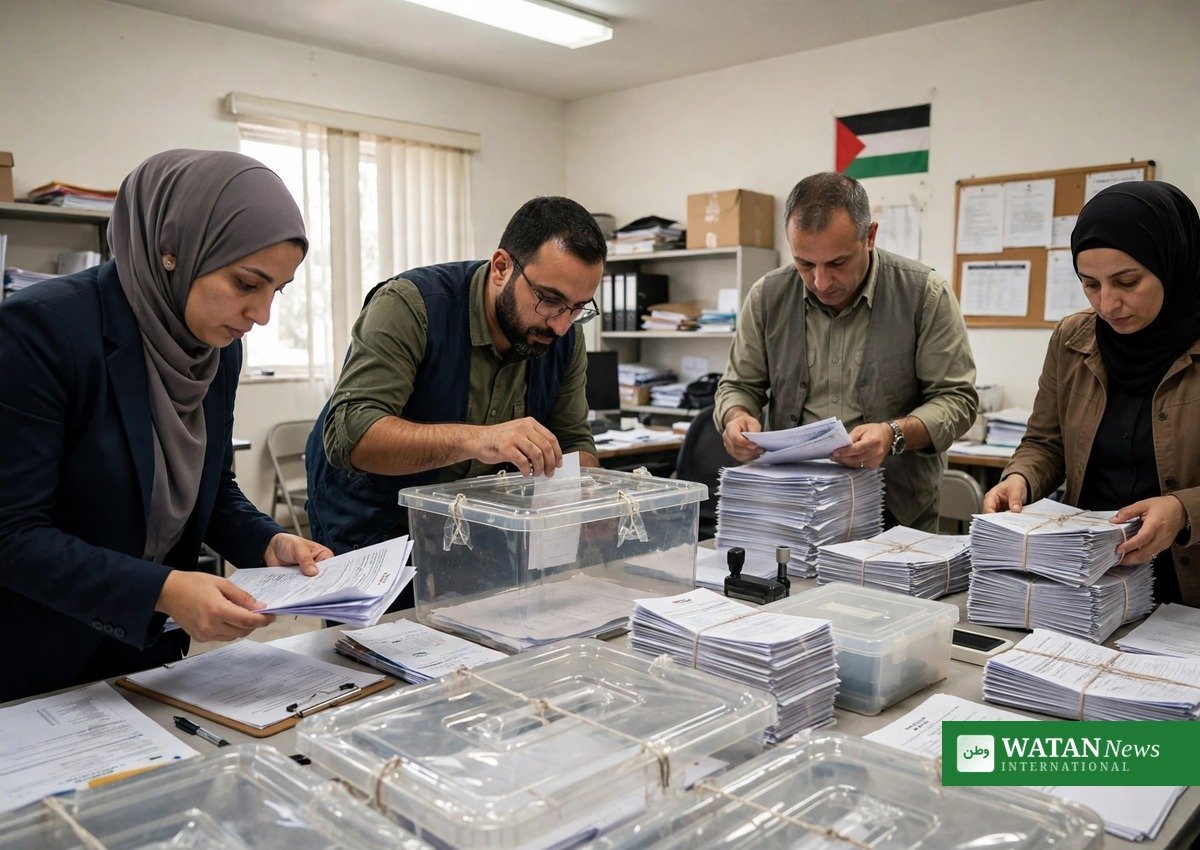
In the Gaza Strip, where around 1.24 million people are eligible to vote, preparations are advancing on the technical and logistical fronts. Jamil al-Khalidi, the Central Elections Commission’s regional director in Gaza, told Anadolu Agency that the commission is working with the Education Ministry to identify accessible schools as polling locations amid widespread destruction — and has drawn up contingency plans in case key election materials cannot enter the enclave.
Candidate registration opened on 26 September with striking early interest: five party and independent lists submitted applications within the first hour, indicating strong public and political engagement. Al-Khalidi stressed that a safe environment is essential for voters, candidates, parties, election staff and observers, urging the international community to help ensure it.
Jobs and security: what voters want
For ordinary Gazans, the campaign issues are brutally practical. Years of blockade and devastating conflict have crippled the enclave’s economy, with labour-market estimates putting unemployment at roughly 80 percent — hitting young people hardest and forcing many into precarious, low-paid work to survive. Voters consistently say they want elected officials who can deliver stable jobs with decent salaries, not rhetoric.
Security runs a close second. The constant threat of violence and instability weighs on daily life, and voters expect candidates to offer concrete plans for improving safety and stability — alongside hopes that elections and ceasefire arrangements could open the way to reconstruction and the easing of restrictions on land and movement.
Analysts note that holding the vote before presidential elections, expected in 2027, adds constitutional tension, while Israel’s own national election on 27 October 2026 creates a volatile regional backdrop. Still, for many Palestinians, the November vote is seen as a potential catalyst for tangible improvements in daily life.
International backing — and lingering doubts
The United Nations has publicly praised the Central Elections Commission’s competence and professional independence. A UNSCO report to the Ad Hoc Liaison Committee — the key donor-coordination body chaired by Norway — welcomed the presidential decree setting the date and called for facilitating the commission’s work so that voters can participate freely.
Yet scepticism persists. Analysts quoted by regional outlets argue that internal Palestinian divisions, Israeli restrictions and the extraordinary conditions in Gaza could still force another postponement — as happened in 2021. More than half of eligible voters have never taken part in a national vote, making the election, if it happens, an unprecedented event in Palestinian political life. Read more on the main site: Gaza voters prioritize jobs, security as Palestinian elections approach.
Sources: European Council on Foreign Relations — Legislative Elections (2026) tracker; Anadolu Agency via Türkiye New Updates — Gaza prepares for legislative elections amid security challenges.
Conclusion
As Gaza approaches its first legislative elections in 20 years, the electorate’s focus is firmly on the fundamentals: employment and security. Whether the 28 November date holds will depend on political consensus and conditions on the ground — but the preparations, the UN backing and the strong early interest in candidate registration all suggest this vote is being taken seriously in a way not seen since 2006.