Belgian physicist Francis Halzen has won the 2026 Nobel Prize in Physics for his decisive contributions to the IceCube Neutrino Observatory and the discovery of high-energy neutrinos of astrophysical origin. The Royal Swedish Academy of Sciences announced the award in Stockholm on 6 October 2026, honouring the scientific vision behind a cubic kilometre of Antarctic ice that became the world’s largest neutrino telescope.
FAKTA: 2026 Nobel Prize in Physics
- Laureate: Francis Halzen, 82, Belgian physicist at the University of Wisconsin–Madison and principal investigator of the IceCube Neutrino Observatory — sole winner, prize share 1/1.
- Official citation: “for decisive contributions to the IceCube Neutrino Observatory and the discovery of high-energy neutrinos of astrophysical origin.”
- Announced: 6 October 2026 by the Royal Swedish Academy of Sciences in Stockholm.
- Prize money: 12 million Swedish kronor (about $1.2 million), awarded in full to Halzen.
- The idea: Halzen first proposed using Antarctic ice as a neutrino detector in 1988; after the AMANDA pilot project, the idea grew into IceCube, built by a collaboration of more than 450 people from 58 institutions in 14 countries, operational since 2010.
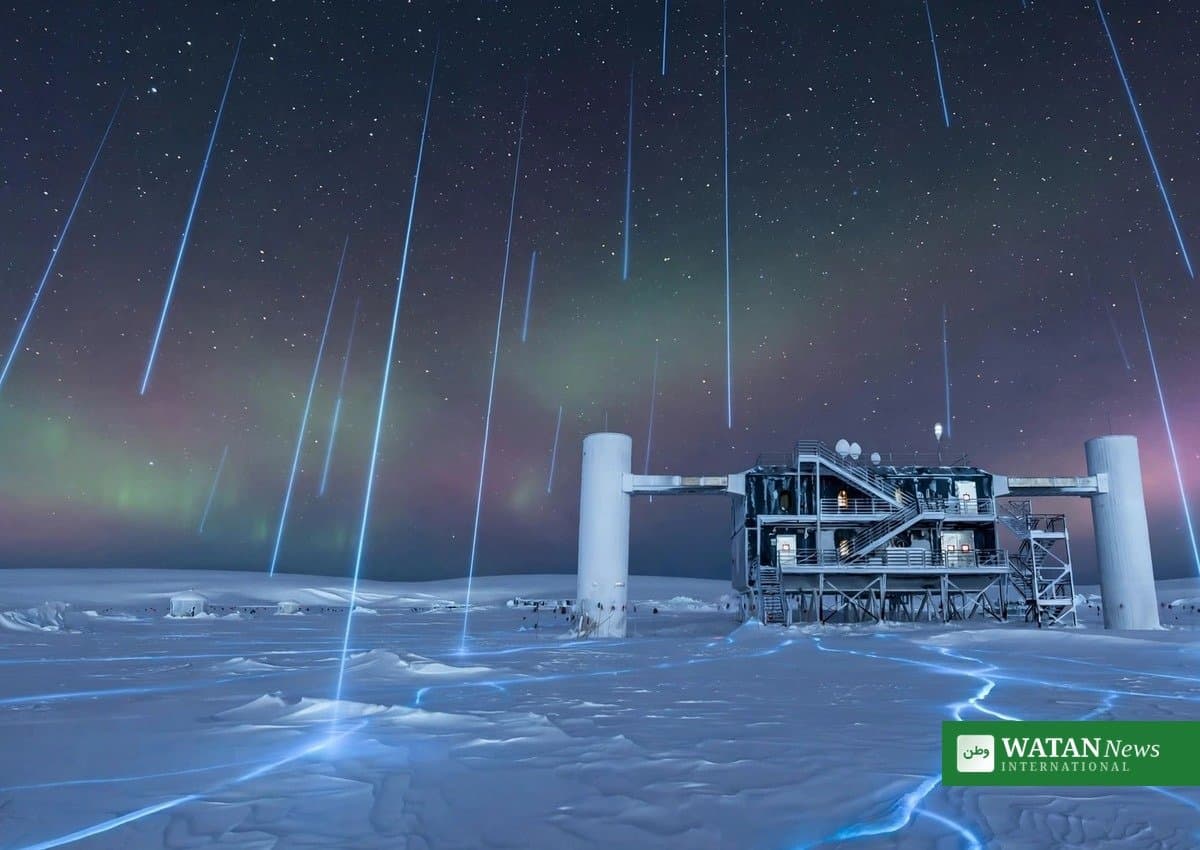
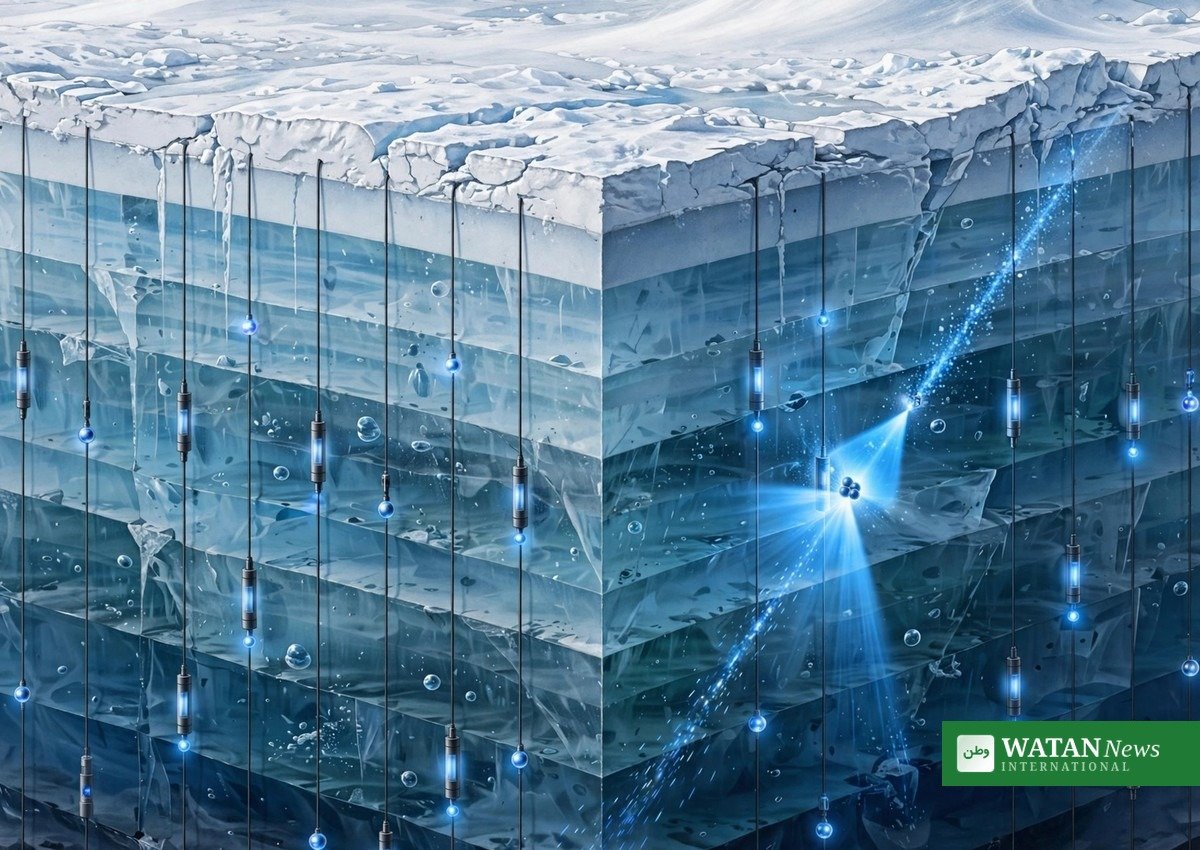
- The instrument: thousands of light sensors buried about two kilometres deep in ultra-clear Antarctic ice, recording the faint blue flash made when a rare neutrino collides with an atomic nucleus.
- Milestones: first detection of high-energy cosmic neutrinos in 2013; in 2017 IceCube traced a neutrino back to a distant blazar, opening a new window on the violent universe.
A bold idea buried in Antarctic ice
The story began in 1988, when Francis Halzen proposed a radical plan: use a vast block of Antarctic ice as a telescope for neutrinos, the elusive particles flooding out of the most energetic places in the universe. Few took the idea seriously at first. Halzen persisted, first through the AMANDA pilot project and then through an international collaboration of more than 450 researchers and engineers from 58 institutions in 14 countries.
The result was the IceCube Neutrino Observatory at the Amundsen–Scott South Pole Station, led by the University of Wisconsin–Madison and operational since 2010. Workers drilled dozens of deep holes with hot water and lowered thousands of light sensors about two kilometres into the ice, where the ancient ice is exceptionally clear. Together the sensors watch a full cubic kilometre of ice for the rarest of events.
The 2026 Nobel Prize in Physics announcement
When the Royal Swedish Academy of Sciences announced the 2026 Nobel Prize in Physics on 6 October 2026, it went to one person alone. Nobel Committee chair Mark Pearce praised Halzen for leading an international team that delivered “a fantastic instrument”, adding: “His tenacity and scientific vision has paved the way for a new kind of astronomy.”
Halzen, reached by phone in Italy on the morning of the announcement, said the prize was a complete surprise: “It was a great surprise and I obviously didn’t expect it.” It had been several years since the physics prize last went to a single laureate, underlining how unusual it is for one scientist’s vision to be singled out from a collaboration of hundreds.
Ghost particles: why they are almost impossible to catch
Neutrinos are nicknamed “ghost particles” for good reason. They carry almost no mass and no electrical charge, so they pass through planets, stars and entire galaxies — and through our own bodies, billions of them every second — without leaving a trace. Halzen’s work concerns the rarest and most energetic of them: high-energy neutrinos born in cosmic accelerators far beyond our galaxy, created when protons collide with other particles in the universe’s most violent environments.
IceCube catches them with patience and scale. On the rare occasion that a neutrino strikes an atomic nucleus in the ice, it produces fast-moving charged particles that emit a flash of blue Cherenkov light. The buried sensors record that flash, and the pattern and timing of the light let scientists trace the neutrino’s path back to its cosmic origin.
A new kind of astronomy
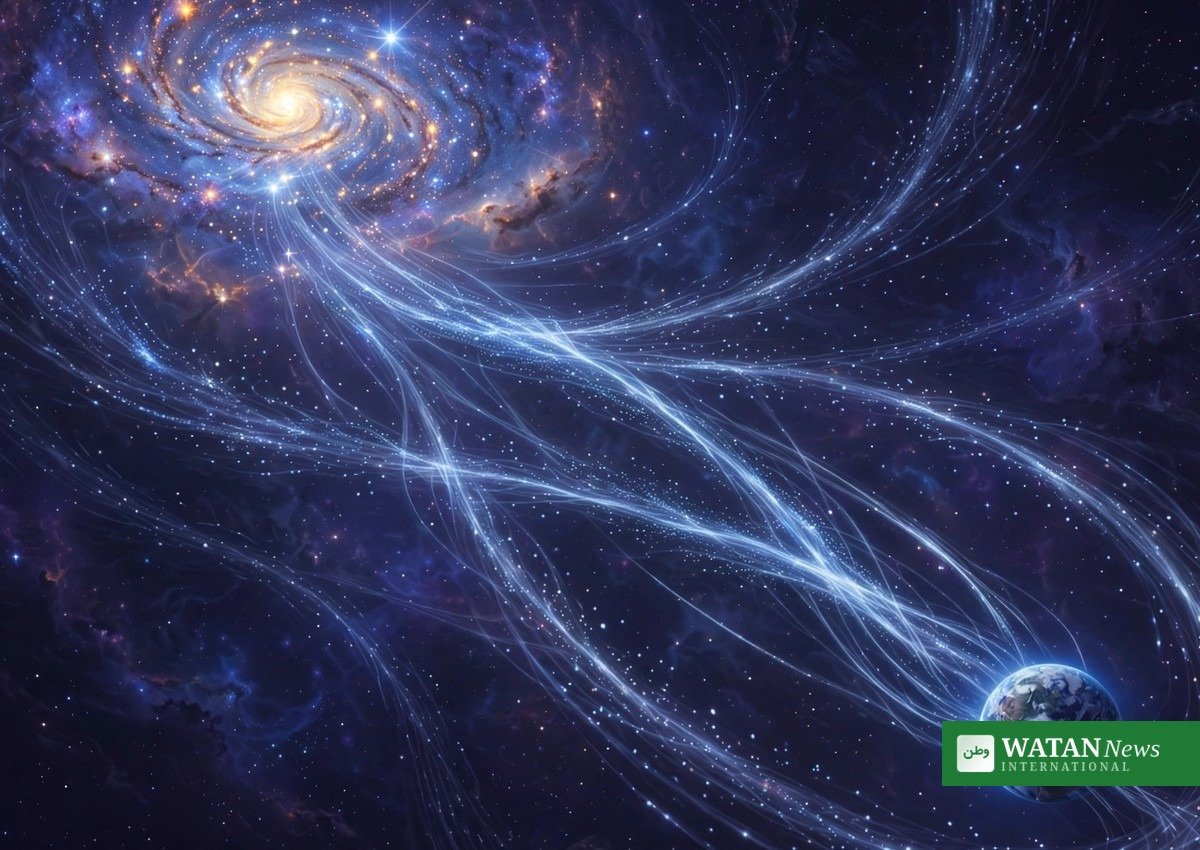
By detecting neutrinos from deep space, IceCube opened a window that conventional telescopes cannot match: regions of the universe hidden behind dust or too dense for light to escape. The breakthrough came in 2013 with the first detection of high-energy neutrinos from beyond our galaxy, and again in 2017, when IceCube traced a neutrino back to a distant blazar — a supermassive black hole firing a jet of particles straight at Earth.
“Ghost-like messengers from the cosmos,” Pearce called them at the announcement press conference — particles that bring information about distant cosmic sources that cannot be gathered in any other way. Alongside light and gravitational waves, neutrinos are now a third messenger of multi-messenger astronomy, and Halzen’s ice telescope showed the way. Read more science coverage on Watan News Technology, and follow the same story on Watan News main site or more world news.
Conclusion
The 2026 Nobel Prize in Physics recognises more than a discovery — it recognises a decades-long act of scientific vision. From a 1988 proposal dismissed as impossible to a cubic kilometre of instrumented Antarctic ice, Francis Halzen’s tenacity gave humanity a new sense with which to perceive the universe. The ghost particles he set out to catch are now carrying messages from the most violent corners of the cosmos, and this is only the beginning.